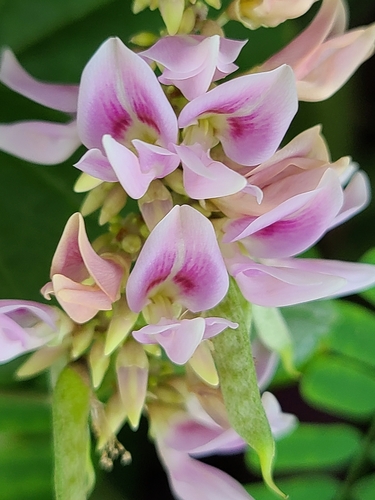
Crotalaria florida
Welw. ex Baker
FabaceaeLeaves

wikimedia · cc0
Wikimedia Commons - State Library and Archives of Florida
Wikimedia Commons - State Library and Archives of Florida

wikimedia · cc0
Wikimedia Commons - State Library and Archives of Florida
Wikimedia Commons - State Library and Archives of Florida
What to Eat
Edible parts: Leaves, Vegetable
The leaves are cooked with potash and peanuts are added.
Where to Find It
It is a tropical plant. It grows in woodland. It can grow in arid places.
Africa, Angola, Central Africa, Congo, East Africa, Malawi, Mozambique, Tanzania, Zambia,
Countries: Angola, Burkina Faso, Burundi, Benin, Botswana, Congo (DRC), Central African Republic, Congo (Republic), Cote d'Ivoire, Cameroon, Cape Verde, Djibouti, Algeria, Egypt, Eritrea, Ethiopia, Gabon, Ghana, Gambia, Guinea, Equatorial Guinea, Guinea-Bissau, Kenya, Comoros, Liberia, Lesotho, Libya, Morocco, Madagascar, Mali, Mauritania, Mauritius, Malawi, Mozambique, Namibia, Niger, Nigeria, Rwanda, Seychelles, Sudan, Sierra Leone, Senegal, Somalia, South Sudan, Sao Tome & Principe, Eswatini, Chad, Togo, Tunisia, Tanzania, Uganda, South Africa, Zambia, Zimbabwe
How to Identify
A herb or small shrub. It keeps growing from year to year. It has several stems coming from a woody rootstock. It grows up to 1.2 m tall. There are several short flowering branches. The branches are ribbed and they have hairs. The leaves mostly have 3 leaflets. The leaflets are 5-22 mm long by 2-10 mm wide. There are 6-10 flowers in a group. The fruit are pods 6-8 mm long by 4-6 mm wide. They have 2 seeds. The seeds are 2 mm long.
Other Information
It is occasionally harvested.
Names & Synonyms
Crotalaria florida Baker var. richardsiana TorreCrotalaria kipiriensis R. WilczekCrotalaria pseudoflorida R. Wilczek
References (4)
- Abukutsa-Onyango, M.O., 2004. Crotalaria brevidens Benth. [Internet] Record from Protabase. Grubben, G.J.H. & Denton, O.A. (Editors). PROTA (Plant Resources of Tropical Africa), Wageningen, Netherlands. < http://database.prota.org/search.htm>. Accessed 15 October 2009.
- Grubben, G. J. H. and Denton, O. A. (eds), 2004, Plant Resources of Tropical Africa 2. Vegetables. PROTA, Wageningen, Netherlands. p 230
- Royal Botanic Gardens, Kew (1999). Survey of Economic Plants for Arid and Semi-Arid Lands (SEPASAL) database. Published on the Internet; http://www.rbgkew.org.uk/ceb/sepasal/internet [Accessed 28th April 2011]
- World Checklist of Useful Plant Species 2020. Royal Botanic Gardens, Kew