Raphionacme velutina
Schltr.
Bushman water root

(c) fayne, some rights reserved (CC BY-NC), uploaded by fayne
no rights reserved
no rights reserved
What to Eat
Edible parts: Tuber, Root
The tuber is a traditional water source—the top is cut off and the flesh mashed then squeezed to drink the water. The flesh can be eaten raw or in cooked vegetable dishes, though it tends to dry the mouth.
Where to Find It
It is a subtropical plant. It grows in hot arid places with a marked dry season. The dry season can be 6-11 months. In Southern Africa it grows between 800-1,600 m altitude. It can grow in arid places.
Africa, Botswana, Lesotho, Middle East, Namibia, South Africa, Southern Africa, Yemen,
How to Identify
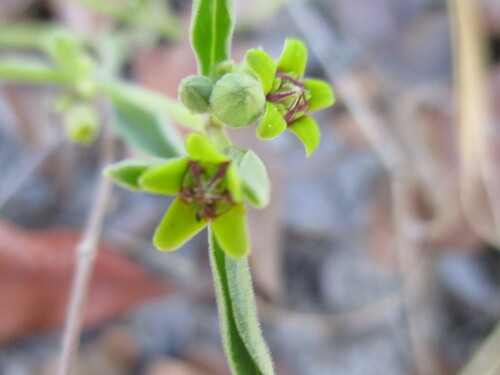
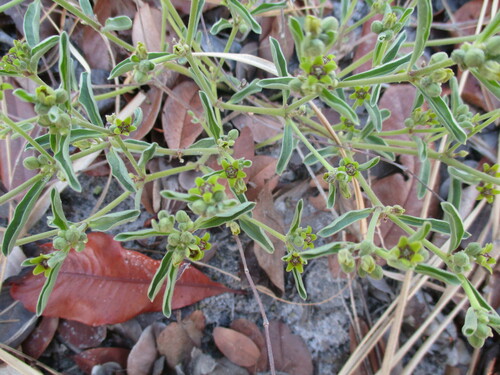
A herb that keeps growing from year to year. It grows 20 cm tall. It forms a thick tuber 10-20 cm below the ground. The tuber can be 25 cm across. The plant secretes a white latex when damaged. The leaves are greyish-green and opposite. They are small and sword shaped. The flowers are green. They in clusters in the axils of leaves near the ends of branches. The flowers are star shaped. The fruit are narrowly oval and 5-9 cm long by 4-6 mm wide.
How to Grow
Found in the wild in dry, open places, uually in sandy soils.
Medicinal Uses
It is an important source of water during the dry season.
Other Uses
All parts of the plant exude a white latex if injured. No uses are recorded for this latex.
Other Information
It is an important source of water in the dry season.
Notes
It is also put in the family Periplocaceae. Also put in the family Asclepiadaceae.
Names & Synonyms
Ella, Etundu, Gurukaka, Qurs-bathilan
References (6)
- Al-Fatimi, M. A., Wild Edible Plants Traditionally Collected and Used in Southern Yemen. Research Square. University of Aden. p 22
- Leger, S., 1997, A Description of Today's Use of Plants in West Bushmanland (Namibia). German Development Service. PO Box 220035, 14061 Berlin, Germany. http://www.sigridleger.de/book/
- Royal Botanic Gardens, Kew (1999). Survey of Economic Plants for Arid and Semi-Arid Lands (SEPASAL) database. Published on the Internet; http://www.rbgkew.org.uk/ceb/sepasal/internet [Accessed 4th April 2011]
- Ruiters-Welcome, A. K., 2019, Food plants of southern Africa. Ph.D. thesis. Univ. of Johannesburg p 27
- Welcome, A. K. & Van Wyk, B.-E., 2019, An inventory and analysis of the food plants of southern Africa. South African Journal of Botany 122 (2019) 136–179
- World Checklist of Useful Plant Species 2020. Royal Botanic Gardens, Kew


