Cajanus cajan
(L.) Millsp.
Pigeon pea
no rights reserved, uploaded by 葉子
no rights reserved, uploaded by 葉子
(c) fbi-mini, some rights reserved (CC BY-NC)
What to Eat
Edible parts: Seeds, Leaves, Pods, Sprouts, Vegetable
Edible Parts: Leaves Seed Seedpod Shoots Edible Uses: Seed - cooked. Very young seeds can be cooked and eaten like peas, going well in rice dishes. Mature seeds are dried and added to soups and stews. Small but flavourful. The seed may be used instead of soya bean to make tempeh or tofu, and can also be sprouted and eaten when about 25mm long. The seed is usually round or oval and up to 8mm in diameter. Seedpods - cooked. The unripe pods are eaten in curries. The pods are up to 10cm long and 14mm wide. Leaves and young shoots - cooked and used as a vegetable. A strong, spicy odour, with a new flavour that is not agreeable to everyone. A good source of protein. The leaves contain up to 9% protein. The leaves quickly become fibrous. Widely cultivated in all tropical and semitropical regions. An important legume crop of rainfed agriculture in the semiarid tropics. The Indian subcontinent, eastern Africa and Central America are the World's three main pigeon pea-producing regions. Pigeon peas are cultivated in more than 25 countries, either as a sole crop or intermixed with cereals, such as sorghum (Sorghum bicolor), pearl millet (Pennisetum glaucum), or maize (Zea mays), or with other legumes, such as peanuts (Arachis hypogaea).
Where to Find It
A tropical plant. Plants require a tropical or subtropical climate. Plants grow from sea level up to about 1800 m in the tropics. They can tolerate drought and are suited to a drier climate. They can grow in places with less than 600 mm rainfall per year. They do less well in the wet tropics. It suffers in waterlogged soils and is damaged by frost. It can also tolerate heat. It will grow on poor soils. It cannot grow on salty soils. It grows to about 2000 m in Nepal. It can grow in arid places. It suits hardiness zones 10-12. In Sichuan and Yunnan.
Afghanistan, Africa, Andaman Is., Angola, Anguilla, Antigua-Barbuda, Asia, Australia, Azerbaijan, Bahamas, Bangladesh, Barbados, Belize, Benin, Bhutan, Bolivia, Botswana, Brazil, Burkina Faso, Burundi, Cambodia, Cameroon, Cape Verde, Caribbean, Caucasus, Central Africa, Central African Republic, CAR, Central America, Chad, China, Colombia, Comoros, Congo DR, Congo R, Cook Is, Costa Rica, Côte d'Ivoire, Cuba, Djibouti, Dominica, Dominican Republic, East Africa, East Timor, Ecuador, Egypt, El Salvador, Eritrea, Eswatini, Ethiopia, Europe, Fiji, French Guiana, French Polynesia, Gabon, Gambia, Georgia, Ghana, Grenada, Guadeloupe, Guatemala, Guianas, Guinea, Guinée, Guinea-Bissau, Guyana, Haiti, Hawaii, Himalayas, Honduras, India*, Indochina, Indonesia, Ivory Coast, Jamaica, Japan, Kenya, Laos, Liberia, Madagascar, Malawi, Malaysia, Maldives, Mali, Marianas, Marquesas, Martinique, Mauritania, Mauritius, Mexico, Middle East, Montserrat, Mozambique, Myanmar, Namibia, Nauru, Nepal, New Caledonia, Nicaragua, Niger, Nigeria, Niue, North Africa, North America, Northeastern India*, Oman, Pacific, Pakistan, Panama, Papua New Guinea, PNG, Paraguay, Peru, Philippines, Puerto Rico, Reunion, Rotuma, Rwanda, Sahel, Sao Tome and Principe, Saudi Arabia, SE Asia, Senegal, Seychelles, Sierra Leone, Slovenia, Solomon Islands, Somalia, South Africa, Southern Africa, South America, South Sudan, Sri Lanka, St Lucia, Sudan, Suriname, Swaziland, Tahiti, Taiwan, Tajikistan, Tanzania, Thailand, Timor-Leste, Togo, Trinidad, Turkey, Türkiye, Turkmenistan, Uganda, USA, Uzbekistan, Vanuatu, Venezuela, Vietnam, West Africa, West Indies, West Timor, Yemen, Zambia, Zimbabwe,
How to Identify
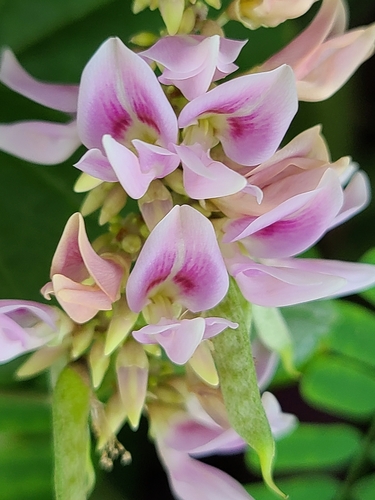
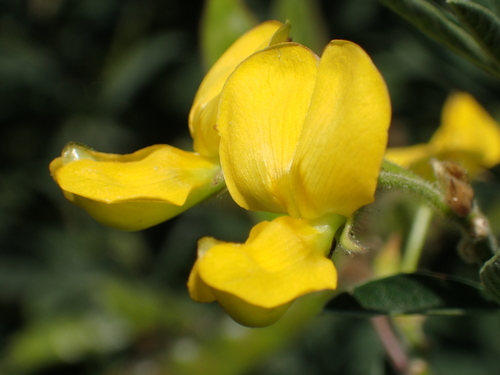
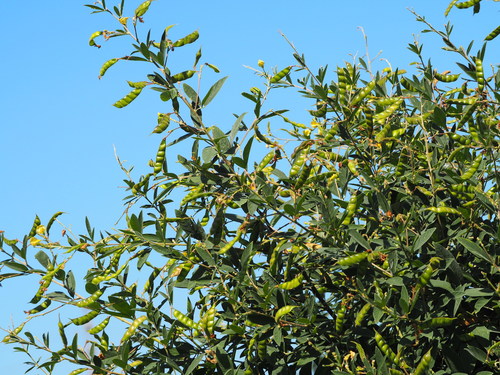
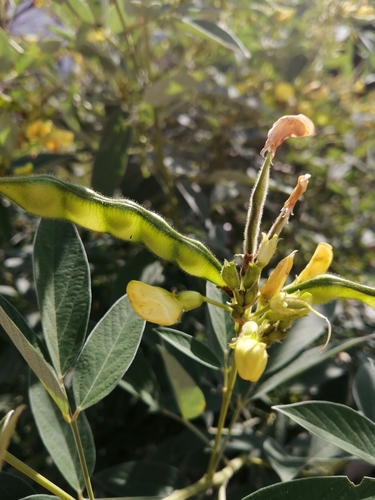
An upright perennial shrubby legume. It lives for 3-4 years. They can be up to about 4 m tall and spreads to 1.5 m wide. The stem is erect and branching. It has a bushy appearance. It has a strong deep taproot. The root nodules are round and sometimes lobed. Young stems are angled and hairy. A leaf consists of 3 leaflets. Leaflets are narrow and green with a silvery green underneath. Leaflet size can be 10 cm x 3 cm. The end leaflet is larger with a longer leaf stalk. Flowers are red and yellow. The large petal has red lines. They are pea shaped and on branched flower stalks which stick upwards in the axils of leaves. Pods are long, straight and narrow, often with 4-8 seeds. The pods are slightly hairy. Pods are often 4-8 cm long and have a beak at the end. Pods are constricted between the seeds. Many varieties of pigeon pea occur. Some are dwarf and day length neutral. Seeds vary in shape, size and colour.
Nutrition Score: 73/100
| Part | Moisture | kJ | kcal | Protein | Vit A | Vit C | Iron | Zinc |
|---|---|---|---|---|---|---|---|---|
| Seeds | 10 | 1449 | 347 | 19.5 | 55 | — | 15 | — |
| Pods young | 64.4 | 477 | 114 | 8.7 | — | — | 2 | — |
| Seeds young boiled | 71.8 | 464 | 111 | 6 | 13 | 28.1 | 1.6 | 0.8 |
| Leaves | — | — | — | — | — | — | — | — |
| Sprouts | — | — | — | — | — | — | — | — |
How to Grow
They are grown from seeds. It is best to sow seeds where the plants are to grow. Seeds normally germinate easily and well. Before sowing seed it helps to soak them in cold water for one day. Seeds store well if kept cool and dry. A spacing of 1.5 m x 1.5 m is suitable. Plants can be cut back and allowed to re-grow. Plants can also be grown from cuttings.
Propagation: Seed - sow in situ during the wet season, placing the seed 2 - 3 cm deep in the soil. Two seeds are often planted per station, thinning to the best plant. The seeds germinate at temperatures of 19 - 43°c, but most rapidly at 20 - 30°c. Emergence is complete 2 - 3 weeks after sowing. Vegetative development starts slowly, but after 2 - 3 months growth accelerates.
Medicinal Uses
Anthelmintic Antidiarrhoeal Antitussive Deodorant Diuretic Expectorant Laxative Mouthwash Pectoral Sedative Skin Vulnerary The roots are anthelmintic, sedative, expectorant and vulnerary. An infusion of the leaves is used as a treatment for pulmonary conditions such as coughs and bronchitis. The leaf juice is taken internally in the treatment of haemorrhages, coughs and diarrhoea. An infusion of the leaves, combined with Dactyloctenium aegyptium, is used to accelerate childbirth. Young leaves are chewed to treat boils on the tongue. A decoction is used for washing ulcers. The boiled leaves are applied to sores and wounds to hasten cicatrization. Young shoots and the green seedpods are used to make a good pectoral infusion. An infusion of the flowers and leaves is diuretic and is used as a diabetes remedy. An infusion of the flowers is pectoral. A decoction of the plant is diuretic and laxative. It is used in the treatment of sore throats. An infusion of the seeds is diuretic. A flour made from the seeds is resolutive. Leaf contains cholesterol. The root bark contains numerous flavones including cajaflavanone and cajanone, and triterpenes. The root contains cajanone, an antimicrobial agent. An enzyme called 'urease' can be extracted from the plant. It has medicinal applications.
Other Uses
Basketry Broom Companion Deodorant Essential Fodder Fuel Green manure Hedge Plant support Roofing Shelterbelt Soil reclamation Soil stabilization Thatching Wood Other uses rating: Medium (3/5). Agroforestry Uses: A good green manure crop. The plant has an extensive root system and is often grown to bind soil. It is also grown to provide shelter from the wind. It is also grown as a shade crop, cover crop, or as support for vanilla. Due to its hardiness, ability to grow on residual soil moisture, and slow early growth, this species is an ideal, non-competitive crop to plant with cereals. For hedgerow intercropping, the hedges should be cut at height of 50 - 100cm when the grain crop is fully mature. The hedges can be cut 2 - 3 times a year in areas where the dry season lasts 4 - 6 months. At pod maturity, the branches are cut at about 50cm. Higher levels of pruning can result in higher and unacceptable levels of plant mortality. The root system is reported to break plough pans, thus improving soil structure, encouraging infiltration, minimizing sedimentation and smothering weeds. Leaf fall at maturity adds to the organic matter in the soil and provides additional nitrogen. It seems to have special mechanisms to extract phosphorus from black Vertisol soils. The plant improves the soil through its extensive root system, nitrogen fixation and the mulch provided by the fallen leaves. Other Uses The stems are of use in basketry and thatching. The plants are often used as brooms. An essential oil can be collected by the steam distillation of the leaves and other aerial organs. It contains a mixture of compounds including the terpenoid alpha - copaene. The macerated leaves are used as a deodorant. The wood is used in light construction such as in roofing, wattling on carts, tubular wickerwork lining for wells and baskets. The dried stalks and branches are used for fuel. The sticks are an important household fuel in many areas. The heat value, with 1,450 kJ per 100g, is about half as high as the same weight of coal. Special Uses Attracts Wildlife Carbon Farming Coppice Food Forest Hedge Nitrogen Fixer
Wikipedia
Source ↗Evergreen shrub reaching 4 m tall with fast growth, hardy to UK zone 10. Self-fertile flowers pollinated by bees and insects. Nitrogen-fixing. Tolerates light sandy, medium loamy, and heavy clay soils, including nutritionally poor soil, with good drainage preferred. Grows in mildly acid to very alkaline conditions. Requires full sun, prefers moist soil but tolerates drought.
Production
Plants are fast growing. Pods are ready after 5 months. Mature seeds take about 8 months. Plants will often live for 3-4 years. Plants are cross pollinated by insects, or self pollinated.
Other Information
It is a commercially cultivated vegetable. A crop being tried out in many villages in Papua New Guinea but very popular in many tropical countries especially India and Pakistan. In these countries they are eaten at almost every meal.
Notes
There are 37 Cajanus species.
Names & Synonyms
Adhaki, Aduwa, Ambarivatra, Ambiatry, Ambrevade, Angola pea, Apena, Arhar, Arhar dhal, Arhat, Arhor, Asedua, Atiyi, Bak tua heea, Behiang, Behieng, Belhang, Betleng, Biefoyoo, Bins tikbus, Blofoyoo atii, Bo-chang, Burusu, Caiano, Catjang, Chinchonchillo, Congo pea, Daal, Dahl, Dau-chieu, Dau-sang, De bei nie jian, Dhal, Duiwe-ertjie, Ekilimite, E-konshon, Enkuuku, Feijao-guandu, Frijol chinanteco, Frijol de palo, Gandul, Gandules, Gandures, Glae bue sa, Golobji grah, Guandul, Guandu, Hpunlasi, Phyan, Kacang dal, Kandulu, Klekoun, Kongo-binch, Konsotoge, Lapena, Lapenda, Mbwengwe, Mu do, Mugu tholhi, Muma krire, Mundodzi, Nandolo, Ne qie ke lie, Ngoliolio, No-eye pea, Nzuu, Lothlodi, Orohor, Osungi, Osugina, Otile, Otili, Paltiyu, Pe-sin-gon, Pijonpii, Pois cajun, Puspu-poroto, Rahar, Red gram, Salbuko-geed, Samdaek khloeng, Sewpi, Thekek, Thovaray, Thuvara, Tiyi, Togare, Toor, Tourhea, Tua heea, Tukai, Tur, Tuur, Tuvari, Tuvarika, Tuver, Tuye, Umukuunde, Urhur, Viovio, Voanamberovatry, Wabin butsuka, Waken turuwa, Wando, Wandu, Wenali, Wewof ater, Yepetum
References (142)
- Abbiw, D.K., 1990, Useful Plants of Ghana. West African uses of wild and cultivated plants. Intermediate Technology Publications and the Royal Botanic Gardens, Kew. p 31
- Ambasta S.P. (Ed.), 2000, The Useful Plants of India. CSIR India. p 94
- Anderson, E. F., 1993, Plants and people of the Golden Triangle. Dioscorides Press. p 205
- Ara, R. I. T., 2015, Leafy Vegetables in Bangladesh. Photon eBooks. p 95
- Asfaw, Z., Conservation and use of traditional vegetables in Ethiopia. FAO
- Bekele-Tesemma A., Birnie, A., & Tengnas, B., 1993, Useful Trees and Shrubs for Ethiopia. Regional Soil Conservation Unit. Technical Handbook No 5. p 124
- Bennett, B. C., 1990, Useful Plants of Amazonian Ecuador. US Agency for International Development. Fifth Progress Report. New York Botanical Gardens. p 39
- Bircher, A. G. & Bircher, W. H., 2000, Encyclopedia of Fruit Trees and Edible Flowering Plants in Egypt and the Subtropics. AUC Press. p 72
- Bodkin, F., 1991, Encyclopedia Botanica. Cornstalk publishing, p 182
- Bodner, C. C. and Gereau, R. E., 1988, A Contribution to Bontoc Ethnobotany. Economic Botany, 43(2): 307-369
- Bourret, D., 1981, Bonnes-Plantes de Nouvelle-Caledonie et des Loyaute. ORSTOM. p 13
- Brouk, B., 1975, Plants Consumed by Man. Academic Press, London. p 125
- Bunderson, W. T. et al, 2002, Common Agroforestry Species in Malawi. Malawi Agroforestry Extension Project, Pubication No. 46, Lilongwe. p 27
- Burkill, H. M., 1985, The useful plants of west tropical Africa, Vol. 3. Kew.
- Burkill, I.H., 1966, A Dictionary of the Economic Products of the Malay Peninsula. Ministry of Agriculture and Cooperatives, Kuala Lumpur, Malaysia. Vol 1 (A-H) p 398 (As Cajanus indicus)
- Cabalion, P. and Morat, P., 1983, Introduction le vegetation, la flore et aux noms vernaculaires de l'ile de Pentcoste (Vanuatu), In: Journal d'agriculture traditionnelle et de botanique appliquee JATBA Vol. 30, 3-4
- Cao, Y., et al, 2020, Ethnobotanical study on wild edible plants used by three trans-boundary ethnic groups in Jiangcheng County, Pu’er, Southwest China. Journal of Ethnobiology and Ethnomedicine (2020) 16:66
- Clarke, W.C. & Thaman, R.R.(Eds.), 1993, Agroforestry in the Pacific Islands: Systems for sustainability. United Nations University Press. New York. p 226
- Cobley, L.S. (rev. Steele, W.M.) 2nd Ed., 1976, An Introduction to the Botany of Tropical Crops. Longmans. p 99
- Coe, F. G. & Anderson, G. J., 1997, Ethnobotany of the Miskitu of Eastern Nicaragua. Journal of Ethnobiology 17(2): 171-214
- Creasy, R., 2000, The Edible Asian Garden. Periplus p 26
- Cruz-Garcia, G. S., & Price, L. L., 2011, Ethnobotanical investigation of 'wild' food plants used by rice farmers in Kalasin, Northeast Thailand. Journal of Ethnobiology and Ethnomedicine 7:33
- Cundall, P., (ed.), 2004, Gardening Australia: flora: the gardener's bible. ABC Books. p 276
- D'Ambrosio, U., & Puri, R. K., 2016, Foodways in transition: food plants, diet and local perceptions of change in a Costa Rican Ngäbe community. Journal of Ethnobiology and Ethnomedicine (2016) 12:3 p 24
- Dansi, A., et al, 2008, Traditional leafy vegetables and their use in the Benin Republic. Genet Resour Crop Evol (2008) 55:1239–1256
- Das, T. & Das, A. K., 2005, Inventorying plant biodiversity in homegardens: A case study in Barak Valley, Assam, North East India. CURRENT SCIENCE, VOL. 89, NO. 1, 10 JULY 2005
- Dansi, A., et al, 2012, Diversity of the Neglected and Underutilized Crop Species of Importance in Benin. The Scientific World Journal. Volume 2012, Article ID 932947, 19 pages
- Dhyani, S.K., & Sharma, R.V., 1987, Exploration of Socio-economic plant resources of Vyasi Valley in Tehri Garwhal. J. Econ. Tax. Bot. Vol. 9 No. 2 pp 299-310
- Duarte, M. C., et al, 2022, Diversity of Useful Plants in Cabo Verde Islands: A Biogeographic and Conservation Perspective. Plants 2022, 11, 1313 p 10
- Ekman Herbarium records Haiti (As Cajanus indicus)
- Facciola, S., 1998, Cornucopia 2: a Source Book of Edible Plants. Kampong Publications, p 102
- FAO, 1988, Traditional Food Plants, FAO Food and Nutrition Paper 42. FAO Rome p 130
- Fowler, D. G., 2007, Zambian Plants: Their Vernacular Names and Uses. Kew. p 36
- Fox, F. W. & Young, M. E. N., 1982, Food from the Veld. Delta Books. p 202
- French, B.R., 1986, Food Plants of Papua New Guinea, A Compendium. Asia Pacific Science Foundation p 38
- French, B.R., 2010, Food Plants of Solomon Islands. A Compendium. Food Plants International Inc. p 51
- Fu, Yongneng, et al, 2003, Relocating Plants from Swidden Fallows to Gardens in Southwestern China. Economic Botany, 57(3): 389-402
- Gangte, H. E., et al, 2013, Wild Edible Plants used by the Zou Tribe in Manipur, India. International Journal of Scientific and Research Publications, Volume 3, Issue 5
- Gohre, A., et al, 2016, Plants from disturbed savannah vegetation and their usage by Bakongo tribes in Uíge, Northern Angola. Journal of Ethnobiology and Ethnomedicine (2016) 12:42
- Goode, P., 1989, Edible Plants of Uganda. FAO p 39
- Goode, P., 1989, Edible Plants of Uganda. FAO p 41
- Gouldstone, S., 1983, Growing your own Food-bearing Plants in Australia. Macmillan p 168
- Guite, C., 2016, A study of wild edible plants associated with the Paite tribe of Manipur, India, International Journal of Current Research. Vol. 8, Issue, 11, pp. 40927-40932
- Hedrick, U.P., 1919, (Ed.), Sturtevant's edible plants of the world. p 141 (As Cajanus indicus)
- Hu, Shiu-ying, 2005, Food Plants of China. The Chinese University Press. p 469
- ILDIS Legumes of the World http:www;ildis.org/Legume/Web
- Jabeen, A., et al, 2009, Indigenous uses of economically important flora of Margallah Hills National Park, Islamabad, Pakistan. African Journal of Biotechnology Vol. 8 (5), pp. 763-784
- Japanese International Research Centre for Agricultural Science www.jircas.affrc.go.jp/project/value_addition/Vegetables Jardin, C., 1970, List of Foods Used In Africa, FAO Nutrition Information Document Series No 2.p 25, 62
- Jha, P. K., et al, 1996, Plant genetic resources of Nepal: A guide for plant breeders of agricultural, horticultural and forestry crops. Euphytica 87:189-210
- Katende, A.B., Birnie, A & Tengnas B., 1995, Useful Trees and Shrubs for Uganda. Identification, Propagation and Management for Agricultural and Pastoral Communities. Technical handbook No 10. Regional Soil Conservation Unit, Nairobi, Kenya. p 144
- Kays, S. J., and Dias, J. C. S., 1995, Common Names of Commercially Cultivated Vegetables of the World in 15 languages. Economic Botany, Vol. 49, No. 2, pp. 115-152
- Kebebew, M. & Leta, G., 2016, Wild Edible Plant Bio-diversity and Utilization System in Nech Sar National Park, Ethiopia. International Journal of Bio-resource and Stress Management 2016, 7(4):885-896
- Kew Plants of the World Online
- Kiple, K.F. & Ornelas, K.C., (eds), 2000, The Cambridge World History of Food. CUP p 1834
- Kuo, W. H. J., (Ed.) Taiwan's Ethnobotanical Database (1900-2000), http://tk.agron.ntu.edu.tw/ethnobot/DB1.htm
- Latham, P., 2004, Useful Plants of Bas-Congo province. Salvation Army & DFID p 65
- Latham, P. & Mbuta, A. K., 2014, Useful Plants of Bas-Congo Province, Democratic Republic of Congo. Volume 1. Salvation Army. p 93
- Lautenschläger, T., et al, 2018, First large-scale ethnobotanical survey in the province of Uíge, northern Angola. Journal of Ethnobiology and Ethnomedicine (2018) 14:51
- Lazarides, M. & Hince, B., 1993, Handbook of Economic Plants of Australia, CSIRO. p 41
- Lembogi Biologi Nasional, 1980m Sayur-sayuran. Balai Pustaka, Jakarta. p 36
- Llamas, K.A., 2003, Tropical Flowering Plants. Timber Press. p 216
- Long, C., 2005, Swaziland's Flora - siSwati names and Uses http://www.sntc.org.sz/flora/
- Macmillan, H.F. (Revised Barlow, H.S., et al) 1991, Tropical Planting and Gardening. Sixth edition. Malayan Nature Society. Kuala Lumpur. p 322
- Magwede, K., van Wyk, B.-E., & van Wyk, A. E., 2019, An inventory of Vhavenḓa useful plants. South African Journal of Botany 122 (2019) 57–89
- Malaisse, F., 1997, Se nourrir en floret claire africaine. Approche ecologique et nutritionnelle. CTA., p 59
- Malaisse, F., 2010, How to live and survive in Zambezian open forest (Miombo Ecoregion). Les Presses Agronomiques de Gembloux.
- Manandhar, N.P., 2002, Plants and People of Nepal. Timber Press. Portland, Oregon. p 126
- Martin, F.W. & Ruberte, R.M., 1979, Edible Leaves of the Tropics. Antillian College Press, Mayaguez, Puerto Rico. p 198
- Maundu, P. et al, 1999, Traditional Food Plants of Kenya. National Museum of Kenya. p 81
- Mbuya, L.P., Msanga, H.P., Ruffo, C.K., Birnie, A & Tengnas, B., 1994, Useful Trees and Shrubs for Tanzania. Regional Soil Conservation Unit. Technical Handbook No 6. p 150
- Medhi, P. & Borthakur, S. K., 2012, Phytoresources from North Cachur Hills of Assam -3: Edible plants sold at Hflong market. Indian Journal or Natural Products and Resources. 3(1) pp 84-109
- Menninger, E.A., 1977, Edible Nuts of the World. Horticultural Books. Florida p 90
- Miguel, E., et al, 1989, A checklist of the cultivated plants of Cuba. Kulturpflanze 37. 1989, 211-357
- Molla, A., Ethiopian Plant Names. http://www.ethiopic.com/aplants.htm
- Murtem, G. & Chaudhrey, P., 2016, An ethnobotanical note on wild edible plants of Upper Eastern Himalaya, India. Brazilian Journal of Biological Sciences, 2016, v. 3, no. 5, p. 63-81.
- Mutie, F. G., 2020, Conservation of Wild Food Plants and Their Potential for Combatting Food Insecurity in Kenya as Exemplified by the Drylands of Kitui County. Plants 2020, 9, 1017
- Mutie, F. M., et al, 2023, Important Medicinal and Food Taxa (Orders and Families) in Kenya, Based on Three Quantitative Approaches. Plants 2023, 12, 1145
- Nyadanu, D., et al, 2015, Agro-biodiversity and challenges of on-farm conservation: the case of plant genetic resources of neglected and underutilized crop species in Ghana. Genet. Resourc. Crop Evol. 62(7):
- Ochse, J.J. et al, 1931, Vegetables of the Dutch East Indies. Asher reprint. p 371
- Omawale, 1973, Guyana's edible plants. Guyana University, Georgetown p 79
- Paczkowska, G . & Chapman, A.R., 2000, The Western Australian Flora. A Descriptive Catalogue. Western Australian Herbarium. p 419
- Pascual-Mendoza, S. et al, 2021, Traditional knowledge of edible plants in an indigenous community in the Sierra Norte of Oaxaca, Mexico. Plant Biosystems - An International Journal Dealing with all Aspects of Plant Biology
- Peekel, P.G., 1984, (Translation E.E.Henty), Flora of the Bismarck Archipelago for Naturalists, Division of Botany, Lae, PNG. p 261, 262
- Pham-Hoang Ho, 1999, An Illustrated Flora of Vietnam. Nha Xuat Ban Tre. p 964
- Phon, P., 2000, Plants used in Cambodia. © Pauline Dy Phon, Phnom Penh, Cambodia. p 119
- Plants of Haiti Smithsonian Institute http://botany.si.edu/antilles/West Indies
- Polunin, O., & Stainton, A., 2006, Flowers of the Himalaya, Oxford India Paperbacks. p 102
- PROSEA (Plant Resources of South East Asia) handbook, Volume 1, 1989, Pulses.
- Publ. Field Columbian Mus., Bot. Ser. 2:53. 1900
- Purseglove, J.W., 1968, Tropical Crops Dicotyledons, Longmans. p 236
- Rahmatullah, M., et al, 2009, A survey of medicinal plants in two areas of Dinajpur district, Bangladesh including plants which can be used as functional foods. American-Eurasian Journal of Sustainable Agriculture, 3(4): 862-876
- Rashid, H. E., 1977, Geography of Bangladesh. Westview p 259 (As Cajanus indicus)
- Razanameharizaka, J., et al, 2022, Catalogue Legumes Traditionnels de Madagascar. Université d’Antananarivo, Antananarivo (101), Madagascar. Vol. 1. p 41
- Recher, P, 2001, Fruit Spirit Botanical Gardens Plant Index. www.nrg.com.au/~recher/ seedlist.html p 1
- Roa, J. A. G. & Boada, D. S. G., 2018, Fundación para el Fortalecimiento de la Fruticultura y Plantas Alimenticias no Convencionales en Colombia.
- Royes, W.V., 1979, Pigeon pea, in Simmonds N.W.,(ed), Crop Plant Evolution. Longmans. London. p 154
- Royal Botanic Gardens, Kew (1999). Survey of Economic Plants for Arid and Semi-Arid Lands (SEPASAL) database. Published on the Internet; http://www.rbgkew.org.uk/ceb/sepasal/internet [Accessed 28th April 2011]
- Rubaihayo, E. B., Conservation and use of traditional vegetables in Uganda. Bioversity International.
- Ruiters-Welcome, A. K., 2019, Food plants of southern Africa. Ph.D. thesis. Univ. of Johannesburg p 56
- Segnon, A. C. & Achigan-Dako, E. G., 2014, Comparative analysis of diversity and utilization of edible plants in arid and semi-arid areas in Benin. Journal of Ethnobiology and Ethnomedicine 2014, 10:80
- Segura, S., et al, 2018, The edible fruit species in Mexico. Genet Resour Crop Evol (2018) 65:1767–1793
- Self, M., 199, Phoenix Seeds catalogue. p 7
- Shah, S. K., 2014, Dietary contribution of underutilized minor crops and indigenous plants collected from uncultivated lands and forests in Nepal. in Promotion of Underutilized Indigenous Food Resources for Food Security and Nutrition in Asia and Pacific. FAO. Bangkok p 64
- Sina, B. & Degu, H. D., 2015, Knowledge and use of Wild Edible Plants in the Hula District of the Sidama Zone. International Journal of Bio-resource and Stress Management 6(3):352-365
- Small, E., 2009, Top 100 Food Plants. The world's most important culinary crops. NRC Research Press. p 424
- Smith, K., 1998. Growing Uncommon Fruits and Vegetables. New Holland. p 4
- Solomon, C., 2001, Encyclopedia of Asian Food. New Holland. p 211
- Srichaiwong, P., et al, 2014, A Study of the Biodiversity of Natural Food Production to Support Community Upstream of Chi Basin, Thailand. Asian Social Science 10 (2):
- Staples, G.W. and Herbst, D.R., 2005, A tropical Garden Flora. Bishop Museum Press, Honolulu, Hawaii. p 308
- Sujanapal, P., & Sankaran, K. V., 2016, Common Plants of Maldives. FAO & Kerala FRI, p 66
- Sukenti, K., et al, 2016, Ethnobotanical study on local cuisine of the Sasak tribe in Lombok Island, Indonesia. Journal of Ethnic Foods. 3 (2016) 189-200 p 198
- Sutjaritjai, N., et al, 2019, Traditional Uses of Leguminosae among the Karen in Thailand. Plants 2019, 8, 600 p 5
- Swaziland's Flora Database http://www.sntc.org.sz/flora
- Teron, R. & Borthakur, S. K., 2016, Edible Medicines: An Exploration of Medicinal Plants in Dietary Practices of Karbi Tribal Population of Assam, Northeast India. In Mondal, N. & Sen, J.(Ed.) Nutrition and Health among tribal populations of India. p 152
- Terra, G.J.A., 1973, Tropical Vegetables. Communication 54e Royal Tropical Institute, Amsterdam, p 34
- Thaman, R. R., et al, 1994, The Flora of Nauru. Atoll Research Bulletin No. 392. Smithsonian Institute p 138
- Tindall, H.D., & Williams, J.T., 1977, Tropical Vegetables and their Genetic Resources, International Board for Plant Genetic Resources, Rome, p 77
- Tindall, H.D., 1983, Vegetables in the Tropics, Macmillan p 254
- Torre, de la, L., et al, 2008, Enciclopedia de las Plantas Útiles del Ecuador. Herbario QCA. Pontificia Universidad Católica del Ecuador. p 334
- Ulian, T., et al, 2020, Unlocking plant resources to support food security and promote sustainable agriculture. Plants, People, Planet. 2020;2:421–445.
- USDA, ARS, National Genetic Resources Program. Germplasm Resources Information Network - (GRIN). [Online Database] National Germplasm Resources Laboratory, Beltsville, Maryland. Available: www.ars-grin.gov/cgi-bin/npgs/html/econ.pl (10 April 2000)
- Vael, L., 2015, Ethnobotanical study of the plant use in the natural landscape of two mestizo communities in the Ucayali region of the Peruvian Amazon. Universiteit Gent.
- van der Maesen, L.J.G., 2006. Cajanus cajan (L.) Millsp. [Internet] Record from Protabase. Brink, M. & Belay, G. (Editors). PROTA (Plant Resources of Tropical Africa), Wageningen, Netherlands. < http://database.prota.org/search.htm>. Accessed 14 October 2009.
- van Wyk, B., 2005, Food Plants of the World. An illustrated guide. Timber press. p 111
- van Wyk, Be, & Gericke, N., 2007, People's plants. A Guide to Useful Plants of Southern Africa. Briza. p 20
- van Wyk, Ben-Erik, 2019, The diversity and multiple uses of southern African legumes. Australian Systematic Botany, 2019, 32, 519–546
- Vasquez, R. and Gentry, A. H., 1989, Use and Misuse of Forest-harvested Fruits in the Iquitos Area. Conservation Biology 3(4): 350f (As Cajanus bicolor)
- Verdcourt, B., 1979, Manual of New Guinea Legumes. Botany Bulletin No 11, Division of Botany, Lae, Papua New Guinea. p 539
- Vickery, M.L. and Vickery, B., 1979, Plant Products of Tropical Africa, Macmillan. p 22
- Walter, A. & Lebot, V., 2007, Gardens of Oceania. ACIAR Monograph No. 122. p 123
- Welcome, A. K. & Van Wyk, B.-E., 2019, An inventory and analysis of the food plants of southern Africa. South African Journal of Botany 122 (2019) 136–179
- Wiersema, J. H. & Leon, B., 2013, World Economic Plants. A Standard Reference CRC Press. 2nd Ed. p 127
- Williamson, J., 2005, Useful Plants of Malawi. 3rd. Edition. Mdadzi Book Trust. p 49
- Wilson, J.M. & Witcombe, J.R., Crops for Arid lands, in Wickens, G.E., Goodin, J.R., and Field, D.V.,(Eds.) 1985, Plants for Arid Lands. Unwin Hyman, London, p 41
- Wiriadinata, H., Ethnobotany of Economic Plants in the Baliem Valley, Jayawijaya, Irian Jaya, Indonesian Institute of Science, Bogor, Indonesia
- Woodward, P., 2000, Asian Herbs and Vegetables. Hyland House. p 47
- World Checklist of Useful Plant Species 2020. Royal Botanic Gardens, Kew
- www.worldagroforestrycentre.org/sea/products/afdbases/af
- www.worldagroforestrycentre.org/treedb/
- Xu, You-Kai, et al, 2004, Wild Vegetable Resources and Market Survey in Xishuangbanna, Southwest China. Economic Botany. 58(4): 647-667.
- Zaldivar, M. E., et al, 2002, Species Diversity of Edible Plants Grown in Homegardens of Chibehan Amerindians from Costa Rica. Human Ecology, Vol. 30, No. 3, pp. 301-316
- Zeven, A. C. & de West, J. M. J., 1982, Dictionary of cultivated plants and their regions of diversity. Wageningen. p 76