Rosa beggeriana
Schrenk
Begger rose
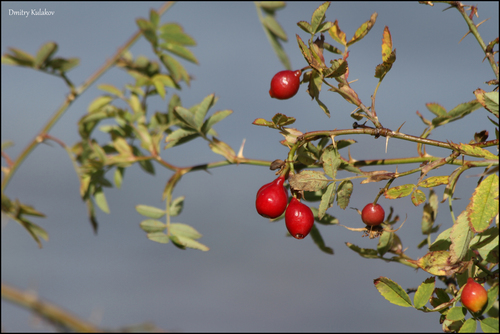
(c) Dmitry Kulakov, some rights reserved (CC BY), uploaded by Dmitry Kulakov
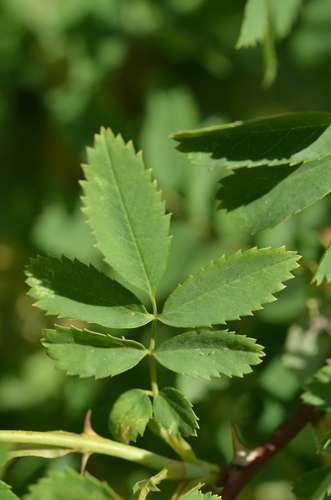
(c) Aleksandr Naumenko, some rights reserved (CC BY-NC), uploaded by Aleksandr Naumenko
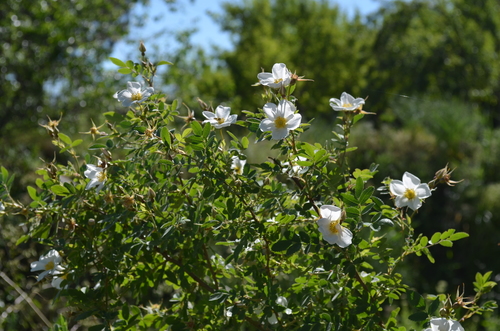
(c) Aleksandr Naumenko, some rights reserved (CC BY-NC), uploaded by Aleksandr Naumenko
What to Eat
Edible parts: Fruit
The fruit are eaten and are exceptionally rich in ascorbic acid, containing 7,000-20,000 mg/100 g.
Known Hazards
Where to Find It
It is a temperate plant. In Kazakhstan it grows on mountain slopes and along rivers and streams. In western China it grows between 900-2,000 m above sea level.
Afghanistan, Asia, Australia, Central Asia, China, Kazakhstan, Mongolia, Tajikistan,
How to Identify
A shrub. It grows 3 m high. The branches are bluish. They have large sickle shaped thorns. The leaves have 3-5 leaflets in pairs. These are 3 cm long. The flowers are white and 2-3 cm across. They are in complex groups. The fruit are round and red. They are 4-5 mm across.
Wikipedia
Source ↗Rosa beggeriana is a species of rose found in Anatolia, Iran, Afghanistan, Pakistan, all of Central Asia, Xinjiang and Gansu in China, and Mongolia. It is a winter‑hardy rambler, with typically flat white (rarely light pink) flowers, and small red (becoming black‑purple) hips. Its 'Polstjärnan' (polestar) cultivar (of uncertain parentage) is the cold‑hardiest known climbing rose.
Notes
The fruit contain 7,000-20,000 mg/100 g of ascorbic acid.
References (4)
- Dzhangaliev, A. D., et al, 2003, The Wild Fruit and Nut Plants of Kazakhstan, Horticultural Reviews, Vol. 29. pp 305-371
- Urgamal, M., Oyuntsetseg, B., Nyambayar, D. & Dulamsuren, Ch. 2014. Conspectus of the vascular plants of Mongolia. (Editors: Sanchir, Ch. & Jamsran, Ts.). Ulaanbaatar, Mongolia. “Admon“ Press. 334pp. (p. 143-158).
- www.efloras.org Flora of China Volume 9
- Zhang, Y. et al, 2020, Characteristics and utilization of plant diversity and resources in Central Asia. Regional Sustainability. Elsevier. p 6
More from Rosaceae


