Prunus nana
Stokes
Dwarf almond
RosaceaeSeeds/Nuts
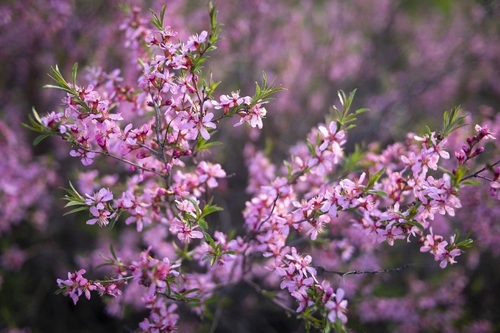
iNaturalist · cc-by-nc
(c) Dana Anikina, some rights reserved (CC BY-NC)
(c) Dana Anikina, some rights reserved (CC BY-NC)

iNaturalist · cc-by-nc
(c) Dana Anikina, some rights reserved (CC BY-NC)
(c) Dana Anikina, some rights reserved (CC BY-NC)
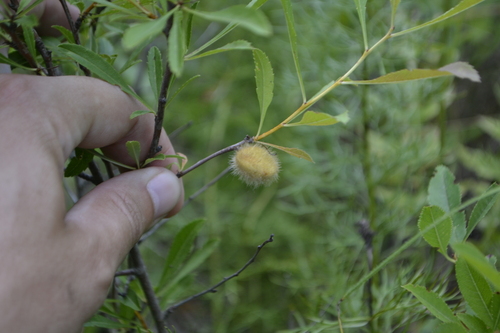
iNaturalist · cc-by-nc
(c) Dima Vladimirov, some rights reserved (CC BY-NC)
(c) Dima Vladimirov, some rights reserved (CC BY-NC)
What to Eat
Edible parts: Nuts
The nuts are eaten; the kernels are bitter but contain oil.
Where to Find It
In Kazakhstan it grows in grassland and on hills.
Asia, Central Asia, Kazakhstan,
Countries: United Arab Emirates, Afghanistan, Armenia, Azerbaijan, Bangladesh, Bahrain, Brunei, Bhutan, China, Georgia, Indonesia, Israel, India, Iraq, Iran, Jordan, Japan, Kyrgyzstan, Cambodia, North Korea, South Korea, Kuwait, Kazakhstan, Laos, Lebanon, Sri Lanka, Myanmar, Mongolia, Maldives, Malaysia, Nepal, Oman, Philippines, Pakistan, Qatar, Saudi Arabia, Singapore, Syria, Thailand, Tajikistan, Timor-Leste, Turkmenistan, Turkey, Taiwan, Uzbekistan, Vietnam, Yemen
How to Identify
A low shrub. It grows 0.5-1.5 m high. The branches are divided and without hairs and has many spurs. The leaves are 4-7 cm long. There are teeth along the edge. The leaves are congested in clusters on spurs. The flowers occur singly and are bright pink. The appear the same time as the leaves. They fruit are pale yellow. They are 1-2 cm long by 1.2-1.8 cm wide. The stone has an irregular net appearance. The kernels are bitter but contain oil.
How to Grow
It is grown from seed.
Names & Synonyms
Amygdalus nana L.
References (1)
- Dzhangaliev, A. D., et al, 2003, The Wild Fruit and Nut Plants of Kazakhstan, Horticultural Reviews, Vol. 29. pp 305-371
More from Rosaceae

Acaena anserinifolia
Bidgee widgee, Buzzy, New Zealand Bur
No photo
Acaenia anserinifolia - (J.R.Forst.&G.Forst.)Druce.
Pirri-Pirri Bur

Adenostoma sparsifolium
Red shanks, Ribbonwood

Agrimonia eupatoria
Agrimony, Salt and Pepper

Agrimonia odorata
Adour agrimony, Liver-wort

Agrimonia pilosa
Indian chestnut, Agrimony