Caralluma flava
N. E. Brown

iNaturalist · cc-by-nc
(c) James Bailey, some rights reserved (CC BY-NC)
(c) James Bailey, some rights reserved (CC BY-NC)

iNaturalist · cc-by-nc
(c) James Bailey, some rights reserved (CC BY-NC)
(c) James Bailey, some rights reserved (CC BY-NC)
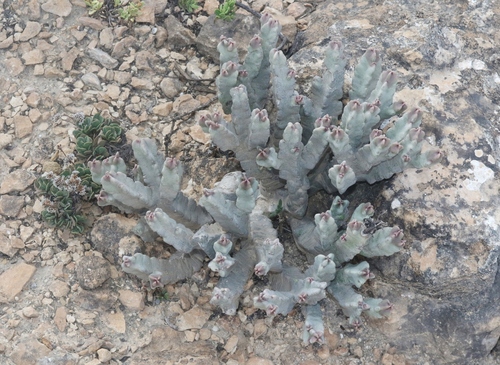
iNaturalist · cc-by-nc
(c) James Bailey, some rights reserved (CC BY-NC)
(c) James Bailey, some rights reserved (CC BY-NC)
What to Eat
Edible parts: Stems, Flowers
The young stems are eaten fresh and have a mildly bitter taste.
Where to Find It
It is a Mediterranean plant.
Middle East, Oman, Saudi Arabia, Yemen,
How to Identify
A succulent herb. It is angular and without leaves. It forms clumps 30 cm tall and 50 cm across. The stems are pale green and can have a reddish tinge. The stems are 4 angled and 1.5-2 cm across. The flowers are at the tip of the shoots and there can be 15-30 flowers in a group. They are yellow. The fruit are follicles in pairs. These are 10-11 cm long by 0.5 cm wide.
Medicinal Uses
It can inhibit some cancer cells.
Notes
There are about 56-100 Caralluma species. These are sometimes put in the Asclepiadaceae. It can inhibit some cancer cells.
Names & Synonyms
Dhaba, Dhagohom, Uruz
Crenulluma flava (N. E. Br.) PlowesDesmidorchis flavus (N. E. Br.) Meve & Liede
References (3)
- Al-Fatimi, M. A., Wild Edible Plants Traditionally Collected and Used in Southern Yemen. Research Square. University of Aden. p 18 (As Desmidorchis flavus)
- Marwah, R. G., et al, 2006, Antioxidant capacity of some edible and wound healing plants in Oman. Journal of Food Chemistry.
- Miller, A. G., Morris, M. & Stuart-Smith, S., 1988, Plants of Dhofar. The Southern Region of Oman, Traditional, Economic and Medicinal Uses. Sultanate of Oman. p 50


