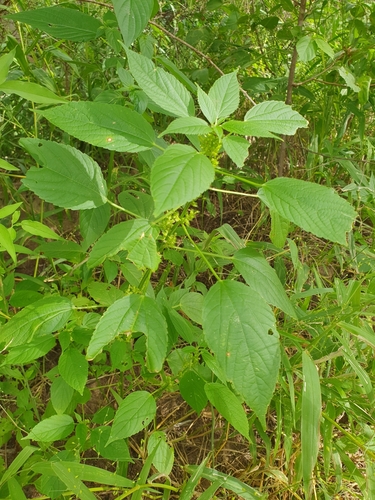
Euphorbia macropus
(Klotzsch & Garke) Boiss.
Huachuca mountain spurge

iNaturalist · cc-by-nc
(c) Álvaro San José Elizundia, some rights reserved (CC BY-NC)
(c) Álvaro San José Elizundia, some rights reserved (CC BY-NC)

iNaturalist · cc-by-nc
(c) Álvaro San José Elizundia, some rights reserved (CC BY-NC)
(c) Álvaro San José Elizundia, some rights reserved (CC BY-NC)
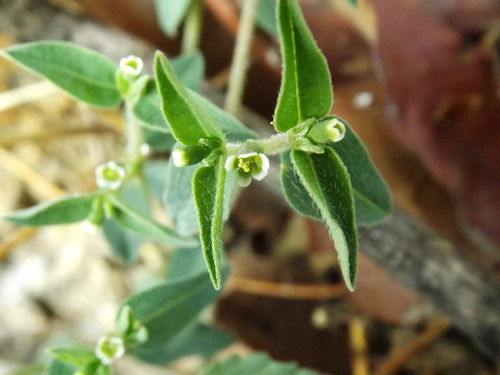
iNaturalist · cc-by-nc
(c) Kevin Meza, some rights reserved (CC BY-NC)
(c) Kevin Meza, some rights reserved (CC BY-NC)
Where to Find It
It is a tropical plant. It grows in seasonally dry areas.
Mexico, North America,
Countries: Antigua & Barbuda, Barbados, Bahamas, Belize, Canada, Costa Rica, Cuba, Dominica, Dominican Republic, Grenada, Guatemala, Honduras, Haiti, Jamaica, St Kitts & Nevis, St Lucia, Mexico, Nicaragua, Panama, Puerto Rico, El Salvador, Trinidad & Tobago, United States, St Vincent
How to Identify
A herb. It has round tubers and keeps growing from year to year. The tubers are 2-8 cm long. The stems are branched and 10-45 cm long. The leaves are usually opposite 6-54 mm long by 2-19 mm wide.
Names & Synonyms
Hierba de chicle
Anisophyllum crassipes Klotzsch & GarckeAnisophyllum macropus Klotzsch & GarckeEumecanthus tener (S.Watson) Millsp.Eumecanthus tenerus (S. Watson) Millsp.Euphorbia biformis S. WatsonEuphorbia plummerae S. WatsonEuphorbia retroscabra S. WatsonEuphorbia tenera S. WatsonZygophyllidum biforme (S. Watson) Arthur
References (2)
- Casas, A., et al, 1996, Plant Management Among the Nahua and the Mixtec in the Balsas River Basin, Mexico: An Ethnobotanical Approach to the Study of Plant Domestication. Human Ecology, Vol. 24, No. 4 pp. 455-478
- Rangel-Landa, S., et al, 2017, Sociocultural and ecological factors influencing management of edible and non-edible plants: the case of Ixcatlan, Mexico. Journal of Ethnobiology and Ethnomedicine. 13:59