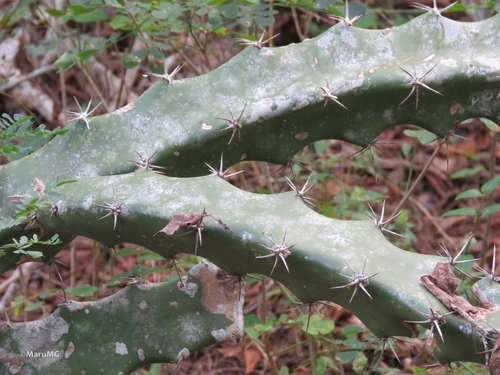
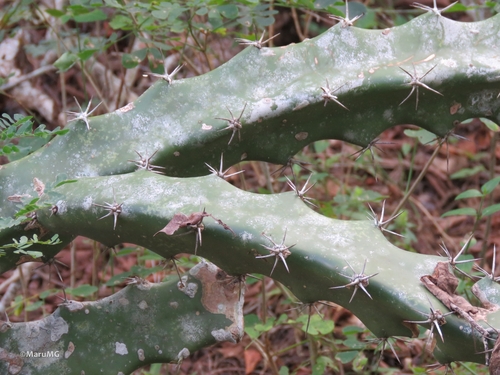
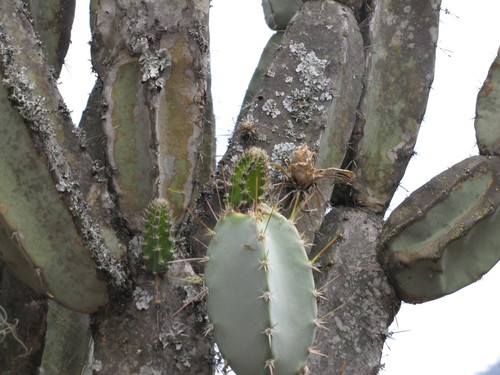
Ferocactus latispinus
(Haw.) Britton & Rose
Biznaga
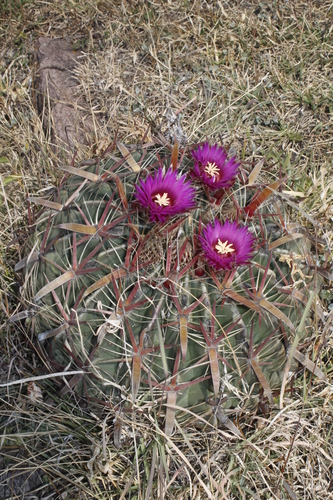
(c) luiszuniga_ecopil, some rights reserved (CC BY-NC), uploaded by luiszuniga_ecopil
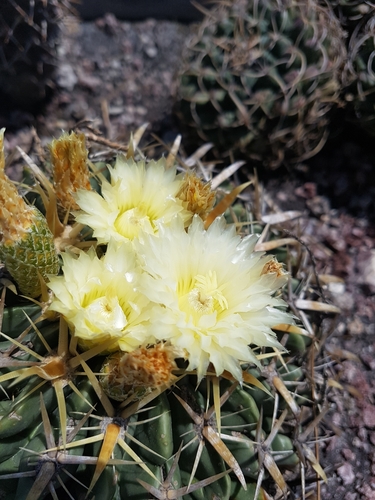
(c) ponche84, some rights reserved (CC BY-NC)

(c) Daniel Torres, some rights reserved (CC BY-NC), uploaded by Daniel Torres
What to Eat
Edible parts: Stem, Fruit
The pulp in the stems is used for making candy. Fruit. The fresh fruits are edible, but very acidic or sour. The ovoid fruit is up to 25mm long. We have no more specific information for this species, but members of this genus are a valuable resource in the dry regions where they are native, and they are generally much utilised for food by native peoples. These uses are likely to include:- The cooked buds and flowers have a flavour somewhat like that of Brussels sprouts. Sometimes the buds were eaten fresh, although they are bitter unless cooked. The seeds are rich in oil and protein, and can be ground into an oily paste. The stems of barrel cacti are traditionally baked in a pit, and the cooked pulp sliced and eaten. The candied pulp of the stem of various barrel cacti makes an excellent sweetmeat, which is much used in Mexico and the southwestern United States, and is sold in the eastern United States as ‘cactus candy’
Where to Find It
It is a tropical plant. It grows in arid places.
Mexico, North America, Slovenia,
How to Identify
A barrel cactus in the family Cactaceae with an edible stem and fruit. It grows in tropical, arid regions.
Medicinal Uses
The plant is used medicinally. No more details
Other Uses
We have no specific information for this species, but members of this genus are a valuable resource in the dry regions where they are native, and they are often utilised by native peoples. These uses are likely to include:- The plants have been used as cooking vessels. The interior is scooped out and mashed, and the liquid thus obtained replaced in the cavity and heated with hot stones, after which food is placed in the liquid and cooked. Several species develop tough spines and, after straightening out the tips and reducing the thicker part, these can be used as toothpicks and needles for knitting stockings etc.
Wikipedia
Source ↗Ferocactus latispinus is a species of barrel cactus native to Mexico.
Production
Plants take 5-10 years before harvesting.
Names & Synonyms
Pochas, širokotrnasti divji kaktus
References (5)
- Arellanes, Y., et al, 2013, Influence of traditional markets on plant management in the Tehuacan Valley. Journal of Ethnobiology and Ethnomedicine 9:38
- Gonzalez-Insuasti, M. S. and Caballero, J., 2007, Managing Plants Resources: How Intensive Can it be? Human Ecology, 35:303-314
- Gonzalez-Insuasti, M. S., et al, 2011, Intra-cultural Differences in the Importance of Plant Resources and Their Impact on Management Intensificaton in the Tehuacan Vallet, Mexico. Human Ecology 39:191-202
- Hellmuth, N. M., 2011, Maya Ethnobotany. Complete Inventory of plants. Associacion FLAAR Mesoamerica. Tenth edition.
- World Checklist of Useful Plant Species 2020. Royal Botanic Gardens, Kew