Rubus canescens
DC.
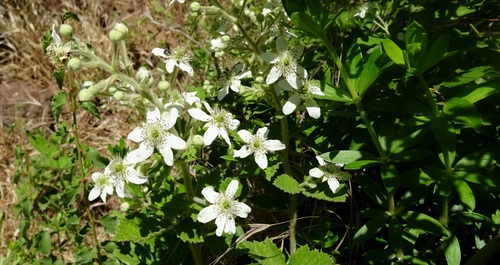
(c) יאיר אור, some rights reserved (CC BY-NC-SA), uploaded by יאיר אור
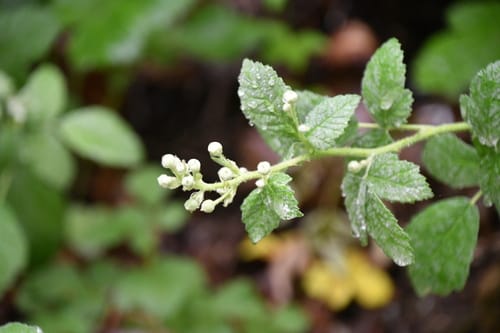
(c) Randy Bodkins, some rights reserved (CC BY-NC)
What to Eat
Edible parts: Fruit
The fruit are eaten fresh and used to make jam.
Dangerous Lookalikes
This plant can be confused with the following toxic species. Always verify identification carefully before consuming any wild plant.


Red Baneberry: Short herbaceous plant (no thorns), berries on thick red stems, each berry has a single seed, compound sharply-toothed leaves.
Rubus canescens: Thorny woody canes (brambles), aggregate berry made of many drupelets, berries pull easily from receptacle.
Where to Find It
It is a Mediterranean plant.
Europe, Jordan, Luxembourg, Middle East, Turkey, Türkiye,
How to Identify
A Mediterranean shrub in the Rosaceae family.
Wikipedia
Source ↗Rubus canescens is a European and Middle Eastern species of brambles in the rose family. It grows in southern and central Europe and in southwestern Asia from Portugal to Iran, north as far as Germany, Poland, and Ukraine. The genetics of Rubus is extremely complex, so that it is difficult to decide on which groups should be recognized as species. There are many rare species with limited ranges such as this. Further study is suggested to clarify the taxonomy.
Names & Synonyms
Bogurtlen, Cobankostegi, Diken, Hamduspara, Karamik, Karamuk, Karanti, Kirinti, Mora, U'llayk
References (10)
- Al-Qura'n, S. A., 2010, Ethnobotanical and Ecological Studies of Wild Edible Plants in Jordan. Libyan Agriculture Research Center Journal International 1(4):231-243
- Dogan, Y., et al, 2004, The Use of Wild Edible Plants in Western and Central Anatolia (Turkey). Economic Botany 58(4) pp. 684-690
- Ertug, F, Yenen Bitkiler. Resimli Türkiye Florası -I- Flora of Turkey - Ethnobotany supplement
- Hancer, C. K., et al, 2020, Traditional Knowledge of Wild Edible Plants of Biga (Çanakkale), Turkey. Acta Societatis Botanicorum Poloniae / 2020 / Volume 89 / Issue 1 / Article 8914
- Kargioglu, M., et al, 2008, An Ethnobotanical Survey of Inner-West Anatolia, Turkey. Human Ecology 36:763-777
- Kargioglu, M. et al, 2010, Traditional Uses of Wild Plants in the Middle Aegean Region. Human Ecology 38:429-450
- Kayabasi, N. P., et al, 2018, Wild edible plants and their traditional use in the human nutrition in Manyas (Turkey). Indian Journal of Traditional Knowledge. Vol. 17(2), April 2018, pp 299-306 (As var. glabratus)
- Kizilarslan, C. & Ozhatay, N., 2012, An ethnobotanical study of the useful and edible plants of İzmit. Marmara Pharmaceutical Journal 16: 134-140, 2012.
- Özdemir, E. and Kültür, S., 2017, Wild Edible Plants of Savaştepe District (Balıkesir, Turkey), Marmara Pharm J 21/3: 578-589
- Tukan, S. K., et al, 1998, The use of wild edible plants in the Jordanian diet. International Journal of Food Sciences and Nutrition. 49:225-235
More from Rosaceae


