Bellevalia romana
(L.) Sweet

(c) Antonio Croce, some rights reserved (CC BY-NC)

(c) Silvia, some rights reserved (CC BY-NC), uploaded by Silvia
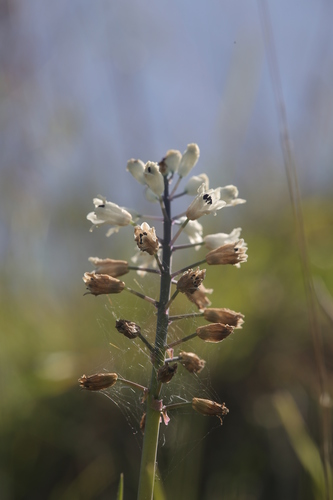
(c) Stefan Gey, some rights reserved (CC BY-NC), uploaded by Stefan Gey
What to Eat
Edible parts: Leaves, Bulbs
In Italy, the hypogeal organs (like a radish) of wild Bellevalia romana are added raw or blanched in boiling water to omelette mixtures [2-4] .
Where to Find It
It is a temperate plant.
Europe, France, Italy, Mediterranean, Slovenia,
How to Identify
An evergreen bulb reaching 30 cm tall and 20 cm wide, growing at a fast rate. Hardy to UK zone 7 and frost-resistant. Insect-pollinated flowers appear from April onward. Grows in light sandy, medium loamy, and heavy clay well-drained soils across mildly acid to mildly alkaline pH ranges. Tolerates semi-shade or full sun with flexible moisture preferences.
How to Grow
Propagation: Seed.
Medicinal Uses
None known
Other Uses
Attractive fragrant flowers from April onwards. Cut flowers. Loved by pollinators. Special Uses
Wikipedia
Source ↗Bellevalia romana is a species of perennial herb in the family Asparagaceae. They have a self-supporting growth form. Individuals can grow to 22 cm.
Notes
Also put in the families Hyacinthaceae and Liliaceae. There are about 50 Bellevalia species. They are in the Mediterranean.
Names & Synonyms
Navadni hijacint, Rimska belvalovka
References (3)
- Biscotti, N. et al, 2018, The traditional food use of wild vegetables in Apulia (Italy) in the light of Italian ethnobotanical literature. Italian Botanist 5:1-24
- Pieroni, A., et al, 2005, Food for two seasons: Culinary uses of non-cultivated local vegetables and mushrooms in a south Italian village. International Journal of Food Sciences and Nutrition, 56(4): 245-272
- Rivera, D. et al, 2006, Gathered Mediterranean Food Plants - Ethnobotanical Investigations and Historical Development, in Heinrich M, Müller WE, Galli C (eds): Local Mediterranean Food Plants and Nutraceuticals. Forum Nutr. Basel, Karger, 2006, vol 59, pp 18–74