Ruscus hypophyllum
L.
Thick-leaf Butchers broom

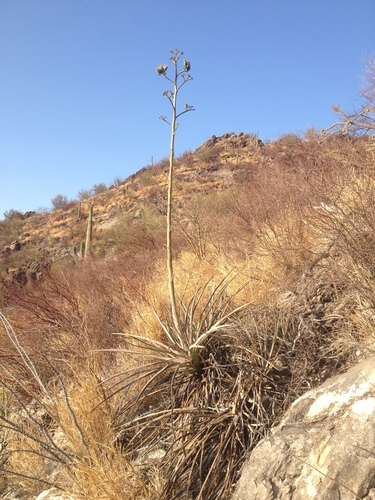
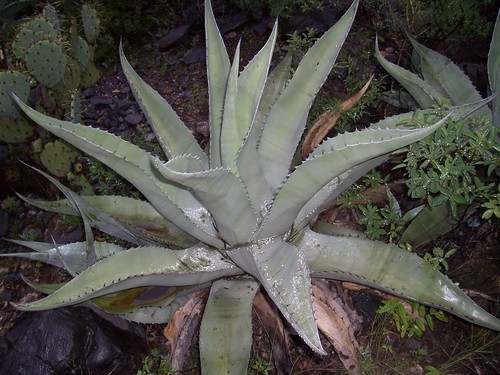
(c) Seán A. O'Hara, some rights reserved (CC BY)

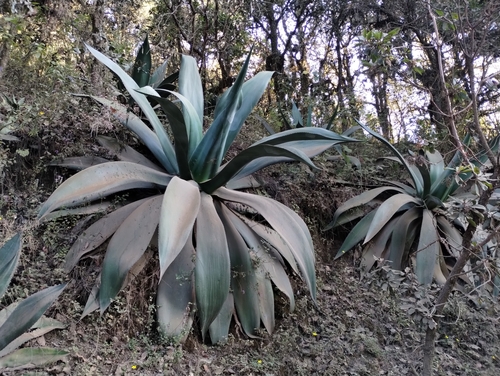
(c) Franck Le Driant, some rights reserved (CC BY-NC)
What to Eat
Edible parts: Shoots, Buds, Fruit
Young fattened buds or shoots are boiled and seasoned with oil and lemon, or cooked in scrambled eggs. The fruit is also edible.
Where to Find It
It is a Mediterranean climate plant. It is resistant to drought.
Algeria, Asia, Australia, Caucasus, Europe, Georgia, Italy, Mediterranean, Morocco, North Africa, Pakistan, Sicily, Spain, Tunisia,
How to Identify
An erect shrub. It grows 45-55 cm tall. It has a simple stem which is finely ribbed. The flattened green leaf like stems are 25-35 cm long and 5-6 cm wide. The lower ones are opposite and higher ones are in rings. They are narrowly oval and taper to the base. The flowers are white or pale blue. The fruit are 8-10 mm across. They are red and have 2 seeds.
Wikipedia
Source ↗Ruscus hypophyllum is a species of shrub in the family Asparagaceae. They have a self-supporting growth form. Individuals can grow to 0.42 m.
Notes
Also put in the family Ruscaceae.
Names & Synonyms
Dzmerkhli
References (5)
- Bussman, R. W., et al, 2016, A comparative ethnobotany of Khevsureti, Samtskhe-Javakheti, Tusheti, Svaneti, and Racha-Lechkhumi, Republic of Georgia (Sakartvelo), Caucasus. Journal of Ethnobiology and Ethnomedicine (2016) 12:4
- Bussman, R. W. et al, 2017, Ethnobotany of Samtskhe-Javakheti, Sakartvelo (Republic of Georgia), Caucasus. Indian Journal of Traditional Knowledge Vol. 16(1) pp 7-24
- Bussman, R. W., et al, 2021, Unity in diversity—food plants and fungi of Sakartvelo (Republic of Georgia), Caucasus. Journal of Ethnobiology and Ethnomedicine (2021) 17:72 p 6
- Geraci, A., et al, 2018, The wild taxa utilized as vegetables in Sicily (Italy): a traditional component of the Mediterranean diet. Journal of Ethnobiology and Ethnomedicine (2018) 14:14
- Lentini, F. and Venza, F., 2007, Wild food plants of popular use in Sicily. J Ethnobiol Ethnomedicine. 3: 15