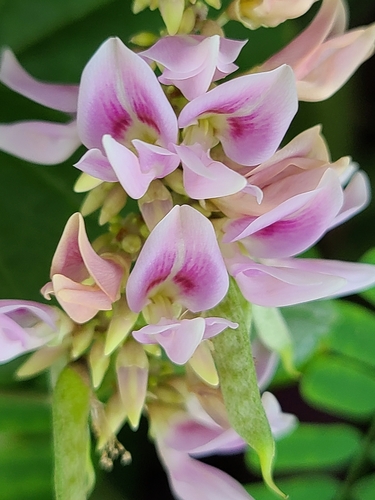
Lathyrus blepharicarpus
Boiss.
Ciliate vetchling

wikimedia · cc-by-sa
Wikimedia Commons - M sh شراونة محمد
Wikimedia Commons - M sh شراونة محمد

wikimedia · cc-by-sa
Wikimedia Commons - M sh شراونة محمد
Wikimedia Commons - M sh شراونة محمد
What to Eat
Edible parts: Fruit, Shoots
The soft fruits are eaten raw, and the young shoots are also eaten raw.
Known Hazards
Where to Find It
It is a Mediterranean climate plant. It grows in woodlands and shrublands.
Israel, Jordan, Mediterranean, Middle East, Palestine,
How to Identify
An annual herb. It grows 15-30 cm high. It is erect or climbs by tendrils. The leaves are alternate and compound. They have leaflets along the stalk. The flowers occur singly. They are orange to red. The fruit is a flattened pod.
Names & Synonyms
Saisa', Sa'ysa, Kbubz al-kak
References (3)
- Ali-Shtayeh, M. S., et al, 2008, Traditional knowledge of wild edible plants used in Palestine (Northern West Bank): A comparative study. J Ethnobiol Ethnomed. 4: 13
- Al-Qura'n, S. A., 2010, Ethnobotanical and Ecological Studies of Wild Edible Plants in Jordan. Libyan Agriculture Research Center Journal International 1(4):231-243
- Hinnawi, N. S. A., 2010, An ethnobotanical study of wild edible plants in the Northern West Bank "Palestine". An-Najah National University. p 93