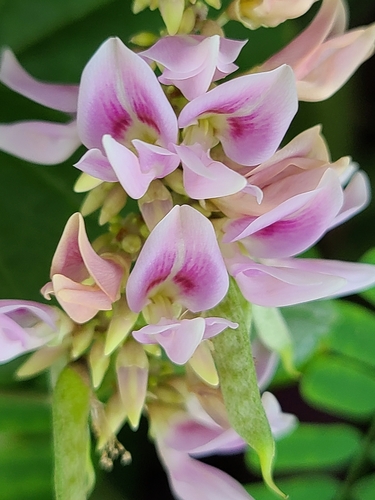
Psoralea bituminosa
L.
Owaineh, Asphalt clover

iNaturalist · cc-by-nc
(c) Sami Tamson, some rights reserved (CC BY-NC)
(c) Sami Tamson, some rights reserved (CC BY-NC)

iNaturalist · cc-by-nc
(c) Sami Tamson, some rights reserved (CC BY-NC)
(c) Sami Tamson, some rights reserved (CC BY-NC)
iNaturalist · cc-by-nc
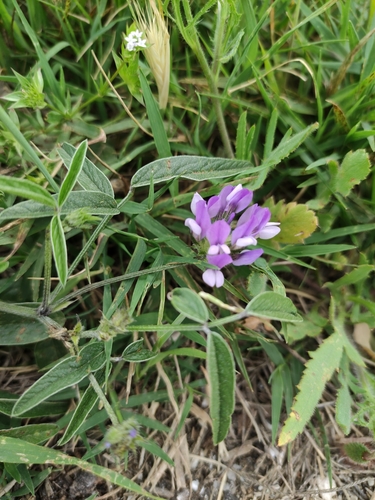
(c) fwto, some rights reserved (CC BY-NC)
(c) fwto, some rights reserved (CC BY-NC)
What to Eat
Edible parts: Fruit, Leaves
The fruits are stewed and eaten, cooked in pastry, or eaten raw. The young leaves are cooked and eaten as a vegetable.
Where to Find It
It is a Mediterranean climate plant.
Africa, Balkans, Bosnia, Canary Islands, Europe, Libya, Mediterranean, Middle East, North Africa, Palestine,
Countries: Andorra, United Arab Emirates, Albania, Angola, Austria, Bosnia & Herzegovina, Belgium, Burkina Faso, Bulgaria, Bahrain, Burundi, Benin, Botswana, Belarus, Congo (DRC), Central African Republic, Congo (Republic), Switzerland, Cote d'Ivoire, Cameroon, Cape Verde, Cyprus, Czechia, Germany, Djibouti, Denmark, Algeria, Estonia, Egypt, Eritrea, Spain, Ethiopia, Finland, France, Gabon, United Kingdom, Ghana, Gambia, Guinea, Equatorial Guinea, Greece, Guinea-Bissau, Croatia, Hungary, Ireland, Israel, Iraq, Iran, Iceland, Italy, Jordan, Kenya, Comoros, Kuwait, Lebanon, Liechtenstein, Liberia, Lesotho, Lithuania, Luxembourg, Latvia, Libya, Morocco, Monaco, Moldova, Montenegro, Madagascar, North Macedonia, Mali, Mauritania, Malta, Mauritius, Malawi, Mozambique, Namibia, Niger, Nigeria, Netherlands, Norway, Oman, Poland, Portugal, Qatar, Romania, Serbia, Russia, Rwanda, Saudi Arabia, Seychelles, Sudan, Sweden, Slovenia, Slovakia, Sierra Leone, San Marino, Senegal, Somalia, South Sudan, Sao Tome & Principe, Syria, Eswatini, Chad, Togo, Tunisia, Turkey, Tanzania, Ukraine, Uganda, Yemen, South Africa, Zambia, Zimbabwe
How to Identify
A herbaceous plant in the pea family native to Mediterranean climates. It is cultivated for its edible fruits and young leaves.
Other Information
It is cultivated.
Names & Synonyms
Djeteljnjak
References (5)
- Ali-Shtayeh, M. S., et al, 2008, Traditional knowledge of wild edible plants used in Palestine (Northern West Bank): A comparative study. J Ethnobiol Ethnomed. 4: 13
- Hinnawi, N. S. A., 2010, An ethnobotanical study of wild edible plants in the Northern West Bank "Palestine". An-Najah National University. p 93
- Mahklouf, M. H., 2019, Ethnobotanical Study of Edible Wild Plants in Libya. European Journal of Ecology. 5(2): 30-40
- Redzic, S. J., 2006, Wild Edible Plants and their Traditional Use in the Human Nutrition in Bosnia-Herzegovina. Ecology of Food and Nutrition, 45:189-232
- Zeven, A. C. & de West, J. M. J., 1982, Dictionary of cultivated plants and their regions of diversity. Wageningen. p 115