Mappianthus iodoides
Handel-mazzetti
Setting heart vine
(c) Beaconman Lau, some rights reserved (CC BY-NC)
(c) Beaconman Lau, some rights reserved (CC BY-NC)
(c) Beaconman Lau, some rights reserved (CC BY-NC)
What to Eat
Edible parts: Fruit
Fruit. The ellipsoid drupe ranges from light green or yellow-green to orange-yellow or orange-red, 20 - 37mm × 10 - 17mm, sparsely yellow-brown somewhat rigidly strigose, base with persistent, slightly accrescent calyx
Where to Find It
In is a tropical plant. In China it grows in scrub and valley forests. It grows between 700-1,900 m altitude. In Yunnan.
Asia, China, Indochina, SE Asia, Vietnam,
How to Identify
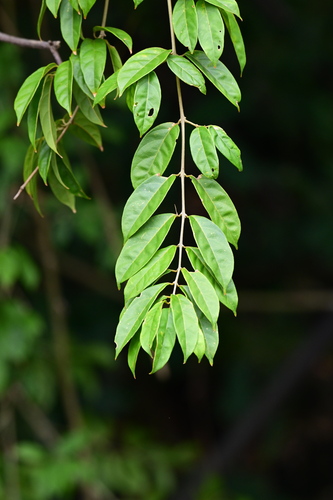
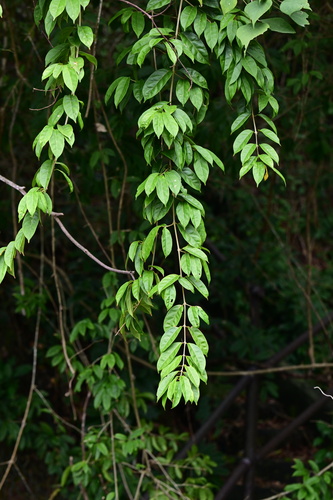
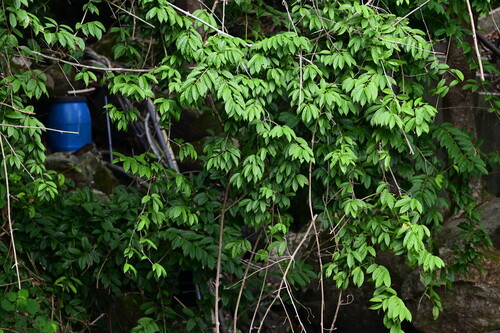
A woody creeper. Young branches are angular. The leaf stalk is up to 1.4 cm long. There is a groove underneath. The leaf blades are reddish underneath. They are olive green above. They are narrowly oval and 8-17 cm long by 3-7 cm wide. Flowers are separately male and female. The flowers are yellowish brown. The fruit is fleshy and light green. It is oval and 2-4 cm long by 1-1.7 cm wide.
How to Grow
A dioecious species, both male and female forms need to be grown if fruit and seed are requires.
Medicinal Uses
The roots and ripe stems are used medicinally. No more information is given
Names & Synonyms
Ding xin teng
References (2)
- Flora of China. Vol. 11 p 511 and Flora of China. www.eFloras.org
- Hu, Shiu-ying, 2005, Food Plants of China. The Chinese University Press. p 521


