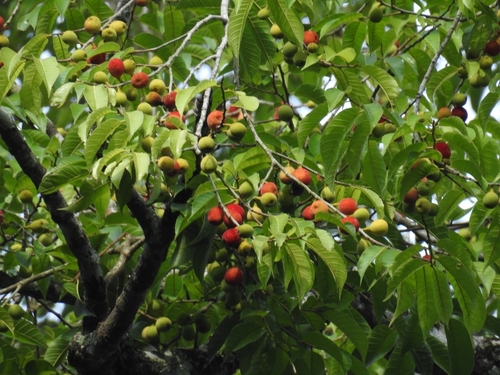
Ficus johannis
Boiss.
iNaturalist · cc-by-nc
(c) Altaf Habib, some rights reserved (CC BY-NC), uploaded by Altaf Habib
(c) Altaf Habib, some rights reserved (CC BY-NC), uploaded by Altaf Habib

iNaturalist · cc-by-nc
(c) Paige Duvenage, some rights reserved (CC BY-NC)
(c) Paige Duvenage, some rights reserved (CC BY-NC)

iNaturalist · cc-by-nc
(c) Paige Duvenage, some rights reserved (CC BY-NC)
(c) Paige Duvenage, some rights reserved (CC BY-NC)
What to Eat
Edible parts: Fruit, Sap
The fruit are eaten raw. The white milky sap is used to turn milk into cheese.
Where to Find It
It is a temperate to Mediterranean climate plant.
Afghanistan, Asia, Iran, Middle East, Pakistan,
Countries: United Arab Emirates, Afghanistan, Armenia, Azerbaijan, Bangladesh, Bahrain, Brunei, Bhutan, China, Georgia, Indonesia, Israel, India, Iraq, Iran, Jordan, Japan, Kyrgyzstan, Cambodia, North Korea, South Korea, Kuwait, Kazakhstan, Laos, Lebanon, Sri Lanka, Myanmar, Mongolia, Maldives, Malaysia, Nepal, Oman, Philippines, Pakistan, Qatar, Saudi Arabia, Singapore, Syria, Thailand, Tajikistan, Timor-Leste, Turkmenistan, Turkey, Taiwan, Uzbekistan, Vietnam, Yemen
How to Identify
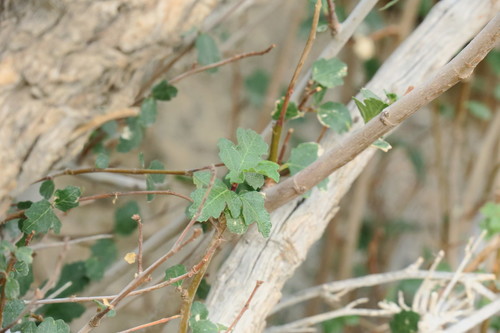
A fig. It is a large shrub or small tree. It has many branches. It grows 3-4 m tall. It does not have aerial roots. The bark is grey or brown. The young stem are reddish-brown. The leaf stalks are 1-2 cm long. The leaf blade varies and is broadly oval with 3-5 lobes. It is 4-8 cm long. The figs are pale purple and about 1 cm across. They can be hairy.
Names & Synonyms
Ficus carica var. johannis Boiss.Ficus carica var. longipes Born. ex ParsaFicus geraniifolia Miq.Ficus malvastrifolia Warb.Ficus persica Boiss.Ficus vitifolia Warb.
References (2)
- Flora of Pakistan. www.eFloras.org
- Hedrick, U.P., 1919, (Ed.), Sturtevant's edible plants of the world. p 308 (As Ficus persica)