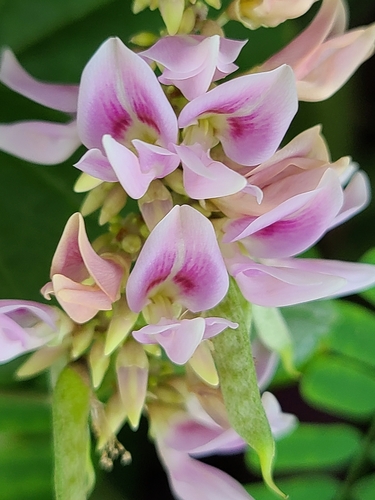
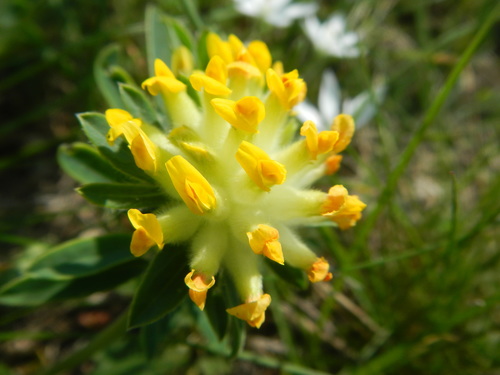
Anthyllis vulneraria
L.
Rajenik, Kidney vetch
(c) Thomas Horvath, some rights reserved (CC BY-NC), uploaded by Thomas Horvath

(c) Vyacheslav Luzanov, some rights reserved (CC BY-NC), uploaded by Vyacheslav Luzanov

(c) Andreas Rockstein, some rights reserved (CC BY-SA)
What to Eat
Edible parts: Leaves, Vegetable
Edible Parts: Edible Uses: Tea The dried flower heads are a tea substitute.
Where to Find It
It is a temperate plant. It needs well-drained limestone soil. It needs an open sunny position. It is damaged by drought and frost.
Africa, Australia, Balkans, Bosnia, Europe*, Libya, Luxembourg, North Africa, Slovenia,
How to Identify
A plant that keeps growing from year to year. It grows 60 cm high and spreads 1 m wide. The taproot is strong. The stem can lie along the ground or be erect. It is hairy. The leaves at the base can be simple or divided. The upper leaves are divided into leaflets along the stalk. The end leaflet is the largest. The flowers are pale yellow or red. They are in oval heads.
How to Grow
Prefers a sunny position and an alkaline soil. Tolerates a pH in the range 4.8 to 8. Prefers a sandy loam. Thrives in poor soils. A rich food source for bees, butterflies and caterpillars. This species has a symbiotic relationship with certain soil bacteria, these bacteria form nodules on the roots and fix atmospheric nitrogen. Some of this nitrogen is utilized by the growing plant but some can also be used by other plants growing nearby.
Propagation: Seed - sow spring or autumn in a cold frame. If there is sufficient seed it can be sown outdoors in situ. Pre-soak the seed for about 12 hrs or scarify the seed. It usually germinates in 1 -2 months at 10°c. When large enough to handle, prick the seedlings out into individual pots and plant them out in the summer. Division in spring or autumn.
Medicinal Uses
Antiemetic Antitussive Astringent Laxative Vulnerary The roots leaves and flowers are antitussive, astringent, laxative and vulnerary. This plant is an ancient remedy for skin eruptions, slow-healing wounds, minor wounds, cuts and bruises, it is applied externally. Internally, it is used as a treatment for constipation and as a spring tonic. The plant can be used fresh in the growing season, or harvested when in flower and dried for later use.
Other Uses
None known Special Uses Attracts Wildlife Nitrogen Fixer
Wikipedia
Source ↗Anthyllis vulneraria, the common kidneyvetch, kidney vetch or woundwort is a medicinal plant native to Europe, northern Africa, and Western Asia. The name vulneraria means "wound healer".
Names & Synonyms
Pravi ranjak
References (4)
- Bodkin, F., 1991, Encyclopedia Botanica. Cornstalk publishing, p 90
- Mahklouf, M. H., 2019, Ethnobotanical Study of Edible Wild Plants in Libya. European Journal of Ecology. 5(2): 30-40
- Redzic, S. J., 2006, Wild Edible Plants and their Traditional Use in the Human Nutrition in Bosnia-Herzegovina. Ecology of Food and Nutrition, 45:189-232
- World Checklist of Useful Plant Species 2020. Royal Botanic Gardens, Kew