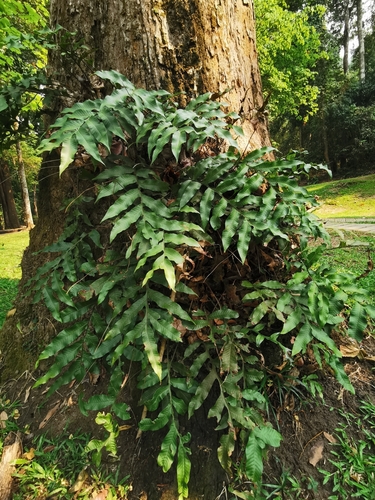
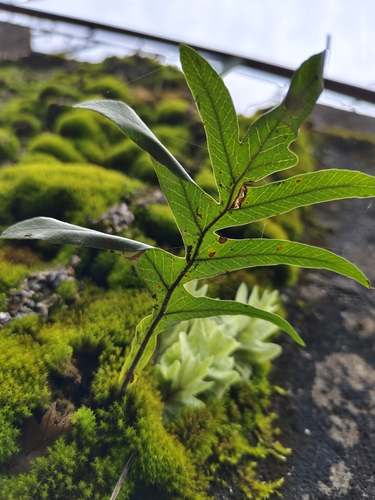
Polypodium cambricum
L.
Slatka paparat
PolypodiaceaeRoots
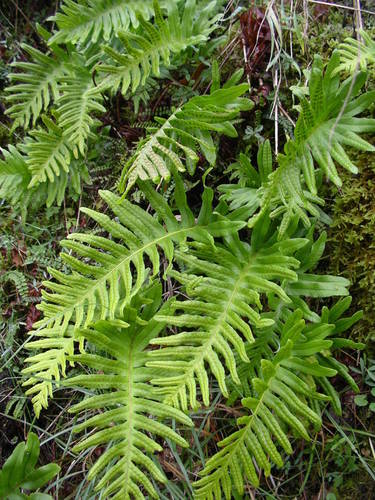
iNaturalist · cc-by-nc
(c) Sylvain Piry, some rights reserved (CC BY-NC), uploaded by Sylvain Piry
(c) Sylvain Piry, some rights reserved (CC BY-NC), uploaded by Sylvain Piry
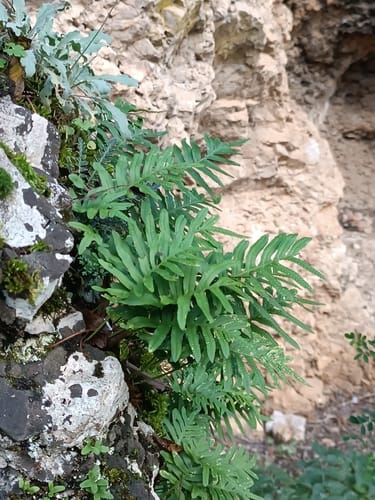
iNaturalist · cc-by
(c) Vasileia Sef, some rights reserved (CC BY)
(c) Vasileia Sef, some rights reserved (CC BY)
What to Eat
Edible parts: Roots
The roots are used for starch to make dishes and bread.
Where to Find It
It is a temperate plant.
Balkans, Bosnia, Europe,
Countries: Andorra, Albania, Austria, Bosnia & Herzegovina, Belgium, Bulgaria, Belarus, Switzerland, Cyprus, Czechia, Germany, Denmark, Estonia, Spain, Finland, France, United Kingdom, Greece, Croatia, Hungary, Ireland, Iceland, Italy, Liechtenstein, Lithuania, Luxembourg, Latvia, Monaco, Moldova, Montenegro, North Macedonia, Malta, Netherlands, Norway, Poland, Portugal, Romania, Serbia, Russia, Sweden, Slovenia, Slovakia, San Marino, Ukraine
How to Identify
A fern of the Polypodiaceae family found in temperate regions.
Wikipedia
Source ↗Polypodium cambricum, the southern polypody, limestone polypody, or Welsh polypody, is a species of fern in the family Polypodiaceae, native to southern and western Europe where it grows on shady rocks, near the coasts of the Mediterranean Basin and in the mountains of Atlantic Europe. It is a spreading, terrestrial, deciduous fern growing to 60 centimetres (24 in) tall, with pinnate fronds. The sori are yellow in winter.
References (1)
- Redzic, S. J., 2006, Wild Edible Plants and their Traditional Use in the Human Nutrition in Bosnia-Herzegovina. Ecology of Food and Nutrition, 45:189-232