Cotoneaster bacillaris
Wall. ex Lindl.
Tsar
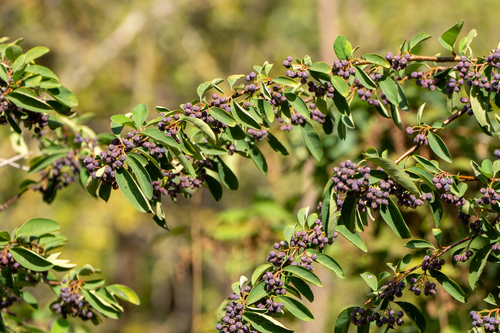
(c) Andrew Skotnicki, some rights reserved (CC BY)

(c) Andrew Skotnicki, some rights reserved (CC BY)
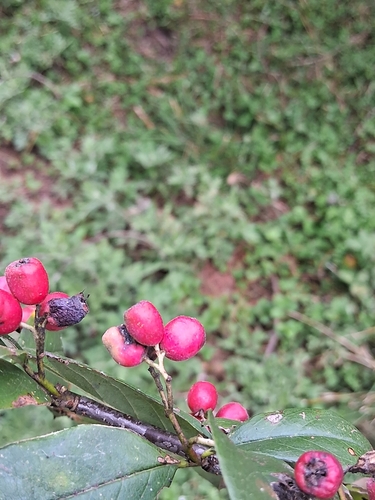
(c) Phuntsho Wangdi, some rights reserved (CC BY-NC)
What to Eat
Edible parts: Fruit
None known
Where to Find It
It is a temperate plant.
Asia, Australia, Himalayas, Nepal, Pakistan,
How to Identify
Deciduous shrub growing to 5m tall at fast rate. Hardy to UK zone 6. Flowers in June. Hermaphrodite species pollinated by flies and midges; noted for wildlife attraction. Adapts to light sandy, medium loamy, and heavy clay soils with preference for drainage; tolerates heavy clay and poor soils. Mildly acid to very alkaline pH range. Grows in semi-shade or full sun; prefers dry to moist soil. Tolerates atmospheric pollution.
How to Grow
A vigorous and easily grown plant, it prefers a good soil but also does well in poor soils. It thrives in lime and is also happy in peaty soils. It succeeds in any soil that is not marshy or waterlogged. Succeeds in dry soils. Grows well in heavy clay soils. Succeeds in full sun or semi-shade but does not fruit so freely in a shady position. Tolerates atmospheric pollution. Hybridizes freely with other members of this genus. The flowers, when inhaled near to, have an unpleasant smell like decaying fish. They are very attractive to bees whilst the fruit is a good winter food source for many species of birds. A very ornamental plant. Trees are notably susceptible to honey fungus.
Propagation: Seed. Members of this genus hybridize freely, so seed should be obtained from a known wild source or controlled fertilization if true breeding is required. Sow seed as soon as it is ripe in autumn in a cold frame; it will usually germinate in spring. Stored seed germinates faster with 3 months warm stratification at 15°C followed by 3 months cold stratification at 4°C. Germination usually occurs within 1–18 months at 15°C but can take 2 years. Pot seedlings as soon as they are large enough to handle, and plant out into nursery beds or permanent positions when more than 10cm tall. Cuttings of half-ripe wood with a heel can be taken in July or August in a frame.
Medicinal Uses
The stolons are said to be astringent.
Other Uses
A rose-tan dye is obtained from the fruit. The wood is very hard, elastic, close and even grained, but splits and warps easily. Too small for many purposes, the branches are used for making walking sticks and agricultural implements.
Wikipedia
Deciduous shrub growing to 5m tall at fast rate. Hardy to UK zone 6. Flowers in June. Hermaphrodite species pollinated by flies and midges; noted for wildlife attraction. Adapts to light sandy, medium loamy, and heavy clay soils with preference for drainage; tolerates heavy clay and poor soils. Mildly acid to very alkaline pH range. Grows in semi-shade or full sun; prefers dry to moist soil. Tolerates atmospheric pollution.
Names & Synonyms
Loni, Loin, Machhaiino
References (3)
- Bhattarai, S and Chaudary, R. P., 2009, Wild Edible Plants Used by the People of Manang District, Central Nepal. Ecology of Food and Nutrition, 48:1-20
- Gautam, R. S., et al, 2020, Wild Edible Fruits of Nepal. Int. J. Appl. Sci. Biotechnol. Vol 8(3): 289-304
- Khan, D. & Shaukat, S.S., 2006, The Fruits of Pakistan: Diversity, Distribution, Trends of Production and Use. Int. J. Biol. Biotech., 3(3):463-499
More from Rosaceae


