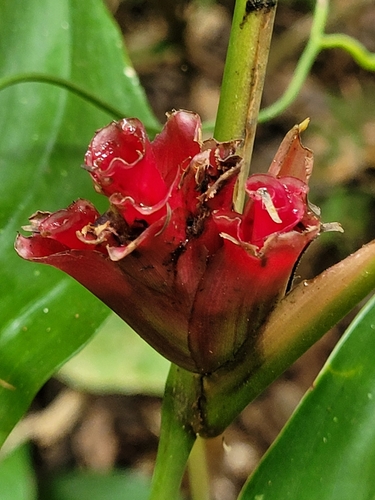
Calathea macrosepala
K. Schum.
Calathea, Chufle
MarantaceaeLeaves
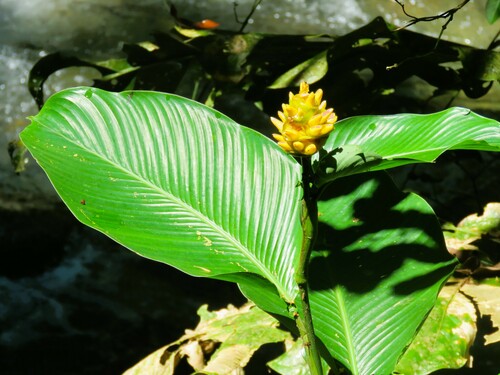
iNaturalist · cc-by-nc
(c) Eric van den Berghe, some rights reserved (CC BY-NC)
(c) Eric van den Berghe, some rights reserved (CC BY-NC)

iNaturalist · cc-by-nc
(c) Marco Acuña, some rights reserved (CC BY-NC)
(c) Marco Acuña, some rights reserved (CC BY-NC)
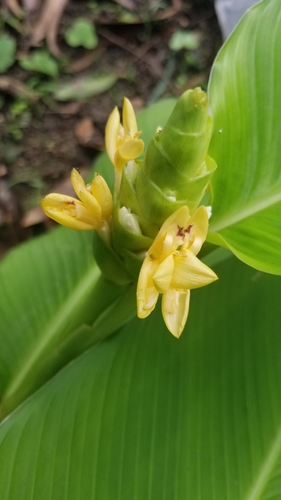
iNaturalist · cc-by-nc
(c) Pablo Galán, some rights reserved (CC BY-NC)
(c) Pablo Galán, some rights reserved (CC BY-NC)
What to Eat
Edible parts: Leaves
The leaves are eaten.
Where to Find It
A tropical plant. It is recorded up to 1,400 m above sea level.
Belize, Central America*, Costa Rica, El Salvador, Guatemala, Mexico, Nicaragua, North America, Panama,
Countries: Antigua & Barbuda, Barbados, Bahamas, Belize, Canada, Costa Rica, Cuba, Dominica, Dominican Republic, Grenada, Guatemala, Honduras, Haiti, Jamaica, St Kitts & Nevis, St Lucia, Mexico, Nicaragua, Panama, Puerto Rico, El Salvador, Trinidad & Tobago, United States, St Vincent
How to Identify
A herb. It has tufts of leaves from the base of the stem. The leaves are broad.
Notes
There are 260-300 Calathea species in tropical America.
Names & Synonyms
Chochogo, Chogo, Chogogo, Sauco, Suco, Xuco
Considered by some to be a form of Calathea allouia
References (6)
- Bircher, A. G. & Bircher, W. H., 2000, Encyclopedia of Fruit Trees and Edible Flowering Plants in Egypt and the Subtropics. AUC Press. p 73
- Hermandez Bermejo, J.E., and Leon, J. (Eds.), 1994, Neglected Crops. 1492 from a different perspective. FAO Plant Production and Protection Series No 26. FAO, Rome. p18
- Martin, F.W. & Ruberte, R.M., 1979, Edible Leaves of the Tropics. Antillian College Press, Mayaguez, Puerto Rico. p 204
- Piedra-Malagón, E. M., et al, 2022, Edible native plants of the Gulf of Mexico Province. Biodiversity Data Journal 10: e80565 p 24
- Terra, G.J.A., 1973, Tropical Vegetables. Communication 54e Royal Tropical Institute, Amsterdam, p 34
- Wiersema, J. H. & Leon, B., 2013, World Economic Plants. A Standard Reference CRC Press. 2nd Ed. p 129