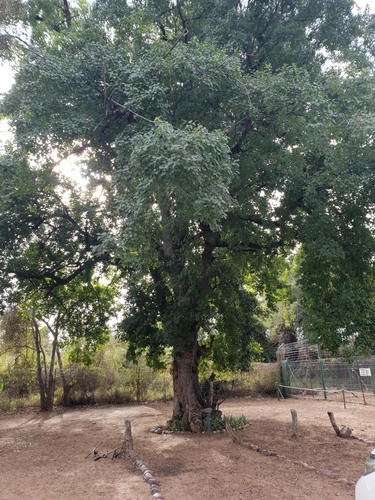
Helinus integrifolius
(Lam.) Kuntze
Soap creeper

(c) Athol Ferguson, some rights reserved (CC BY-NC), uploaded by Athol Ferguson
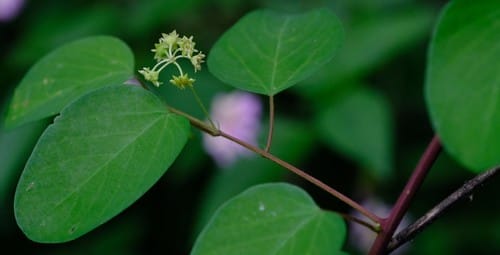
(c) Nick Helme, some rights reserved (CC BY-NC)
What to Eat
Edible parts: Fruit
The fruit are eaten raw.
Where to Find It
It is a tropical plant. It grows in savanna woodland and in rocky places. It grows in sandy and loam soils. It grows from sea level to 1,980 m above sea level. It can tolerate shade. It can grow in arid places.
Africa, Angola, Botswana, Central Africa, Congo, East Africa, Eswatini, Kenya, Malawi, Middle East, Mozambique, Namibia, Socotra, Somalia, South Africa, Southern Africa, Swaziland, Tanzania, Yemen, Zambia, Zimbabwe,
How to Identify
A climbing shrub. It grows 6 m tall. It has coiled tendrils. The leaves are 2-4 cm long. They are broadly oval or round. There are hairs underneath. The flowers are in groups in the axils of leaves. The fruit is an oval capsule. The seeds are 3 angled. The seed coat is shiny black.
Other Uses
The roots are rich in saponins. They are pounded, then mixed with water and used as a soap for washing clothes.
Names & Synonyms
Kasese, Mulalawa, Nhapucutele, Pupuma, Ubhubhubhu
References (7)
- Flora Zambesiaca. http://apps.kew.org/efloras
- Fowler, D. G., 2007, Zambian Plants: Their Vernacular Names and Uses. Kew. p 53
- Fox, F. W. & Young, M. E. N., 1982, Food from the Veld. Delta Books. p 316
- Long, C., 2005, Swaziland's Flora - siSwati names and Uses http://www.sntc.org.sz/flora/
- Royal Botanic Gardens, Kew (1999). Survey of Economic Plants for Arid and Semi-Arid Lands (SEPASAL) database. Published on the Internet; http://www.rbgkew.org.uk/ceb/sepasal/internet [Accessed 6th June 2011]
- Ruiters-Welcome, A. K., 2019, Food plants of southern Africa. Ph.D. thesis. Univ. of Johannesburg p 94
- World Checklist of Useful Plant Species 2020. Royal Botanic Gardens, Kew