Ipomoea albivenia
(Lindl.) Sweet
Wooden rose creeper, Climbing kapok

(c) Troos van der Merwe, some rights reserved (CC BY-NC), uploaded by Troos van der Merwe
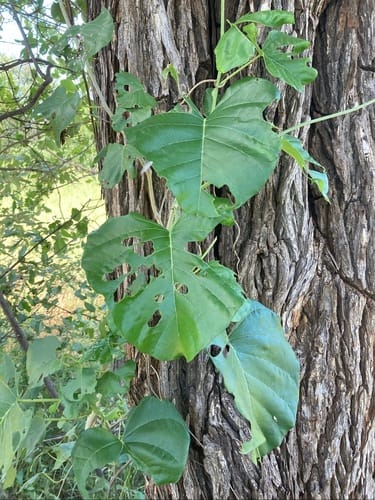
(c) xihuhuri, some rights reserved (CC BY-NC)
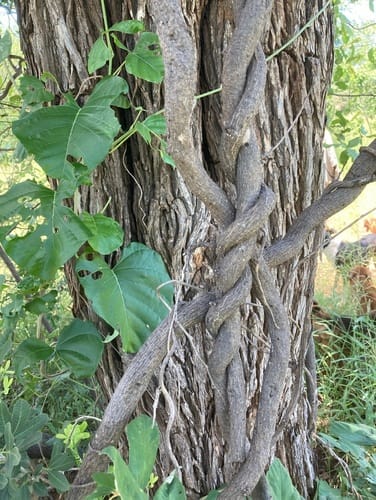
(c) xihuhuri, some rights reserved (CC BY-NC)
What to Eat
Edible parts: Tubers, Root
The tubers and roots are eaten, traditionally used as a famine food.
Where to Find It
It is a tropical and subtropical plant. It grows between 40-800 m above sea level. It grows in woodland and savannah. It grows in moist and sandy soils. It needs a temperature above 15°C.
Africa, East Africa, Eswatini, Kenya, Mozambique, South Africa, Southern Africa, Swaziland, Zimbabwe,
How to Identify
A climbing shrub. It grows 10 m long. The stems are slender. The leaf blades are almost round. They are large, velvety and heart shaped. They have white hairs on the veins. The flowers are funnel shaped and white but pale pink or yellow in the throat. They are 8 cm across. They open at night and close at midday. They have a sweet scent. The fruit are woody capsules. The seeds are covered in white threads.
How to Grow
Plants can be grown from seeds.
Other Information
A famine food.
Names & Synonyms
Damba, Imibuzana, Leshulegohlolo, Queia, Ubatata wentaba, Umangfongo, Umgwiligiwili, Ungubasiswana, Uphatata
References (5)
- Fox, F. W. & Young, M. E. N., 1982, Food from the Veld. Delta Books. p 159
- http://www.plantzafrica.com/planthij/ipomoeaalbivena.htm
- Long, C., 2005, Swaziland's Flora - siSwati names and Uses http://www.sntc.org.sz/flora/
- Ruiters-Welcome, A. K., 2019, Food plants of southern Africa. Ph.D. thesis. Univ. of Johannesburg p 45
- Welcome, A. K. & Van Wyk, B.-E., 2019, An inventory and analysis of the food plants of southern Africa. South African Journal of Botany 122 (2019) 136–179


