Pachycarpus concolor
E. Mey.
Astral pachycarpus

(c) Troos van der Merwe, some rights reserved (CC BY-NC), uploaded by Troos van der Merwe
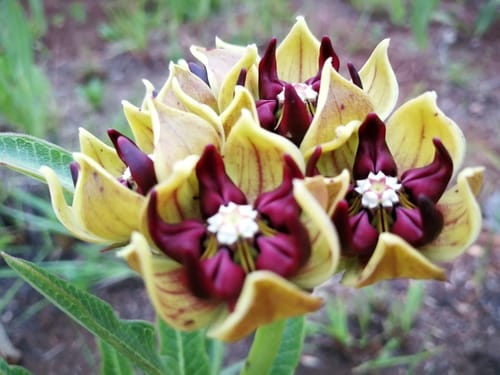
(c) Jean Stephenson, some rights reserved (CC BY-NC)
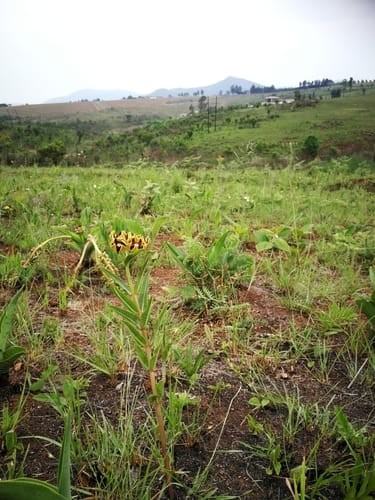
(c) Jean Stephenson, some rights reserved (CC BY-NC)
What to Eat
Edible parts: Leaves, Vegetable
The leaves are used as a vegetable, though they are notably bitter.
Where to Find It
It is a tropical plant. It grows in open burned grassland. In Zimbabwe it grows between 1,300-2,500 m above sea level.
Africa, Botswana, East Africa, Eswatini, Kenya, Mozambique, South Africa, Southern Africa, Swaziland, Tanzania, Zimbabwe,
How to Identify
A herb. It keeps growing from year to year from a cylinder shaped tuber by producing annual stems. There can be one or several stems and they can be erect or lie along the ground. They sometimes branch near the base. They can be 1 m tall. They are hairy. The leaves are opposite. They are oval or narrowly sword shaped. They are 16 cm long by 4 cm wide. There are hairs on both surfaces. The flowers are in groups of 1 to 7 near the top of the stems. The flowers have a scent. The flowers are bell shaped and reddish-brown outside and white or pink inside. The fruit is an erect sac on a twisted stalk. It can be 12 cm long by 3 cm wide. There are 6 ridges along it.
Names & Synonyms
Lichogina, Munenzva zimayi
References (3)
- Long, C., 2005, Swaziland's Flora - siSwati names and Uses http://www.sntc.org.sz/flora/
- Ruiters-Welcome, A. K., 2019, Food plants of southern Africa. Ph.D. thesis. Univ. of Johannesburg p 26
- Welcome, A. K. & Van Wyk, B.-E., 2019, An inventory and analysis of the food plants of southern Africa. South African Journal of Botany 122 (2019) 136–179


