Plumbago auriculata
Lam.
Blue lead wort, Cape leadwort
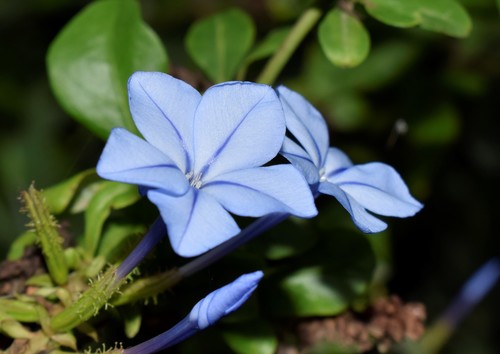
(c) Σάββας Ζαφειρίου (Savvas Zafeiriou), some rights reserved (CC BY-NC), uploaded by Σάββας Ζαφειρίου (Savvas Zafeiriou)
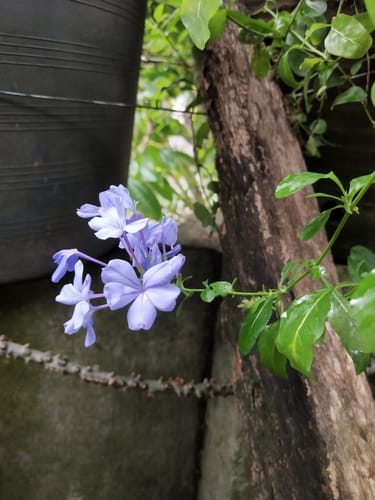
(c) Greg III Espera, some rights reserved (CC BY)
What to Eat
Edible parts: Flowers
The flowers are edible.
Known Hazards
Where to Find It
It is a subtropical plant. It is drought tolerant. Brisbane Botanical Garden. In XTBG Yunnan.
Africa, Antigua and Barbuda, Asia, Australia, Bangladesh, Benin, Burkina Faso, Cameroon, Canary Is., Central America, China, Comoros, Crete, Cuba, Dominican Republic, East Africa, Ecuador, El Salvador, Eritrea, Eswatini, Ethiopia, Gambia, Greece, Guatemala, Guiana, Guianas, Guyana, Haiti, Hawaii, Indochina, Italy, Marquesas, Mauritius, Mexico, Mozambique, Niue, North America, Northeastern India, Pacific, Peru, Portugal, Puerto Rico, Reunion, Sao Tome and Principe, SE Asia, Sicily, Somalia, South Africa, South America, Southern Africa, Spain, St Helena, Suriname, Swaziland, Taiwan, Trinidad-Tobago, Tunisia, USA, Vanuatu, Venezuela, Vietnam, West Indies, Zimbabwe,
How to Identify
A shrub. It can be somewhat climbing. It can grow 2-4 m tall. The leaf stalk is winged at the base and clasps the stem. The leaves are narrowly oval and their are scales underneath. The leaves are greyish-green underneath. The flowers have a pale blue tube and wide lobes.
How to Grow
Plants can be grown from seeds. cuttings or suckers.
Propagation: Seed - sow in trays in a light soil and keep the soil moist, but not wet. Division of older plants. Rooted suckers. Semi-ripe cuttings.
Medicinal Uses
Many secondary metabolites have been discovered and isolated from Plumbago auriculata such as plumbagin and palmitic acids.
Other Uses
In East Africa the flowers and leaves of Plumbago are used as a dye for textiles: beige, lemon, yellow (if combined with alum) or gold (if combined with chrome). Plumbagin is also a yellow pigment, occurring in a colourless combined form in the plant and is liberated by acid treatment. The sap of the roots is grey-blue, and is used for tattoos. The plant has insecticidal properties as an antifeedant and as a moulting inhibitor. Children often make 'earrings' with the sticky flowers - letting them stick to their earlobes. Plumbago is grown in gardens throughout the tropics as an ornamental and as a hedge or live fence. The plant responds very well to pruning and so is often trained to form low hedges or borders and sometimes trained as a climber on arches.
Wikipedia
Source ↗Plumbago auriculata, the Cape leadwort, blue plumbago or Cape plumbago, is a species of flowering plant in the family Plumbaginaceae, native to South Africa and Mozambique. The specific epithet auriculata means "with ears", referring to the shape of the leaves., leaf venation - reticulate.
Names & Synonyms
Buombuom xanh
References (2)
- Kew Plants of the World Online
- Long, C., 2005, Swaziland's Flora - siSwati names and Uses http://www.sntc.org.sz/flora/