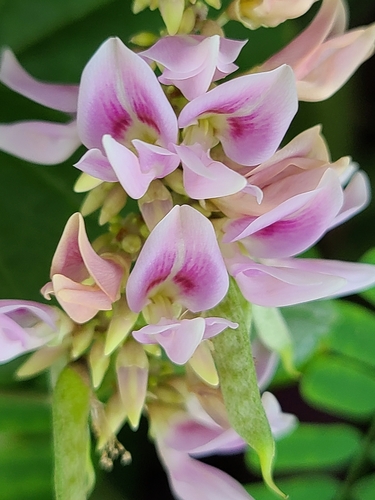
Baphia nitida
Lodd.
Camwood, African sandalwood tree
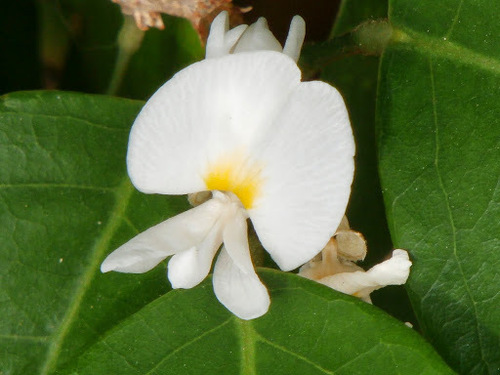
(c) 106611639464075912591, some rights reserved (CC BY-NC-SA), uploaded by 106611639464075912591
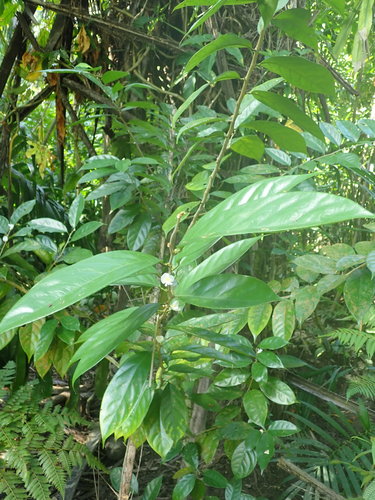
(c) Nolan Exe, some rights reserved (CC BY), uploaded by Nolan Exe
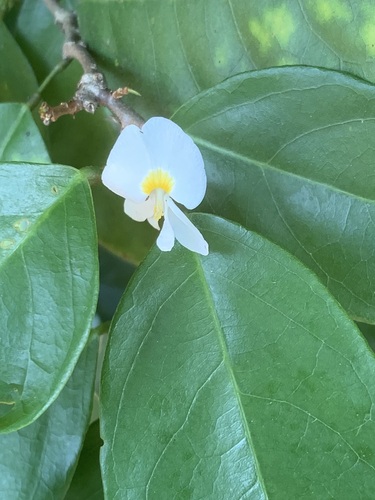
(c) Gerrit Alink, some rights reserved (CC BY-NC)
What to Eat
Edible parts: Seeds
Edible Parts: Seed Edible Uses: Edible portion: Seeds. The seeds are edible.
Where to Find It
It is a tropical plant. It grows as an under-storey tree in wetter parts and rain-forest in West Africa. It grows up to 600 m above sea level.
Africa*, Asia, Cameroon, Central Africa, Gabon, Guinea, Guinée, Indonesia, Sao Tome and Principe, SE Asia, Senegal, Sierra Leone, West Africa,
How to Identify
A shrub or small tree. It grows 10 m high and the trunk is 45 cm across. It can have many stems. The branches are slender and curve over like an umbrella. The leaves are alternate and narrowly oval or oblong. They are 10-15 cm long. The flowers are in the axils of leaves with 1-4 flowers. The flowers are white with yellow centre. The fruit is a flattened pod 10-15 cm long.
How to Grow
A plant of the moister lowland tropics, where it is found at elevations up to 600 metres. It grows best in areas where annual daytime temperatures are within the range of 24 - 30°c, but can tolerate 16 - 32°c. It prefers a mean annual rainfall in the range 1,500 - 2,400mm, but tolerates 1,300 - 4,500mm. Prefers a position in full sun, tolerating light shade. Prefers a fertile, medium-textured soil. Prefers a pH in the range 5 - 5.5, tolerating 4.5 - 7. This species has a symbiotic relationship with certain soil bacteria, these bacteria form nodules on the roots and fix atmospheric nitrogen. Some of this nitrogen is utilized by the growing plant but some can also be used by other plants growing nearby.
Propagation: Seed - For best results cuttings should be taken from rather young parts of the plant.
Medicinal Uses
Analgesic Antiasthmatic Antidiarrhoeal Antifungal Antiinflammatory Antirheumatic Cardiac Epilepsy Haemostatic Laxative Skin Camwood has long been used in traditional African medicine. Modern research has shown that several medically active compounds are present in the leaves, including saponins, flavonoid glycosides and true tannins. An ointment made from the leaves has shown anti-inflammatory activity, supported the external use in traditional medicine. Extracts of fresh leaves inhibited digestion, showed antidiarrhoeal effects and also demonstrated analgesic activity. An infusion of the leaves is drunk to cure enteritis and other gastrointestinal problems. The powdered leaves are taken with palm wine or food to cure venereal diseases. Combined with Senna occidentalis, it is drunk against asthma; in combination with the leaves of Morinda lucida it is a treatment against female sterility and painful menstruation. A decoction of the leaves is taken against jaundice and diabetes. The leaves have also been used as an enema to treat constipation. The leaves or leaf juice are used externally against parasitic skin diseases. Combined with Cissus quadrangularis, it is used to treat bone fractures. Both leaves and bark are considered haemostatic and anti-inflammatory, and are used for healing sores and wounds. A bark decoction is drunk to cure epilepsy and cardiac pain. The powdered heartwood is made into an ointment with shea butter (Vitellaria paradoxa) and is applied to stiff and swollen joints, sprains and rheumatic complaints. Finely ground root bark, mixed with honey, is taken against asthma. The pounded dried root, mixed with water and oil, is applied to a ringworm-like fungus attacking the feet.
Other Uses
Cosmetic Dye Fencing Furniture Hedge Paint Teeth Wood Other uses rating: High (4/5). Agroforestry Uses: The plant responds well to trimming and is grown as a hedge and fence. Other Uses The heartwood and roots yield a red dye that is used to dye raffia and cotton textiles. It was exported on a large scale to Europe from the 17th century and to North America from the 18th century as one of the main redwood dyes for wool, cotton and silk. It was considered by European and American dyers to have a colouring power 3 - 4 times stronger than the other 'insoluble' redwoods they were using. In the wool industry, camwood was not only used to obtain red colours but a large range of reddish to dark brown colours called 'drabs', 'muddy brown' and 'London smoke', mostly in combination with other dyewoods. In small quantities, it was an ingredient of recipes for bronze-green colours and was used as ground dye followed by a logwood (Haematoxylum campechianum) dye bath. It was used for dark grey and black colours in the wool-cloth industry until the beginning of the 20th century. It was a major source of bright to dark red colours in the big European cotton-printing industries, e.g. to dye bandanas in 'mock turkey red', and it was also used, principally in the United Kingdom, to dye silk pink, 'acid brown' and 'light claret'. In West Africa, powdered heartwood is a familiar red body paint that is considered to have magic powers. A paste of the heartwood is much used as a cosmetic for the skin. By soaking the dried and ground roots in water a red liquid is obtained, which is used for painting furniture. In southern Benin and south-western Nigeria, Yoruba ceremonial masks are painted dark red with a decoction of the wood. In Nigeria, Tiv people colour the inside of a gourd prepared as a beehive with the red dye to attract a swarm to settle there and Yoruba honey-hunters rub their body with the dye paste to prevent bee-stings. The dye is found in the heartwood, which often is of small size. It is present in varying concentrations, up to about 23%. The dye is soluble in alkali and alcohol, much less so in water. In the Colour Index, the number of the dye is 75560 and it is classified as Natural Red 22, together with other redwoods. The twigs are used as chewing sticks. When freshly cut the sapwood is yellowish-white, emitting an unpleasant smell, scarcely darkening when dry. The heartwood is pale brown when fresh, turning rapidly to dark red or orange upon exposure. The wood is extremely hard, heavy and durable, close-grained and of fine texture. It carves and turns well and planes smoothly. The wood is used for house posts, rafters, naves of wheels and utensils such as walking sticks, mortars, pestles, tool handles and farm implements. It was formerly exported to Europe for turnery and cabinetry. Special Uses Hedge Nitrogen Fixer
Wikipedia
Source ↗Baphia nitida, also known as camwood, barwood, and African sandalwood (although not a true sandalwood), is a shrubby, leguminous, hard-wooded tree from central west Africa. It is a small understorey, evergreen tree, often planted in villages, and known as osun in Yoruba. The wood is of a very fine colour, and is used in woodturning for making knife handles and similar articles. The tree's bark and heartwood are commonly used to make a brilliant but non-permanent red dye, which is soluble in alkali. Pterocarpin is a pterocarpan found in B. nitida. Osun (camwood) extract is also used in some soaps and skin treatments, primarily among the Yoruba people of West Africa. The extract of the Camwood can be formed into a soft soap like material that is thought to promote healthy skin.
Names & Synonyms
Dolo, Doro, Pohon cendana afrika
References (5)
- Burkill, H. M., 1985, The useful plants of west tropical Africa, Vol. 3. Kew.
- Dalziel, 1937,
- Kouahkou-Siransy, G., et al, 2010, Oxygen species scavenger activities and phenolic contents of four West African plants. Food Chemistry 118: 430-435
- Sukarya, D. G., (Ed.) 2013, 3,500 Plant Species of the Botanic Gardens of Indonesia. LIPI p 147
- World Checklist of Useful Plant Species 2020. Royal Botanic Gardens, Kew