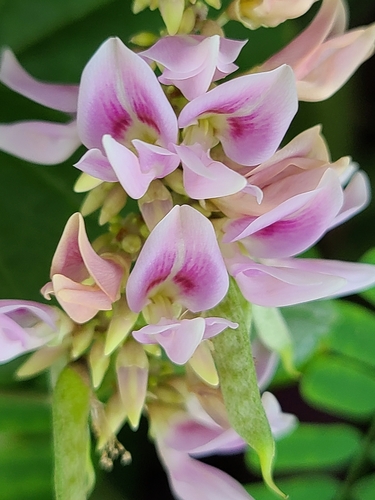
Brachystegia eurycoma
Harms
Wikimedia Commons - Onwuka Glory
What to Eat
Edible parts: Seeds, Seeds - spice, Leaves
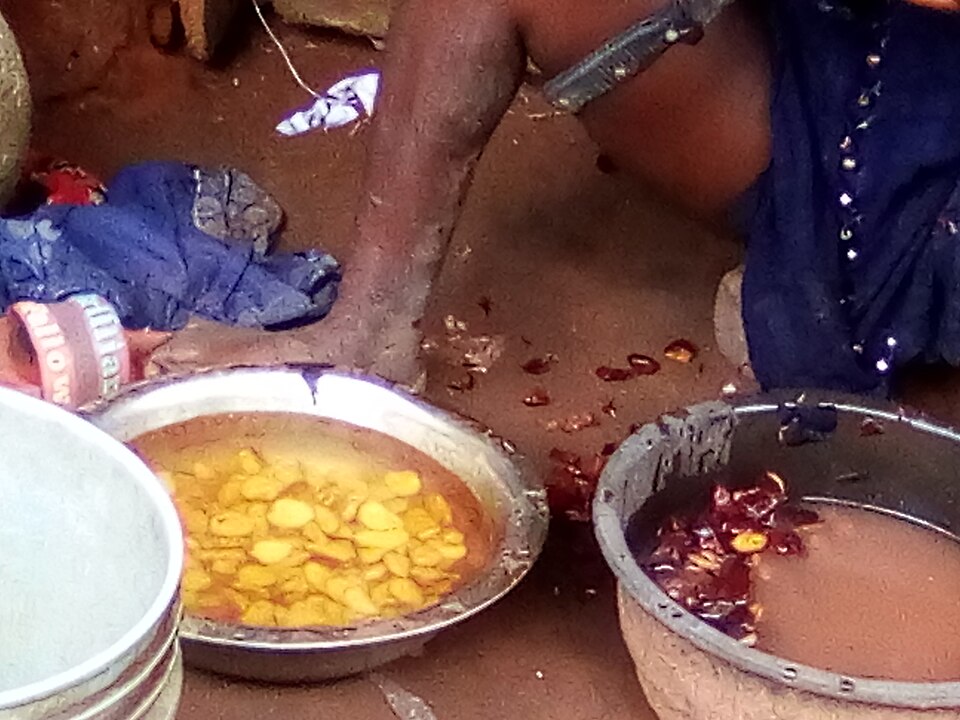
Seeds - used as a thickening in soups. They are known to cause increased viscosity in soups, giving it more palatability and good mouth feel. The gum also impacts certain desirable functional properties when added in other foods.
Where to Find It
It is a tropical plant. It grows on the banks of rivers in the forest zone in Nigeria. It has been recorded at 200 and 900 m above sea level.
Africa, Cameroon, Central Africa, Gabon, Nigeria, West Africa,
How to Identify
A large tree. It grows 35 m high. The trunk is 2 m across. It develops branches low down and has a large flat crown.
Medicinal Uses
The stem exudate has effective antibacterial activity. It is used traditionally in the treatment of wounds and infections. The stem bark is antifungal. A tincture of the seeds and also of the stem bark have shown effective antiinflammatory activity.
Other Uses
The seed pods make a good fuel. A gum is obtained from the stems. It has medicinal uses. The heartwood is light brown to red brown with purplish glints; it is clearly demarcated from the 6 - 15cm wide band of white sapwood. The texture is medium; the grain usually interlocked, sometimes irregular. The wood is heavy; moderately hard to hard; elastic; moderately durable, being resistant to dry wood borers and moderately resistant to fungi and termites. It seasons fairly slowly, with a high risk of checking and distortion; once dry it is stable in service. The wood has a fairly high blunting effect, stellite-tipped and tungsten carbide tools are recommended; it is difficult to obtain a good finish due to the irregular grain, careful sanding and filling are required; nailing and screwing are good, but pre-boring is required to prevent splitting; gluing is correct. A possible substitute for mahogany, the wood has various uses including in construction, cabinet making, furniture, flooring, light carpentry, interior joinery and panelling and veneer.
Wikipedia
Source ↗Brachystegia eurycoma, a plant in the family Fabaceae, is a sizable species of tree found in southern Nigeria and western Cameroon. It has a spreading, flattened crown.
Notes
Also as Caesalpinaceae.
Names & Synonyms
Kepuruk, Okuen, Okung
References (11)
- Burkill, H. M., 1985, The useful plants of west tropical Africa, Vol. 3. Kew.
- Chapman, J. D. & Chapman, H. M., 2001, The Forest Flora of Taraba and Andamawa States, Nigeria. WWF & University of Canterbury. p 181
- Dalziel, 1937,
- FAO Corporate Document Repository. The Major Significance of 'Minor' Forest Products. Appendix 3
- Giami, S. Y. & Wachuku, O. C. 1997, Composition and functional properties of unprocessed and locally processed seeds from three underutilised food sources in Nigeria. Plant Foods for Human Nutrition. 50:27-36
- INFOODSUpdatedFGU-list.xls
- Salvi, J. et al, 2016, A review: Underutilized wild edible plants as a potential source of alternative nutrition. International Journal of Botany Studies. Volume 1; Issue 4; May 2016; Page No. 32-36
- Ubom, R. M., 2010, Ethnobotany and Diversity Conservatioon in the Niger Delta, Nigeria. International Journal of Botany. 6(3): 310-322
- Udo, E. S., et al, 2009, Life-form and Density of Valuable Non-timber Plants in Ukpom Community Forest, Akwa Ibom State, Nigeria. African Research Review 3(3) p 7
- Uzomah*, A., and R.N. Ahiligwo, 1999, Studies on the rheological properties and functional potentials of achi (Brachystegea eurycoma) and ogbono (Irvingia gabonesis) seed gums. Food Chemistry 67) 217-222
- World Checklist of Useful Plant Species 2020. Royal Botanic Gardens, Kew