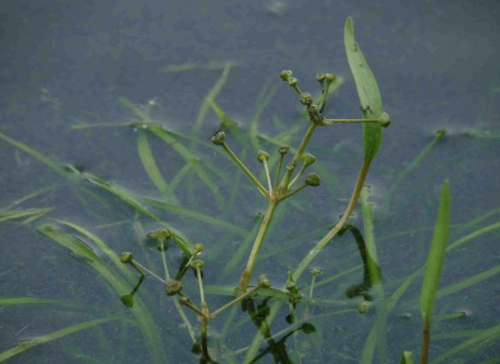
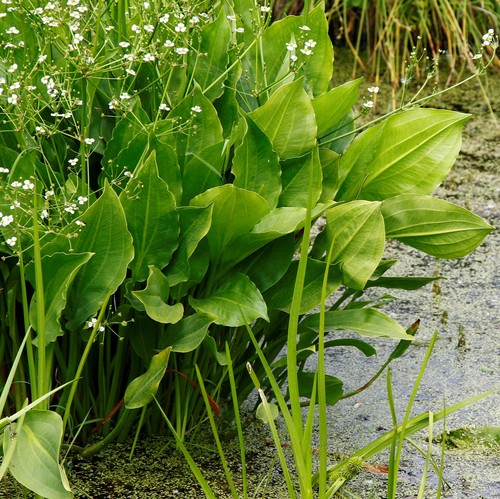
Caldesia reniformis
(D. Don) Makino
AlismataceaeLeaves

iNaturalist · cc-by-nc
(c) Оксана Цьось, some rights reserved (CC BY-NC)
(c) Оксана Цьось, some rights reserved (CC BY-NC)

iNaturalist · cc-by
(c) Robert Taylor, some rights reserved (CC BY)
(c) Robert Taylor, some rights reserved (CC BY)

iNaturalist · cc-by
(c) Robert Taylor, some rights reserved (CC BY)
(c) Robert Taylor, some rights reserved (CC BY)
What to Eat
Edible parts: Leaf stalk
The succulent stems and leaves are cooked and eaten.
Where to Find It
It is a tropical plant. It grows in swamps and shallow water.
Africa, Asia, Australia, Benin, Botswana, Burkina Faso, China, East Africa, Myanmar, Nigeria, SE Asia, Sierra Leone, West Africa, Zambia,
Countries: United Arab Emirates, Afghanistan, Armenia, Angola, Australia, Azerbaijan, Bangladesh, Burkina Faso, Bahrain, Burundi, Benin, Brunei, Bhutan, Botswana, Congo (DRC), Central African Republic, Congo (Republic), Cote d'Ivoire, Cameroon, China, Cape Verde, Djibouti, Algeria, Egypt, Eritrea, Ethiopia, Gabon, Georgia, Ghana, Gambia, Guinea, Equatorial Guinea, Guinea-Bissau, Indonesia, Israel, India, Iraq, Iran, Jordan, Japan, Kenya, Kyrgyzstan, Cambodia, Comoros, North Korea, South Korea, Kuwait, Kazakhstan, Laos, Lebanon, Sri Lanka, Liberia, Lesotho, Libya, Morocco, Madagascar, Mali, Myanmar, Mongolia, Mauritania, Mauritius, Maldives, Malawi, Malaysia, Mozambique, Namibia, Niger, Nigeria, Nepal, Oman, Philippines, Pakistan, Qatar, Rwanda, Saudi Arabia, Seychelles, Sudan, Singapore, Sierra Leone, Senegal, Somalia, South Sudan, Sao Tome & Principe, Syria, Eswatini, Chad, Togo, Thailand, Tajikistan, Timor-Leste, Turkmenistan, Tunisia, Turkey, Taiwan, Tanzania, Uganda, Uzbekistan, Vietnam, Yemen, South Africa, Zambia, Zimbabwe
How to Identify
A herb that grows in water. The leaves float on the water. The flower stem sticks up above the water.
Notes
There are 4 Caldesia species.
Names & Synonyms
Vipiwi
References (2)
- Burkill, H. M., 1985, The useful plants of west tropical Africa, Vol. 1. Kew.
- Fowler, D. G., 2007, Zambian Plants: Their Vernacular Names and Uses. Kew. p 64