Calochortus tolmiei
Hook. & Arn.
Tolmie startulip

(c) Vanessa Macias, some rights reserved (CC BY-NC)
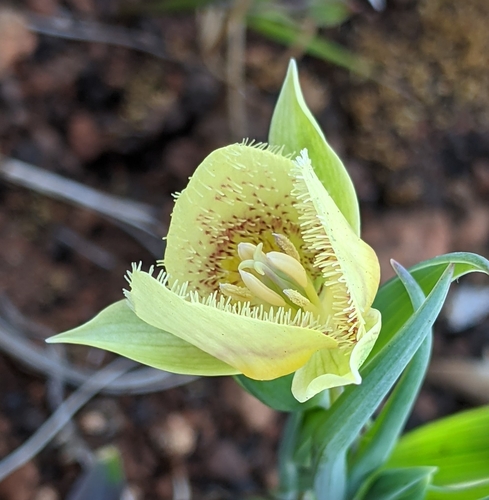
(c) Chris Shuck, some rights reserved (CC BY-NC)
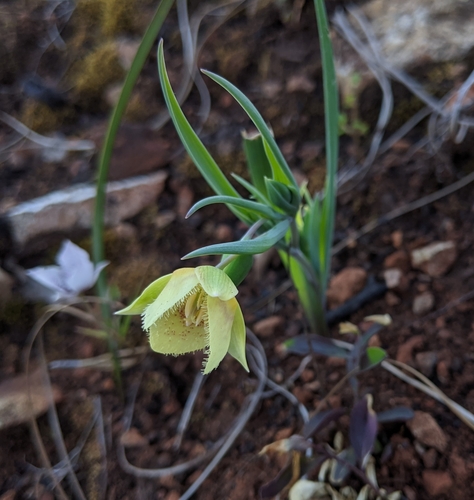
(c) Chris Shuck, some rights reserved (CC BY-NC)
What to Eat
Edible parts: Root, Bulb
Edible Parts: Root Edible Uses: Bulb - raw or cooked. A sweet flavour, it can be baked or boiled like potatoes.
Where to Find It
It is a temperate plant.
North America, USA,
How to Identify
Calochortus tolmiei is a bulbous perennial reaching 30 cm tall, hardy to UK zone 3. It flowers from April to June with hermaphroditic blooms pollinated by insects. Grows in light sandy to medium loamy, well-drained soils across mildly acid to basic pH ranges. Tolerates semi-shade (light woodland) or no shade and adapts to both dry and moist soil conditions.
How to Grow
Requires a deep very well-drained fertile sandy soil in a sunny position and must be kept dry over winter. Another report says that it is best grown in a good, very gritty soil in sun or semi-shade in a bulb frame. This is a rather difficult plant to cultivate in Britain, it is very cold hardy but is intolerant of wetness especially in the winter. It is easiest to grow in a bulb frame but is worth trying outdoors at the base of a south-facing wall, especially with shrubs that like these conditions. Bulbs can be lifted as soon as the foliage dies down in the summer and stored overwinter in a cool dry place, replanting in spring. Another report says that they should be replanted immediately. Bulbs frequently divide after flowering, the bulblets taking 2 years to reach flowering size. Hand pollination is necessary if seed is required.
Propagation: Seed - sow as soon as ripe or early spring in a cold frame in a very sharply draining medium. Stratification may be helpful. Germination usually takes place within 1 - 6 months at 15°c. Leave the seedlings undisturbed for their first two years growth, but give them an occasional liquid feed to ensure they do not become nutrient deficient. It is quite difficult to get the seedlings through their first period of dormancy since it is all too easy either to dry them out completely or keep them too moist when they will rot. After their second year of growth, pot up the dormant bulbs in late summer and grow them on for at least another 2 years in the greenhouse before trying them outside. Seedlings take about 5 - 7 years to come into flower. Division of the bulbs as soon as the foliage dies down. One report says that the bulbs must be planted into their permanent positions immediately, whilst another says that they can be stored overwinter and replanted in the spring. Stem bulbils, harvested from the stems after flowering. They can be stored cool and dry then planted in pots in the cold frame in the spring.
Medicinal Uses
None known
Other Uses
None known Special Uses
Wikipedia
Source ↗Calochortus tolmiei is a North American species of flowering plant in the lily family known by the common names Tolmie's star-tulip and pussy ears. It was discovered by and named for Dr. William Fraser Tolmie. It is native to the west coast of the United States: Washington, Oregon, and northern California as far south as Santa Cruz County. It is a common member of the flora in several types of habitat.
Notes
There are about 60-100 Calochortus species. There are 7-9 species in tropical America. They have also been put in the family Calochortaceae.


