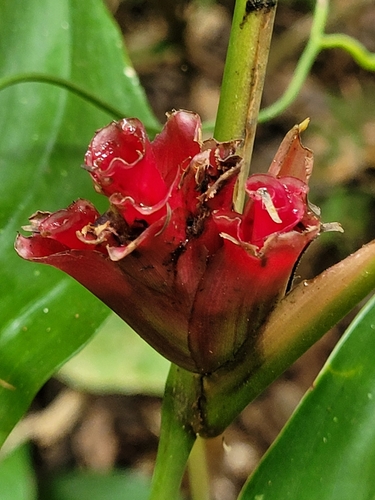
Hypselodelphys violacea
(Ridl.) Milne-Redh.
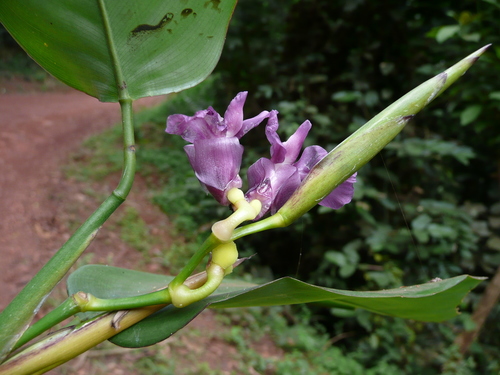
iNaturalist · cc-by-nc
(c) Carel Jongkind, some rights reserved (CC BY-NC), uploaded by Carel Jongkind
(c) Carel Jongkind, some rights reserved (CC BY-NC), uploaded by Carel Jongkind
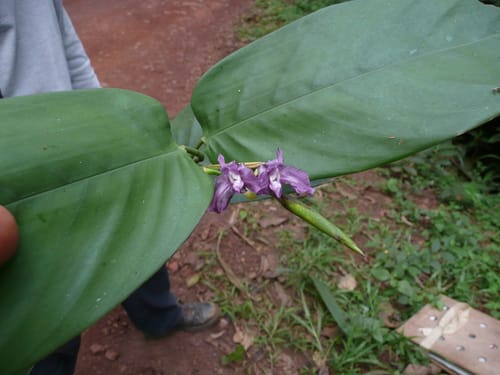
iNaturalist · cc-by-nc
(c) Carel Jongkind, some rights reserved (CC BY-NC)
(c) Carel Jongkind, some rights reserved (CC BY-NC)
What to Eat
Edible parts: Seeds, Leaves, Fruit
The fruit are eaten raw. The seeds and leaves are also edible.
Where to Find It
It is a tropical plant. It grows in secondary jungle especially on humid sites.
Africa, Angola, Benin, Cabinda, Cameroon, Central Africa, Congo R, Côte d'Ivoire, Ivory Coast, Sierra Leone, West Africa,
Countries: Angola, Burkina Faso, Burundi, Benin, Botswana, Congo (DRC), Central African Republic, Congo (Republic), Cote d'Ivoire, Cameroon, Cape Verde, Djibouti, Algeria, Egypt, Eritrea, Ethiopia, Gabon, Ghana, Gambia, Guinea, Equatorial Guinea, Guinea-Bissau, Kenya, Comoros, Liberia, Lesotho, Libya, Morocco, Madagascar, Mali, Mauritania, Mauritius, Malawi, Mozambique, Namibia, Niger, Nigeria, Rwanda, Seychelles, Sudan, Sierra Leone, Senegal, Somalia, South Sudan, Sao Tome & Principe, Eswatini, Chad, Togo, Tunisia, Tanzania, Uganda, South Africa, Zambia, Zimbabwe
How to Identify
A straggling herb. It has slender stems and branches at angles. It produces a thicket 3.5 m high. The flowers are violet and white.
Names & Synonyms
Akwukwa, Amachi, Komou-adjue
Donax violacea (Ridl.) RobertyTrachyphrynium preussianum K. Schum.Trachyphrynium violaceum Ridl.
References (5)
- Burkill, H. M., 1985, The useful plants of west tropical Africa, Vol. 4. Kew.
- Codjia, J. T. C., et al, 2003, Diversity and local valorisation of vegetal edible products in Benin. Cahiers Agricultures 12:1-12
- Diop, A. l., et al, 2021, Cultural importance of wild edible plants in three sympatric communities: Agni, Akyé and Gwa in the Department of Alépé (Southeast of Côte d’Ivoire). Ethnobotany Research and Applications 22:35. p 7
- Nkeoua, G. & Boundzanga, G. C., 1999, Donnees sur les produits forestieres non ligneux en Republique du Congo. FAO. p 29
- World Checklist of Useful Plant Species 2020. Royal Botanic Gardens, Kew