Landolphia membranacea
(Stapf) Pichon
ApocynaceaeFruit

iNaturalist · cc-by-nc
(c) Carel Jongkind, some rights reserved (CC BY-NC), uploaded by Carel Jongkind
(c) Carel Jongkind, some rights reserved (CC BY-NC), uploaded by Carel Jongkind
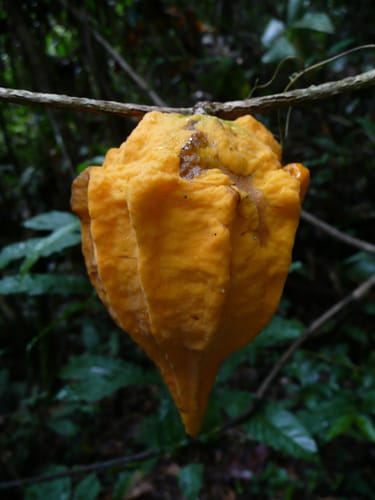
iNaturalist · cc-by-nc
(c) Carel Jongkind, some rights reserved (CC BY-NC)
(c) Carel Jongkind, some rights reserved (CC BY-NC)
What to Eat
Edible parts: Fruit
The fruit pulp is eaten fresh.
Where to Find It
It is a tropical plant. It grows in the forest zone in West Africa.
Africa, Côte d'Ivoire, Guinea, Guinée, Ivory Coast, Liberia, Sierra Leone, West Africa,
Countries: Angola, Burkina Faso, Burundi, Benin, Botswana, Congo (DRC), Central African Republic, Congo (Republic), Cote d'Ivoire, Cameroon, Cape Verde, Djibouti, Algeria, Egypt, Eritrea, Ethiopia, Gabon, Ghana, Gambia, Guinea, Equatorial Guinea, Guinea-Bissau, Kenya, Comoros, Liberia, Lesotho, Libya, Morocco, Madagascar, Mali, Mauritania, Mauritius, Malawi, Mozambique, Namibia, Niger, Nigeria, Rwanda, Seychelles, Sudan, Sierra Leone, Senegal, Somalia, South Sudan, Sao Tome & Principe, Eswatini, Chad, Togo, Tunisia, Tanzania, Uganda, South Africa, Zambia, Zimbabwe
How to Identify
A slender tropical creeper from the Apocynaceae family native to the forest zone in West Africa, with stems that cling to other plants by tendrils.
How to Grow
Plants are grown by seeds.
Other Uses
The plant yields a latex that is said to produce a good rubber.
Names & Synonyms
Clitandra membranacea Stapf
References (3)
- Bongers, F. et al (Eds), Forest Climbing Plants of West Africa: Diversity, Ecology and Management. CABI
- Burkill, H. M., 1985, The useful plants of west tropical Africa, Vol. 1. Kew.
- World Checklist of Useful Plant Species 2020. Royal Botanic Gardens, Kew


