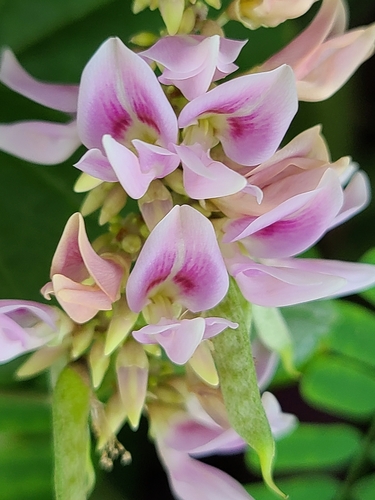
Rhynchosia minima
(Linn.) DC.
Burn moth vine
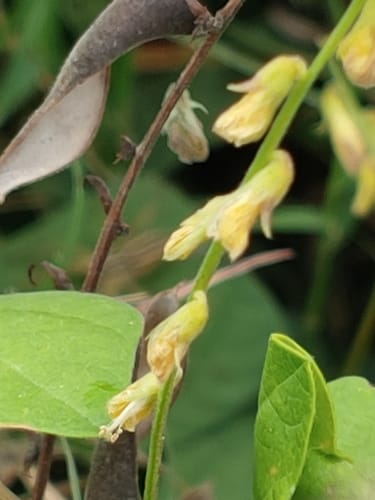
(c) Cyndie Segovia, some rights reserved (CC BY-NC)
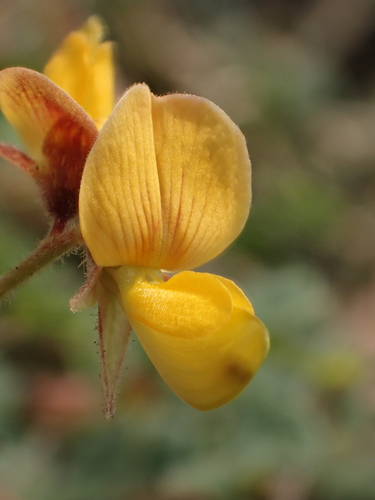
no rights reserved, uploaded by 葉子
What to Eat
Edible parts: Root bark, Leaves - tea, Flowers, Seeds
The leaves are used for tea and as a relish. The root bark, flowers, and seeds are also edible.
Known Hazards
Where to Find It
It is a tropical plant. It grows in open savannah and drier parts of West Africa. It grows between 30-2,440 m above sea level. It grows in areas with an annual rainfall between 1,000-1,270 m above sea level. It can grow in salty soil. It can grow in arid places. In Argentina it grows below 500 m above sea level. In Sichuan and Yunnan.
Africa, Afghanistan, Angola, Arabia, Argentina, Australia, Bahamas, Barbados, Belize, Bhutan, Bolivia, Botswana, Brazil, Burkina Faso, Burundi, Cameroon, Cape Verde, Central Africa, Central African Republic, CAR, Central America, Chad, Chile, China, Colombia, Congo, Costa Rica, Côte d'Ivoire, Cuba, Dominica, Dominican Republic, East Africa, East Timor, Ecuador, Egypt, El Salvador, Eswatini, Ethiopia, Fiji, French Guiana, Gambia, Ghana, Grenada, Guadeloupe, Guatemala, Guianas, Guinea, Guinée, Guyana, Haiti, Himalayas, Honduras, India, Indochina, Indonesia, Israel, Ivory Coast, Jamaica, Japan, Kenya, Lesotho, Malawi, Malaysia, Mali, Martinique, Mediterranean, Mexico, Middle East, Mozambique, Myanmar, Namibia, Nepal, New Caledonia, Nicaragua, Niger, Nigeria, Niue, North Africa, North America, Oman, Pacific, Pakistan, Panama, Papua New Guinea, PNG, Paraguay, Peru, Philippines, Puerto Rico, Rwanda, Ryukyu, Samoa, Saudi Arabia, SE Asia, Senegal, Sierra Leone, Somalia, South Africa, Southern Africa, South America, Sri Lanka, Sudan, Suriname, Swaziland, Taiwan, Tanzania, Thailand, Timor-Leste, Togo, Trinidad-Tobago, Uganda, USA, Venezuela, Vietnam, West Africa, West Indies, Yemen, Zambia, Zimbabwe,
How to Identify
A slender trailing herb. It has a woody rootstock. It has fine hairs. It can lie along the ground. It can be 5 m long. The leaves have 3 leaflets. The leaflets taper to a sharp point at the tip. There are 3 varieties. The flower are 5-10 mm long with a yellow standard. The pods are 20 mm long by 4-5 mm wide. They are narrowed at the base.
How to Grow
Requires a well-drained soil. Somewhat tolerant of saline soils. Probably introduced to many countries in seed mixtures for soil improvement, this species has become naturalized at low elevation in several Pacific Islands where it is considered to be invasive. It can form a a densely interlocking mat under coconut trees, has become an adventive along roadsides, in plantations, or in waste places near sea level. This species has a symbiotic relationship with certain soil bacteria; these bacteria form nodules on the roots and fix atmospheric nitrogen. Some of this nitrogen is utilized by the growing plant but some can also be used by other plants growing nearby.
Propagation: Like many species within the family Fabaceae, once they have ripened and dried the seeds of this species may benefit from scarification before sowing in order to speed up and improve germination. This can usually be done by pouring a small amount of nearly boiling water on the seeds (being careful not to cook them!) and then soaking them for 12 - 24 hours in warm water. By this time they should have imbibed moisture and swollen - if they have not, then carefully make a nick in the seedcoat (being careful not to damage the embryo) and soak for a further 12 hours before sowing.
Medicinal Uses
The leaves are used traditionally for tea.
Other Uses
The seeds are used as miscellaneous poisons or repellents. An essential oil obtained from the aerial parts of the plant has shown a significant inhibition in the germination of seeds of the common weedsf Dactyloctenium aegyptium and Rumex dentatus. It has potential for use as a pre-emergence herbicide. We have seen no specific entry for this species, but all members of this genus have at least some merit for use as a ground cover and in local soil conservation projects.
Wikipedia
Source ↗Rhynchosia minima is a species of flowering plant in the legume family known by the common names least snout-bean, burn-mouth-vine, and jumby-bean. It can be found on every continent. It is naturalized in Hawaii. This perennial herb has twining or trailing stems which can reach 1.2 meters in length. The leaves are made up of three leaflets measuring up to 3 to 3.5 centimeters long. The inflorescence is a raceme of up to 15 flowers. The flowers are yellow with purple or brown veining and measure up to 8 millimeters long. The fruit is one or two centimeters long. This common plant is used as animal forage.
Names & Synonyms
Chipali, Dau-mo nho, Frijolillo, Habilla, Herdal, Jajale, Jangli arwan, Jangli lobia, Kamwazi, Mborosan, Orosus, Sharkuma, Tarillo, Taw-pe
References (11)
- Addis, G., et al, 2013, The Role of Wild and Semi-wild Edible Plants in Household Food Sovereignty in Hamer and Konso Communities, South Ethiopia. Ethnobotany Research & Applications. 11:251-271
- Anon., 2003, Native Plants for the Fitzroy basin. Society for Growing Australian Plants Inc. (Rockhampton Branch) p 73
- Burkill, H. M., 1985, The useful plants of west tropical Africa, Vol. 3. Kew.
- Flora Zambesiaca. http://apps.kew.org/efloras
- Fowler, D. G., 2007, Zambian Plants: Their Vernacular Names and Uses. Kew. p 40
- Kiran, K. C., et al, 2019, Diversity and Seasonal Availability of Potential Wild Edible Plants from Vidarbha Region of Maharashtra State, India. Int.J.Curr.Microbiol.App.Sci (2019) 8(2): 1434-1446
- Lulekal, E., et al, 2011, Wild edible plants in Ethiopia: a review on their potential to combat food insecurity. Afrika Focus - Vol. 24, No 2. pp 71-121
- Majeed, M., et al, 2021, Gathered Wild Food Plants among Diverse Religious Groups in Jhelum District, Punjab, Pakistan. Foods 2021, 10, 594.
- Pickering, H., & Roe, E., 2009, Wild Flowers of the Victoria Falls Area. Helen Pickering, London. p 76
- Royal Botanic Gardens, Kew (1999). Survey of Economic Plants for Arid and Semi-Arid Lands (SEPASAL) database. Published on the Internet; http://www.rbgkew.org.uk/ceb/sepasal/internet [Accessed 29th April 2011]
- World Checklist of Useful Plant Species 2020. Royal Botanic Gardens, Kew