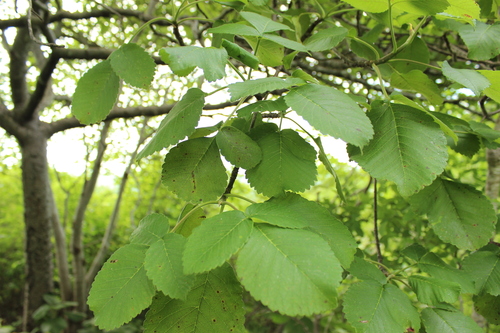
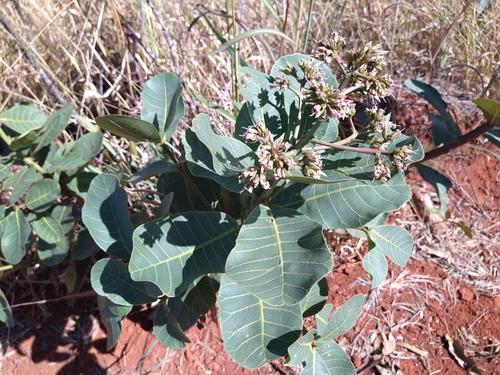
Lannea fruticosa
(Hochst. ex A. Rich.) Engl.

Wikimedia Commons - TifNefertari

Wikimedia Commons - TifNefertari
What to Eat
Edible parts: Root, Fruit
The tuberous root is cooked and eaten. The oblong fruits are also edible.
Where to Find It
It is a tropical plant. It grows in the Sahel in West Africa. It can grow in arid places. It grows in savannah. It grows between 300-2,300 m above sea level.
Africa, Burkina Faso, Cameroon, East Africa, Eritrea, Ethiopia, Middle East, Niger, Nigeria, Sahel, Sudan, Uganda, West Africa, Yemen,
How to Identify
A shrub or small tree. It grows 8 m high. It has a tuberous root. The bark is rough with deep cracks. The young parts have a reddish covering. The leaves are in clusters at the ends of the small branches. The leaves have leaflets along the stalk. The leaves are compound and 12-25 cm long and with 11-15 leaflets 1-2 cm long. The flowers are yellow. The fruit are oblong and 7-12 mm long.
How to Grow
Plants can be grown from seed. It can be grown from cuttings.
Propagation: Seed - Cuttings root easily.
Other Uses
The bark exudes a gum which is soluble. It us used for adulterating gum arabic (from Acacia spp.). It is very attractive to ants. The wood is used locally for construction, furniture and bed frames.
Names & Synonyms
Adhar, Afrormosia, Dugduguga, Dugula, Faru, Ghallub, Leyun, Limba, Paaruu, Paru kanuri
References (6)
- Burkill, H. M., 1985, The useful plants of west tropical Africa, Vol. 1. Kew.
- Ferns, Useful Tropical Plants.
- Le Houerou, H. N., (Ed.), 1980, Browse in Africa. The current state of knowledge. International Livestock Centre for Africa, Ethiopia. p 161
- PROTA
- Vanderjagt, F. J., et al, 2000, The trypsin inhibitor content of 61 wild edible plant foods of Niger. Plant Foods for Human Nutrition 55: 335–346, 2000.
- World Agroforestry.org