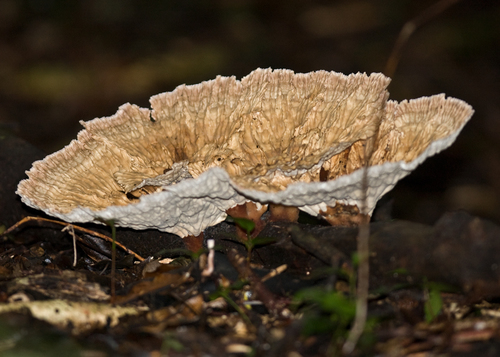
Panus conchatus
(Bull.) Fr.
PolyporaceaeMushrooms

iNaturalist · cc-by
(c) Alan Rockefeller, some rights reserved (CC BY), uploaded by Alan Rockefeller
(c) Alan Rockefeller, some rights reserved (CC BY), uploaded by Alan Rockefeller
iNaturalist · cc0
no rights reserved
no rights reserved
What to Eat
Edible parts: Mushroom
The mushroom fruiting body is eaten.
Where to Find It
It is eaten among the Dani of Papua Indonesia.
Asia, Indonesia, Papua, SE Asia,
Countries: United Arab Emirates, Afghanistan, Armenia, Azerbaijan, Bangladesh, Bahrain, Brunei, Bhutan, China, Georgia, Indonesia, Israel, India, Iraq, Iran, Jordan, Japan, Kyrgyzstan, Cambodia, North Korea, South Korea, Kuwait, Kazakhstan, Laos, Lebanon, Sri Lanka, Myanmar, Mongolia, Maldives, Malaysia, Nepal, Oman, Philippines, Pakistan, Qatar, Saudi Arabia, Singapore, Syria, Thailand, Tajikistan, Timor-Leste, Turkmenistan, Turkey, Taiwan, Uzbekistan, Vietnam, Yemen
How to Identify
A mushroom in the family Polyporaceae, eaten by the Dani people of Papua, Indonesia.
Wikipedia
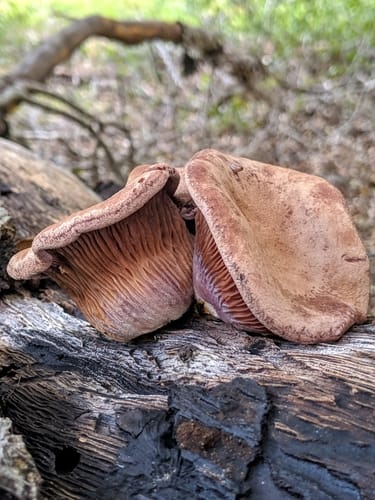
Source ↗Panus conchatus, commonly known as the lilac oysterling, smooth panus, or conch panus, is a species of fungus. Despite being a gilled species, phylogenetic analysis has shown it is closely related to the pored species found in the family Polyporaceae. The fruit bodies are characterized by a smooth, lilac- or tan-colored cap, and decurrent gills. The fungus is saprophytic and fruits on the decomposing wood of a wide variety of deciduous and coniferous trees throughout the Northern Hemisphere.
References (1)
- Walulo, E. B., 2008, Review: Research Ethnobotany in Indonesia and the Future Perspectives. Biodiversitas Vol. 9 Nomor 1. Halaman 59-63 http://www.unsjournals.com/D/D0901/D090114.pdf (As Panus choncantus)