Convolvulus japonicus
Thunb.
Rose glorybind, Japanese bindweed
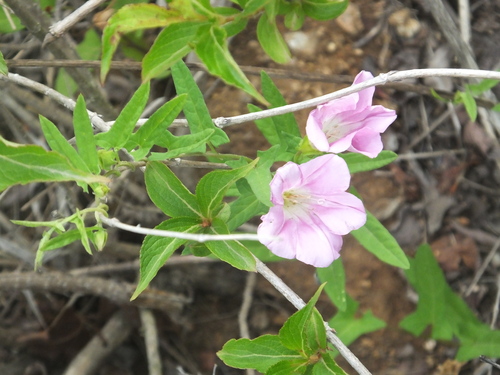
iNaturalist · cc-by-nc
(c) Charles, some rights reserved (CC BY-NC)
(c) Charles, some rights reserved (CC BY-NC)
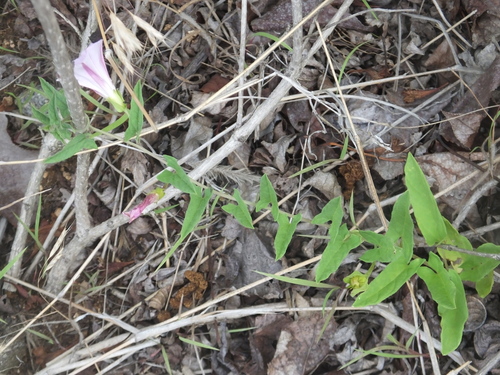
iNaturalist · cc-by-nc
(c) Charles, some rights reserved (CC BY-NC)
(c) Charles, some rights reserved (CC BY-NC)
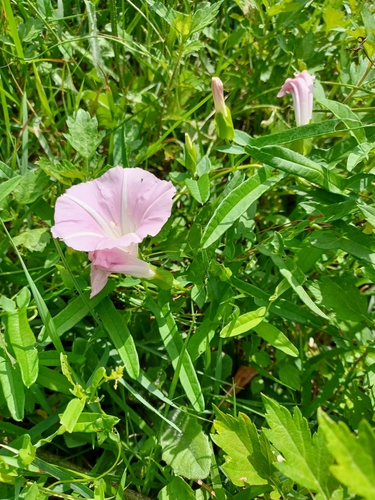
iNaturalist · cc-by-nc
(c) hakkahamushi, some rights reserved (CC BY-NC)
(c) hakkahamushi, some rights reserved (CC BY-NC)
What to Eat
Edible parts: Leaves, Vegetable, Root
The leafy shoots are eaten as a vegetable, and the roots are also edible.
Where to Find It
It is a tropical plant.
Asia, China, Japan, Korea,
Countries: United Arab Emirates, Afghanistan, Armenia, Azerbaijan, Bangladesh, Bahrain, Brunei, Bhutan, China, Georgia, Indonesia, Israel, India, Iraq, Iran, Jordan, Japan, Kyrgyzstan, Cambodia, North Korea, South Korea, Kuwait, Kazakhstan, Laos, Lebanon, Sri Lanka, Myanmar, Mongolia, Maldives, Malaysia, Nepal, Oman, Philippines, Pakistan, Qatar, Saudi Arabia, Singapore, Syria, Thailand, Tajikistan, Timor-Leste, Turkmenistan, Turkey, Taiwan, Uzbekistan, Vietnam, Yemen
How to Identify
A herbaceous bindweed in the morning glory family (Convolvulaceae) found in tropical regions and commercially cultivated as a vegetable.
Other Information
It is a commercially cultivated vegetable.
Notes
There are 25 Calystegia species.
Names & Synonyms
Calystegia japonica (Miq.) ChoisyIpomoea angustifolia
References (3)
- Kays, S. J., and Dias, J. C. S., 1995, Common Names of Commercially Cultivated Vegetables of the World in 15 languages. Economic Botany, Vol. 49, No. 2, pp. 115-152
- Plants for a Future database, The Field, Penpol, Lostwithiel, Cornwall, PL22 0NG, UK. http://www.scs.leeds.ac.uk/pfaf/
- READ,


