Capparis corymbosa
Lam.

Wikimedia Commons - T. S. Sabnis, B.A., B.Sc.
What to Eat
Edible parts: Leaves, Fruit
The leaves are sometimes boiled in soup. The fruit are used in cakes.
Where to Find It
A tropical plant. It grows in the Sahel. It is often on termite mounds in the savannah. It can be on seasonally flooded areas with an iron hardpan. It can grow in arid places.
Africa, Burkina Faso, Ghana, Sahel, Senegal, Sudan, West Africa,
How to Identify
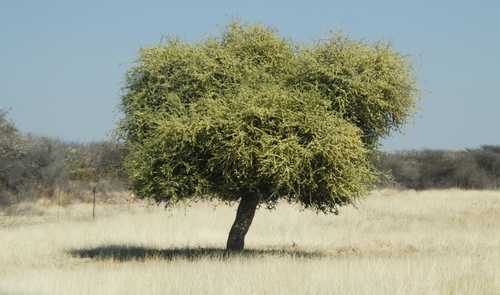
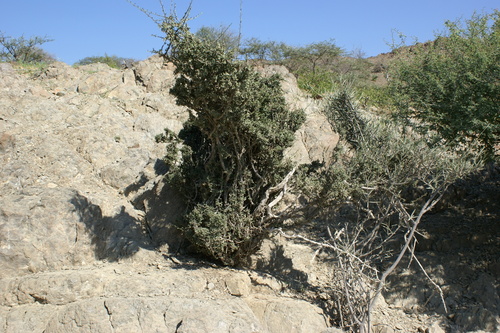
A climbing shrub. The bark is dark grey and scaly. The leaves are alternate and usually softly hairy. They are oval and have a shallow notch at the top end with a sharp tip. They can be 4 cm long. The flowers are in groups of 10-15 and they are white or cream coloured. The fruit are round and orange red and 12 mm across. They are orange red or yellow.
Nutrition Score: 48/100
| Part | Moisture | kJ | kcal | Protein | Vit A | Vit C | Iron | Zinc |
|---|---|---|---|---|---|---|---|---|
| Leaves raw | 72 | 351 | 84 | 8.4 | — | — | 5.7 | — |
How to Grow
Plants can be grown by seed.
Other Information
A famine food.
Notes
There are about 250 Capparis species. There are about 50 Capparis species in tropical America.
Names & Synonyms
Goumi balewi
References (12)
- Abbiw, D.K., 1990, Useful Plants of Ghana. West African uses of wild and cultivated plants. Intermediate Technology Publications and the Royal Botanic Gardens, Kew. p 41
- Belem, M., et al, 2017, Strategy of Conservation and Protection of Wild Edible Plants Diversity in Burkina Faso. ANADOLU 27 (2) 2017, 82- 90
- Bircher, A. G. & Bircher, W. H., 2000, Encyclopedia of Fruit Trees and Edible Flowering Plants in Egypt and the Subtropics. AUC Press. p 81
- Busson, 1965,
- Dalziel, J. M., 1937, The Useful plants of west tropical Africa. Crown Agents for the Colonies London.
- Encycl. 1:605. 1785
- Jardin, C., 1970, List of Foods Used In Africa, FAO Nutrition Information Document Series No 2.p 63, 124
- Maydell, H. von, 1990, Trees and shrubs of the Sahel: their characteristics and uses. Margraf. p 217
- Okigbo, B.N., Vegetables in Tropical Africa, in Opena, R.T. & Kyomo, M.L., 1990, Vegetable Research and development in SADCC countries. Asian Vegetable Research and development Centre. Taiwan. p 38
- Peters, C. R., O'Brien, E. M., and Drummond, R.B., 1992, Edible Wild plants of Sub-saharan Africa. Kew. p 76
- Terra, G.J.A., 1973, Tropical Vegetables. Communication 54e Royal Tropical Institute, Amsterdam, p 35
- World Checklist of Useful Plant Species 2020. Royal Botanic Gardens, Kew