Capparis loranthifolia
Lindley
Narrow-leaf Bumble tree
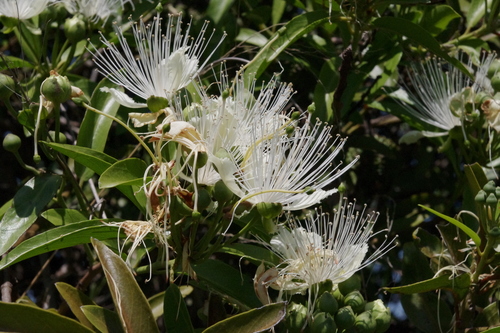
(c) coenobita, some rights reserved (CC BY), uploaded by coenobita
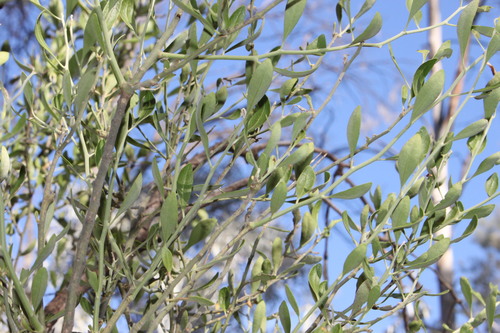
(c) Darren Fielder, some rights reserved (CC BY-NC)
What to Eat
Edible parts: Fruit
The fruit are eaten.
Where to Find It
It grows in subtropical locations. It occurs in inland Queensland and New South Wales in Australia.
Australia*,
How to Identify
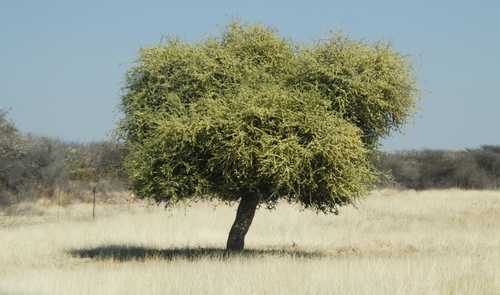
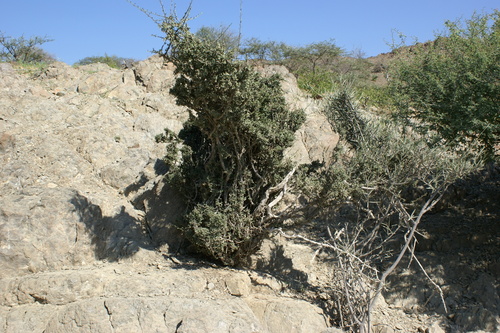
A tall shrub. The bark is dark grey and deeply cracked. The stems are thorny. The leaves are 2-4 cm long by 0.8-1.5 cm wide. They are sword shaped and thick and leathery. They are dark green. The flowers are in clusters of 1-5 at the ends of branches. The flowers are 2.5 cm across. They are white. They have many spreading stamens. The fruit is a berry with is 2-4 cm across. It is yellowish and mostly smooth.
Nutrition Score: 55/100
| Part | Moisture | kJ | kcal | Protein | Vit A | Vit C | Iron | Zinc |
|---|---|---|---|---|---|---|---|---|
| Fruit | 42 | 647 | 155 | 3.7 | — | 11 | 2.9 | 2.2 |
How to Grow
Plants can be grown from fresh seed or cuttings.
Wikipedia
Source ↗Capparis loranthifolia, also known as the narrowleaf bumble or narrow-leaved bumble tree, is a shrub or small tree in the caper family. It is endemic to the arid and semi-arid interior of northern and eastern Australia from Western Australia to New South Wales.
Notes
There are about 250 Capparis species. There are about 50 Capparis species in tropical America.
Names & Synonyms
Dharrday, Native mandarin
References (7)
- Cherikoff V. & Isaacs, J., The Bush Food Handbook. How to gather, grow, process and cook Australian Wild Foods. Ti Tree Press, Australia p 189
- Flora of Australia, Volume 8, Lecythidales to Batales, Australian Government Publishing Service, Canberra (1982) p 216
- Hall, N. et al, 1972, The Use of Trees and Shrubs in the Dry Country of Australia, AGPS, Canberra. p 357
- Lazarides, M. & Hince, B., 1993, Handbook of Economic Plants of Australia, CSIRO. p 47
- Low, T., 1991, Wild Food Plants of Australia. Australian Nature FieldGuide, Angus & Robertson. p 172
- McKerney, M. & White, H., 2011, Bush Tucker, Boomerangs & Bandages. Border River-Gwyder Catchment Management Authority p 99
- Melzer, R. & Plumb, J., 2011, Plants of Capricornia. Belgamba, Rockhampton. p 88 (As var. bancroftii)