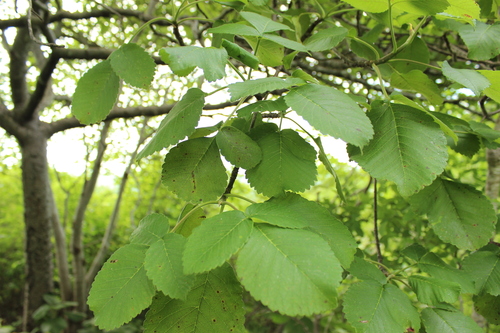
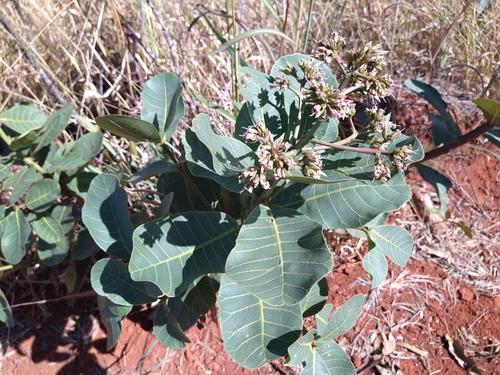
Searsia laevigata
(L.) F. A. Barkley
White karee, Dune currant

(c) Marian Oliver, some rights reserved (CC BY-NC), uploaded by Marian Oliver
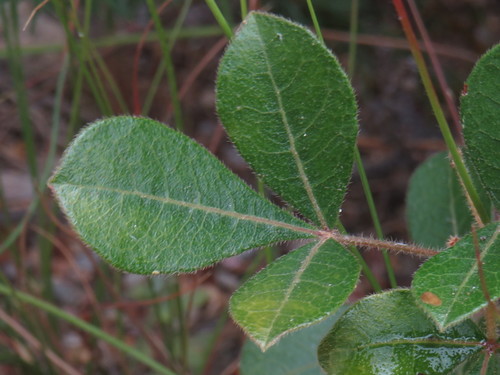
(c) Jeremy Gilmore, some rights reserved (CC BY), uploaded by Jeremy Gilmore

(c) Dave Richardson, some rights reserved (CC BY), uploaded by Dave Richardson
What to Eat
Edible parts: Fruit
The fruit are eaten raw and are especially enjoyed by children. The fruit are also used as a yeast and to curdle milk.
Where to Find It
It is a subtropical plant. It grows in dry soils near water courses. It can grow in arid places.
Africa, South Africa*, Southern Africa,
How to Identify
An erect shrub or small tree. It can grow up to 10 m tall. The bark is dark brown and rough. The leaves have 3 leaflets. These are green and sword shaped. The flowers are small and green to yellow. They are in many branched heads. The fruit are almost round.
Wikipedia
Source ↗Searsia laevigata, the dune currant rhus, is a small, bushy, evergreen tree that occurs in rocky fynbos slopes and coastal shrub in South Africa.
Other Information
The fruit are enjoyed especially by children.
Names & Synonyms
References (6)
- Fox, F. W. & Young, M. E. N., 1982, Food from the Veld. Delta Books. p 78 (As Rhus laevigata)
- Moffett, R. O., 2007, Name changes in the Old World Rhus and recognition of Searsia (Anacardiaceae). Bothalia 37,2: 165-175 (2007)
- Royal Botanic Gardens, Kew (1999). Survey of Economic Plants for Arid and Semi-Arid Lands (SEPASAL) database. Published on the Internet; http://www.rbgkew.org.uk/ceb/sepasal/internet [Accessed 28th March 2011] (As Rhus laevigata)
- Ruiters-Welcome, A. K., 2019, Food plants of southern Africa. Ph.D. thesis. Univ. of Johannesburg p 16
- Welcome, A. K. & Van Wyk, B.-E., 2019, An inventory and analysis of the food plants of southern Africa. South African Journal of Botany 122 (2019) 136–179
- World Checklist of Useful Plant Species 2020. Royal Botanic Gardens, Kew