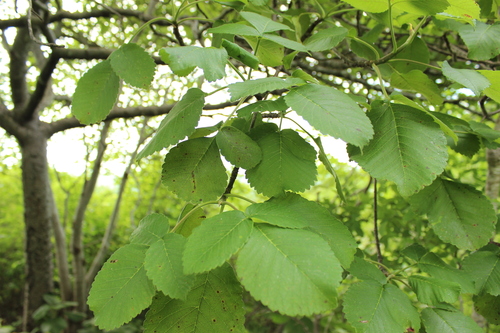
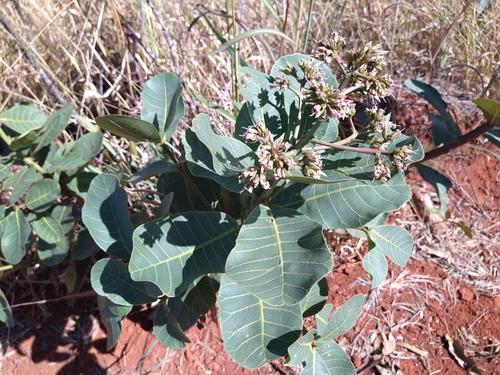
Searsia refracta
(Eckl. & Zeyh.) Moffett
Mogadiri
AnacardiaceaeFruit
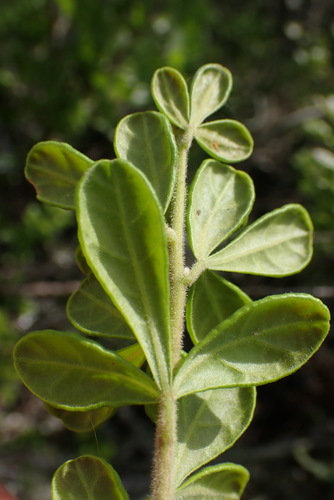
iNaturalist · cc-by-nc-sa
(c) David Hoare, some rights reserved (CC BY-NC-SA), uploaded by David Hoare
(c) David Hoare, some rights reserved (CC BY-NC-SA), uploaded by David Hoare
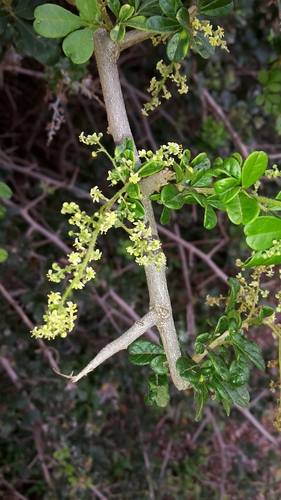
iNaturalist · cc-by
(c) Christiaan Viljoen, some rights reserved (CC BY), uploaded by Christiaan Viljoen
(c) Christiaan Viljoen, some rights reserved (CC BY), uploaded by Christiaan Viljoen
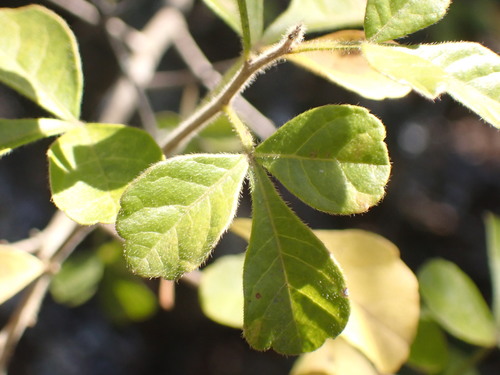
iNaturalist · cc-by-nc
(c) Abdul-lateef Ismail, some rights reserved (CC BY-NC), uploaded by Abdul-lateef Ismail
(c) Abdul-lateef Ismail, some rights reserved (CC BY-NC), uploaded by Abdul-lateef Ismail
What to Eat
Edible parts: Fruit
The fruit are eaten raw.
Where to Find It
It is a Mediterranean climate or subtropical plant. It grows in dry locations. It can grow in arid places.
Africa, Botswana, East Africa, Mozambique, South Africa, Southern Africa,
Countries: Angola, Burkina Faso, Burundi, Benin, Botswana, Congo (DRC), Central African Republic, Congo (Republic), Cote d'Ivoire, Cameroon, Cape Verde, Djibouti, Algeria, Egypt, Eritrea, Ethiopia, Gabon, Ghana, Gambia, Guinea, Equatorial Guinea, Guinea-Bissau, Kenya, Comoros, Liberia, Lesotho, Libya, Morocco, Madagascar, Mali, Mauritania, Mauritius, Malawi, Mozambique, Namibia, Niger, Nigeria, Rwanda, Seychelles, Sudan, Sierra Leone, Senegal, Somalia, South Sudan, Sao Tome & Principe, Eswatini, Chad, Togo, Tunisia, Tanzania, Uganda, South Africa, Zambia, Zimbabwe
How to Identify
An erect shrub or small tree. It is usually less than 3 m high. It has spines. It has many branches. It has grey hairs on the small branches. The leaves are alternate and compound. There are 3 leaflets. They are dark green above and more pale underneath. The edges are slightly rolled. The flowers are in loose branches in the axils of leaves or at the ends of branches. The flowers are small and 2 mm long.
Names & Synonyms
Mogadisa
Rhus refracta Eckl. & Zeyh.
References (6)
- Fox, F. W. & Young, M. E. N., 1982, Food from the Veld. Delta Books. p 77 (As Rhus refracta)
- Moffett, R. O., 2007, Name changes in the Old World Rhus and recognition of Searsia (Anacardiaceae). Bothalia 37,2: 165-175 (2007)
- Royal Botanic Gardens, Kew (1999). Survey of Economic Plants for Arid and Semi-Arid Lands (SEPASAL) database. Published on the Internet; http://www.rbgkew.org.uk/ceb/sepasal/internet [Accessed 28th March 2011] (As Rhus refracta)
- Ruiters-Welcome, A. K., 2019, Food plants of southern Africa. Ph.D. thesis. Univ. of Johannesburg p 16
- Welcome, A. K. & Van Wyk, B.-E., 2019, An inventory and analysis of the food plants of southern Africa. South African Journal of Botany 122 (2019) 136–179
- World Checklist of Useful Plant Species 2020. Royal Botanic Gardens, Kew