Gomphocarpus sinaicus
Boiss.
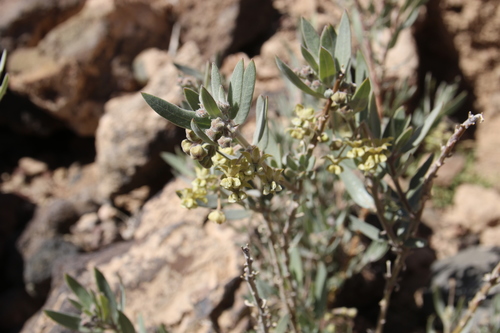
iNaturalist · cc-by-nc
(c) sami-youssef, some rights reserved (CC BY-NC), uploaded by sami-youssef
(c) sami-youssef, some rights reserved (CC BY-NC), uploaded by sami-youssef

iNaturalist · cc-by
(c) Rafael Medina, some rights reserved (CC BY)
(c) Rafael Medina, some rights reserved (CC BY)

iNaturalist · cc-by
(c) Ben Lyle Bedard, some rights reserved (CC BY)
(c) Ben Lyle Bedard, some rights reserved (CC BY)
What to Eat
Edible parts: Sugar
The plant produces edible sugar.
Where to Find It
It is a Mediterranean plant. It grows in hot dry places. It can grow in arid places.
Africa, Egypt, Middle East, North Africa, Saudi Arabia, Yemen,
Countries: United Arab Emirates, Angola, Burkina Faso, Bahrain, Burundi, Benin, Botswana, Congo (DRC), Central African Republic, Congo (Republic), Cote d'Ivoire, Cameroon, Cape Verde, Djibouti, Algeria, Egypt, Eritrea, Ethiopia, Gabon, Ghana, Gambia, Guinea, Equatorial Guinea, Guinea-Bissau, Israel, Iraq, Iran, Jordan, Kenya, Comoros, Kuwait, Lebanon, Liberia, Lesotho, Libya, Morocco, Madagascar, Mali, Mauritania, Mauritius, Malawi, Mozambique, Namibia, Niger, Nigeria, Oman, Qatar, Rwanda, Saudi Arabia, Seychelles, Sudan, Sierra Leone, Senegal, Somalia, South Sudan, Sao Tome & Principe, Syria, Eswatini, Chad, Togo, Tunisia, Tanzania, Uganda, Yemen, South Africa, Zambia, Zimbabwe
How to Identify
A perennial shrub in the Apocynaceae family native to Mediterranean and arid regions, where it grows in hot, dry places.
Notes
Also put in the family Asclepiadaceae.
Names & Synonyms
Asclepias sinaica (Boiss.) Muschler
References (2)
- Royal Botanic Gardens, Kew (1999). Survey of Economic Plants for Arid and Semi-Arid Lands (SEPASAL) database. Published on the Internet; http://www.rbgkew.org.uk/ceb/sepasal/internet [Accessed 30th March 2011]
- World Checklist of Useful Plant Species 2020. Royal Botanic Gardens, Kew


