Dipcadi crispum
Baker

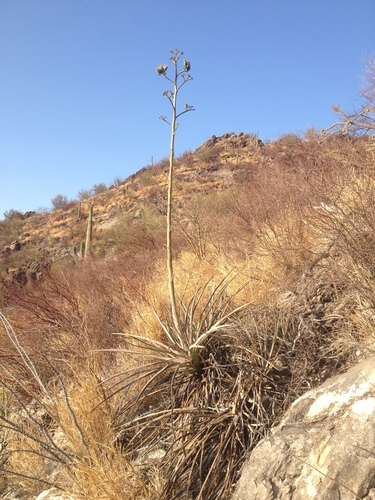
(c) mike_spies, some rights reserved (CC BY-NC)

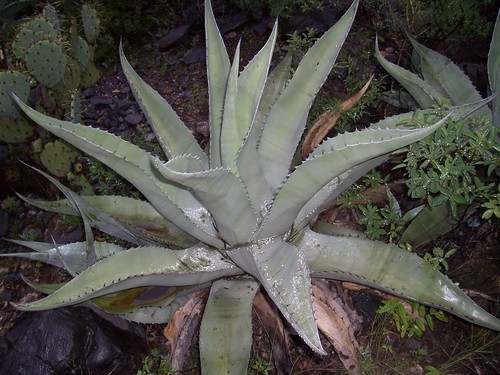
(c) Jean Audissou, some rights reserved (CC BY-NC), uploaded by Jean Audissou

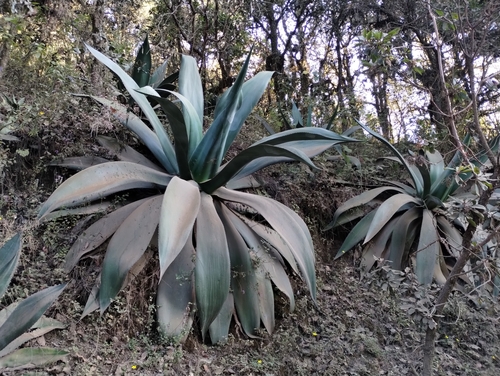
(c) Kevin Murray, some rights reserved (CC BY), uploaded by Kevin Murray
What to Eat
Edible parts: Bulb, Corm, Leaves
The bulbs or corms are eaten raw as a vegetable or roasted. The leaves are also edible.
Where to Find It
It is a subtropical plant. It grows in hot arid places with a marked dry season. The dry season can be 6-11 months. It grows in well drained stony and sandy soils. It grows between 70-300 m above sea level. It can grow in arid places.
Africa, Namibia, South Africa, Southern Africa,
How to Identify
A herb with a bulb. It grows 30 cm high. It keeps growing from year to year. The bulb is oval and has yellowish scales. There are about 4 leaves in a ring. They are about 60-200 mm long by 4-16 mm wide. The flowers are brown to orange. They are about 2 cm long. They have a sweet smell. The fruits are a large capsule. It is round and brown and 2 cm long. The seeds are 9 mm across.
Nutrition
| Part | Moisture | kJ | kcal | Protein | Vit A | Vit C | Iron | Zinc |
|---|---|---|---|---|---|---|---|---|
| Leaves | 81.5 | — | — | — | — | — | — | — |
Notes
They have also been put in the families Hyacinthaceae and Liliaceae.
Names & Synonyms
Glomglomkwasa, Somaes
References (4)
- Royal Botanic Gardens, Kew (1999). Survey of Economic Plants for Arid and Semi-Arid Lands (SEPASAL) database. Published on the Internet; http://www.rbgkew.org.uk/ceb/sepasal/internet [Accessed 16th April 2011]
- Ruiters-Welcome, A. K., 2019, Food plants of southern Africa. Ph.D. thesis. Univ. of Johannesburg p 65
- Welcome, A. K. & Van Wyk, B.-E., 2019, An inventory and analysis of the food plants of southern Africa. South African Journal of Botany 122 (2019) 136–179
- World Checklist of Useful Plant Species 2020. Royal Botanic Gardens, Kew