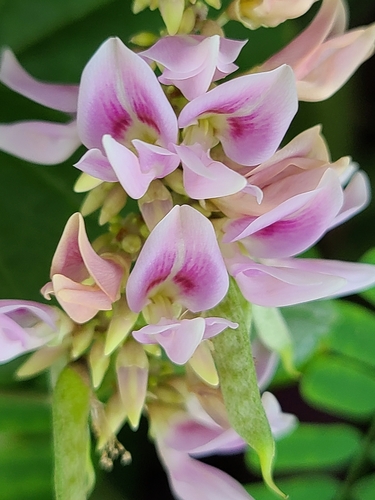
Indigofera compacta
N. E. Br.
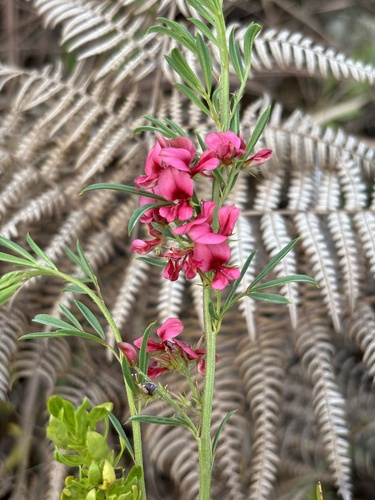
(c) Troos van der Merwe, some rights reserved (CC BY-NC)
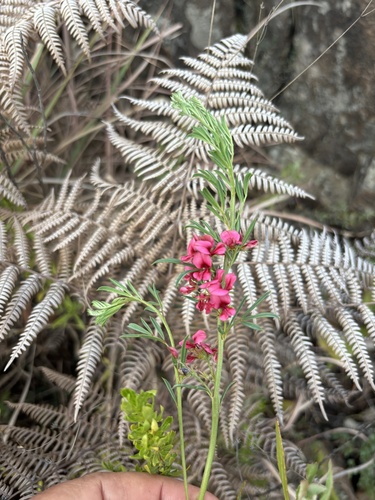
(c) Troos van der Merwe, some rights reserved (CC BY-NC)
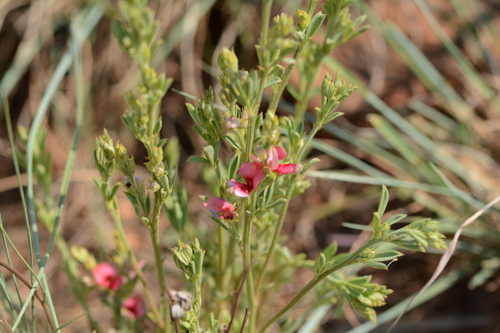
(c) Richard Gill, some rights reserved (CC BY-NC)
What to Eat
Edible parts: Leaves - tea, Roots
The leaves are dried and used for tea. The roots are eaten as a relish, and the juice of the roots is eaten, especially by children.
Where to Find It
It is a subtropical plant. It can grow in arid places.
Africa, Eswatini, South Africa, Southern Africa, Swaziland,
How to Identify
A herb or small shrub. It keeps growing from year to year. It grows 30 m high. It grows from a woody rootstock. It has many branches from the base. The stems are slender and dark reddish-brown. They are hairy. There are grooves along them. The leaves are compound with leaflets along the stalk. There are 5 closely set leaflets that are folded and opposite. They are hairy on both surfaces. The flowers are small and 4-6 mm long and a light red colour. The fruit is a pod that is slender and erect. See Indigofera hilaris
Other Information
The juice of the roots is eaten especially by children.
Names & Synonyms
Isaceke, Wilde teebos
References (3)
- Fox, F. W. & Young, M. E. N., 1982, Food from the Veld. Delta Books. p 212
- Royal Botanic Gardens, Kew (1999). Survey of Economic Plants for Arid and Semi-Arid Lands (SEPASAL) database. Published on the Internet; http://www.rbgkew.org.uk/ceb/sepasal/internet [Accessed 29th April 2011]
- Welcome, A. K. & Van Wyk, B.-E., 2019, An inventory and analysis of the food plants of southern Africa. South African Journal of Botany 122 (2019) 136–179