Russula ochroleuca
(Pers.: Secr.) Fr.
RussulaceaeMushrooms

iNaturalist · cc-by-nc
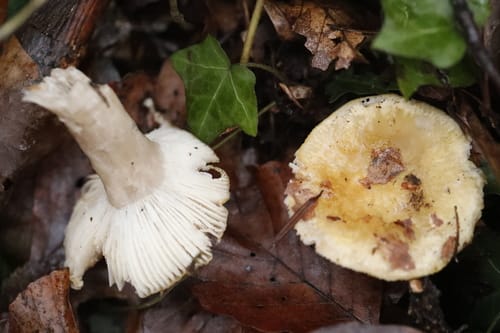
(c) Federico Calledda, some rights reserved (CC BY-NC), uploaded by Federico Calledda
(c) Federico Calledda, some rights reserved (CC BY-NC), uploaded by Federico Calledda
iNaturalist · cc-by-nc
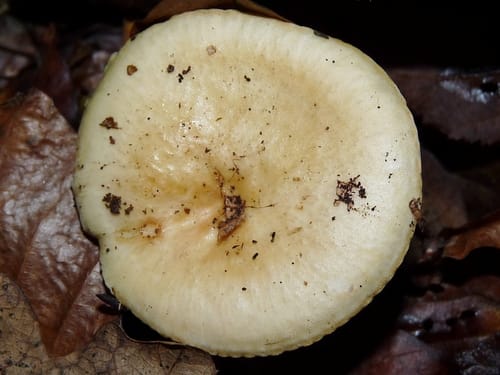
(c) Sepp Schmid, some rights reserved (CC BY-NC)
(c) Sepp Schmid, some rights reserved (CC BY-NC)
iNaturalist · cc-by-nc
(c) lastovka, some rights reserved (CC BY-NC)
(c) lastovka, some rights reserved (CC BY-NC)
What to Eat
Edible parts: Mushroom, Fungus
Where to Find It
It is a temperate to tropical plant.
Africa, Denmark, East Africa, Europe, Iraq, Malawi, Middle East,
Countries: Andorra, United Arab Emirates, Albania, Angola, Austria, Bosnia & Herzegovina, Belgium, Burkina Faso, Bulgaria, Bahrain, Burundi, Benin, Botswana, Belarus, Congo (DRC), Central African Republic, Congo (Republic), Switzerland, Cote d'Ivoire, Cameroon, Cape Verde, Cyprus, Czechia, Germany, Djibouti, Denmark, Algeria, Estonia, Egypt, Eritrea, Spain, Ethiopia, Finland, France, Gabon, United Kingdom, Ghana, Gambia, Guinea, Equatorial Guinea, Greece, Guinea-Bissau, Croatia, Hungary, Ireland, Israel, Iraq, Iran, Iceland, Italy, Jordan, Kenya, Comoros, Kuwait, Lebanon, Liechtenstein, Liberia, Lesotho, Lithuania, Luxembourg, Latvia, Libya, Morocco, Monaco, Moldova, Montenegro, Madagascar, North Macedonia, Mali, Mauritania, Malta, Mauritius, Malawi, Mozambique, Namibia, Niger, Nigeria, Netherlands, Norway, Oman, Poland, Portugal, Qatar, Romania, Serbia, Russia, Rwanda, Saudi Arabia, Seychelles, Sudan, Sweden, Slovenia, Slovakia, Sierra Leone, San Marino, Senegal, Somalia, South Sudan, Sao Tome & Principe, Syria, Eswatini, Chad, Togo, Tunisia, Tanzania, Ukraine, Uganda, Yemen, South Africa, Zambia, Zimbabwe
How to Identify
Russula ochroleuca is a mushroom in the family Russulaceae, found in temperate to tropical regions.
Wikipedia
Source ↗Russula ochroleuca is a member of the genus Russula. A group that have become known as brittlegills. It has been commonly known as the common yellow russula for some years, and latterly the ochre brittlegill. It is widespread, and common in mixed woodland.
References (3)
- Aziz, F. H. & Toma, F. M., 2012, First Observations on the Mushroom in Mountain Area of Iraqi Kurdistan Region. Journal of Advanced Laboratory Research in Biology 3(4)
- Boa, E. R., 2004, Wild edible fungi and their importance to people. FAO Non Wood Forest Products Booklet 17
- www.plantnames.unimelb.edu.au


