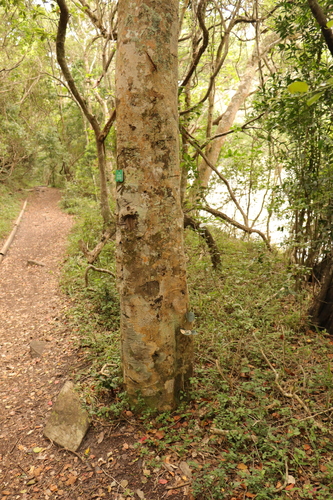
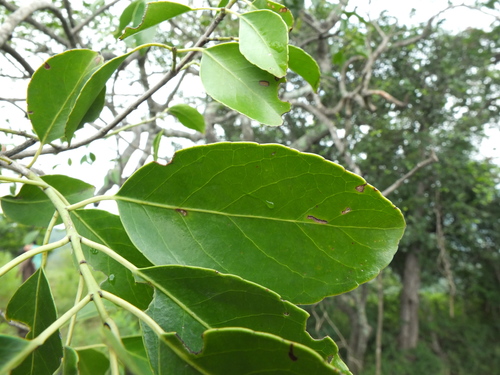
Salacia viminea
Wallich ex Lawson
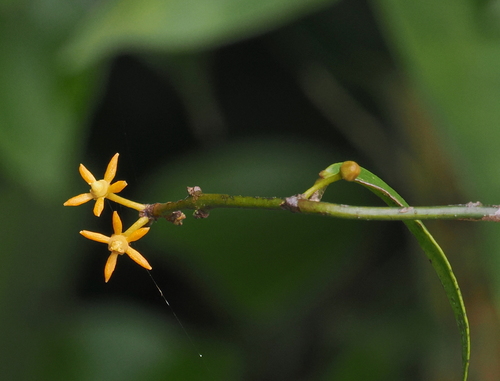
iNaturalist · cc-by
(c) desertnaturalist, some rights reserved (CC BY), uploaded by desertnaturalist
(c) desertnaturalist, some rights reserved (CC BY), uploaded by desertnaturalist
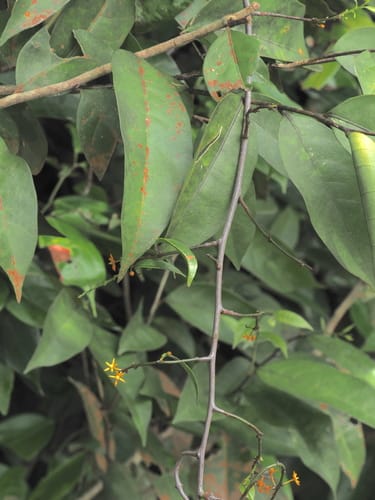
iNaturalist · cc-by
(c) desertnaturalist, some rights reserved (CC BY)
(c) desertnaturalist, some rights reserved (CC BY)
What to Eat
Edible parts: Aril, Seed layer, Fruit
The pulp surrounding the seeds is eaten fresh. The aril and fruit layer are also edible.
Where to Find It
It is a tropical plant. It grows in lowland forests up to 250 m altitude.
Asia, Cambodia, Indochina, Indonesia, Malaysia, Myanmar, SE Asia, Singapore, Thailand,
Countries: United Arab Emirates, Afghanistan, Armenia, Azerbaijan, Bangladesh, Bahrain, Brunei, Bhutan, China, Georgia, Indonesia, Israel, India, Iraq, Iran, Jordan, Japan, Kyrgyzstan, Cambodia, North Korea, South Korea, Kuwait, Kazakhstan, Laos, Lebanon, Sri Lanka, Myanmar, Mongolia, Maldives, Malaysia, Nepal, Oman, Philippines, Pakistan, Qatar, Saudi Arabia, Singapore, Syria, Thailand, Tajikistan, Timor-Leste, Turkmenistan, Turkey, Taiwan, Uzbekistan, Vietnam, Yemen
How to Identify
A shrub or vine. It lies along the ground but can be erect. The fruit is round and fleshy with a stone inside. The fruit is 2 cm across. It has one seed.
Notes
It has also been put in the family Hippocrataceae.
References (4)
- Burkill, I. M., 1966,
- Milow, P., et al, 2013, Malaysian species of plants with edible fruits or seeds and their evaluation. International Journal of Fruit Science. 14:1, 1-2
- PROSEA No. 2
- World Checklist of Useful Plant Species 2020. Royal Botanic Gardens, Kew