Cuscuta reflexa
Roxb.
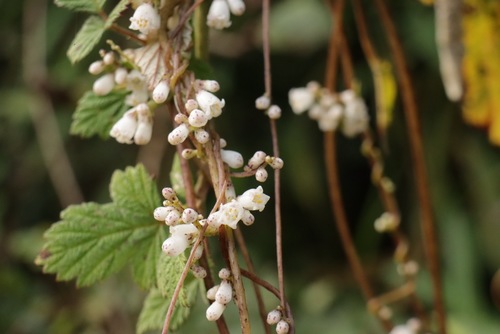
(c) connk, some rights reserved (CC BY-NC), uploaded by connk

(c) John Brew, some rights reserved (CC BY), uploaded by John Brew
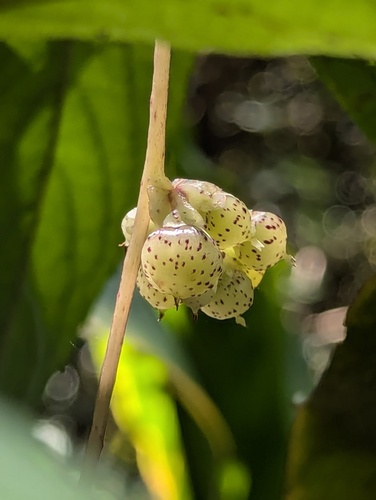
(c) Sagnik Dutta Roy, some rights reserved (CC BY)
What to Eat
Edible parts: Leaves, Plant
None known
Where to Find It
It is a tropical plant. It grows on shrubs between 900-2,800 m above sea level in southern China. In Sichuan and Yunnan.
Afghanistan, Asia, Bangladesh, China, Himalayas, India, Indochina, Indonesia, Laos, Malaysia, Myanmar, Nepal, Northeastern India, Pakistan, SE Asia, Sikkim, Sri Lanka, Thailand, Tibet,
How to Identify
A climbing herb. The stems are yellow or pale green. They are 2-3 mm across. They have brown spots. The flowers are on the side. There can be several flowers in a group. They are white or cream and have a scent. They are small and tube shaped.
How to Grow
We have virtually no information on this species and do not know if it will be hardy in Britain. One report says that it needs cold greenhouse treatment in this country but some provenances from the higher parts of its range could succeed outdoors. This is a parasitic species that is devoid of leaves, roots or chlorophyll and so is totally dependant upon its host. It must be grown next to the host plant, which it penetrates with suckers in order to obtain nutriment.
Propagation: Seed is best sown as soon as it is ripe in autumn, by lodging it among the stems of a host plant being grown in a pot in the greenhouse.
Medicinal Uses
The seeds are alterative, anthelmintic, and carminative, and are used in the treatment of bilious disorders. The stems are also used for bilious disorders. The whole plant is purgative and is used internally for protracted fevers and externally for body pains and itchy skin. In Ayurvedic medicine, the plant is used to treat difficulty urinating, jaundice, muscle pain, and coughs. The juice of the plant, mixed with the juice of Saccharum officinarum, is used in the treatment of jaundice. The chemical composition of the plant varies depending on the host it grows on, though it is not recorded whether this affects its medicinal properties.
Other Uses
None known Special Uses
Wikipedia
Source ↗Cuscuta reflexa, the giant dodder or ulan ulan, is one of about 220 species in genus Cuscuta, in the family Convolvulaceae. It is common in the Indian subcontinent and the Greater Himalayas and as far south as Malaysia and Indonesia. This parasitic plant species is a leafless twined sprawling thin vine that grows over a host plant, including large trees. It will make garlands hanging down from tree canopies as long as 10 metres (33 ft). The flowers are small, bell shaped and white with yellow filaments.
Other Information
These parasitic weeds can damage other crops.
Notes
There are 170 Cuscuta species. Also put in the family Cuscutaceae. Cuscuta plants are parasites growing on other plants.
Names & Synonyms
Aakas beli, Megh, Shwe-nwe
References (5)
- Anderson, E. F., 1993, Plants and people of the Golden Triangle. Dioscorides Press. p 208
- Aryal, K. P., et al, 2018, Diversity and use of wild and non-cultivated edible plants in the Western Himalaya. Journal of Ethnobiology and Ethnomedicine (2018) 14:10
- Das, S. and Mohiuddin, M., 2012, Gender role in Home Garden Management in the Indigenous Community: A case study in Bandarban Hill District, Bangladesh. International Journal of Social Forestry. 5(1):22-37
- Sarma, H., et al, 2010, Updated Estimates of Wild Edible and Threatened Plants of Assam: A Meta-analysis. International Journal of Botany 6(4): 414-423
- World Checklist of Useful Plant Species 2020. Royal Botanic Gardens, Kew


