Engelhardtia serrata
Blume
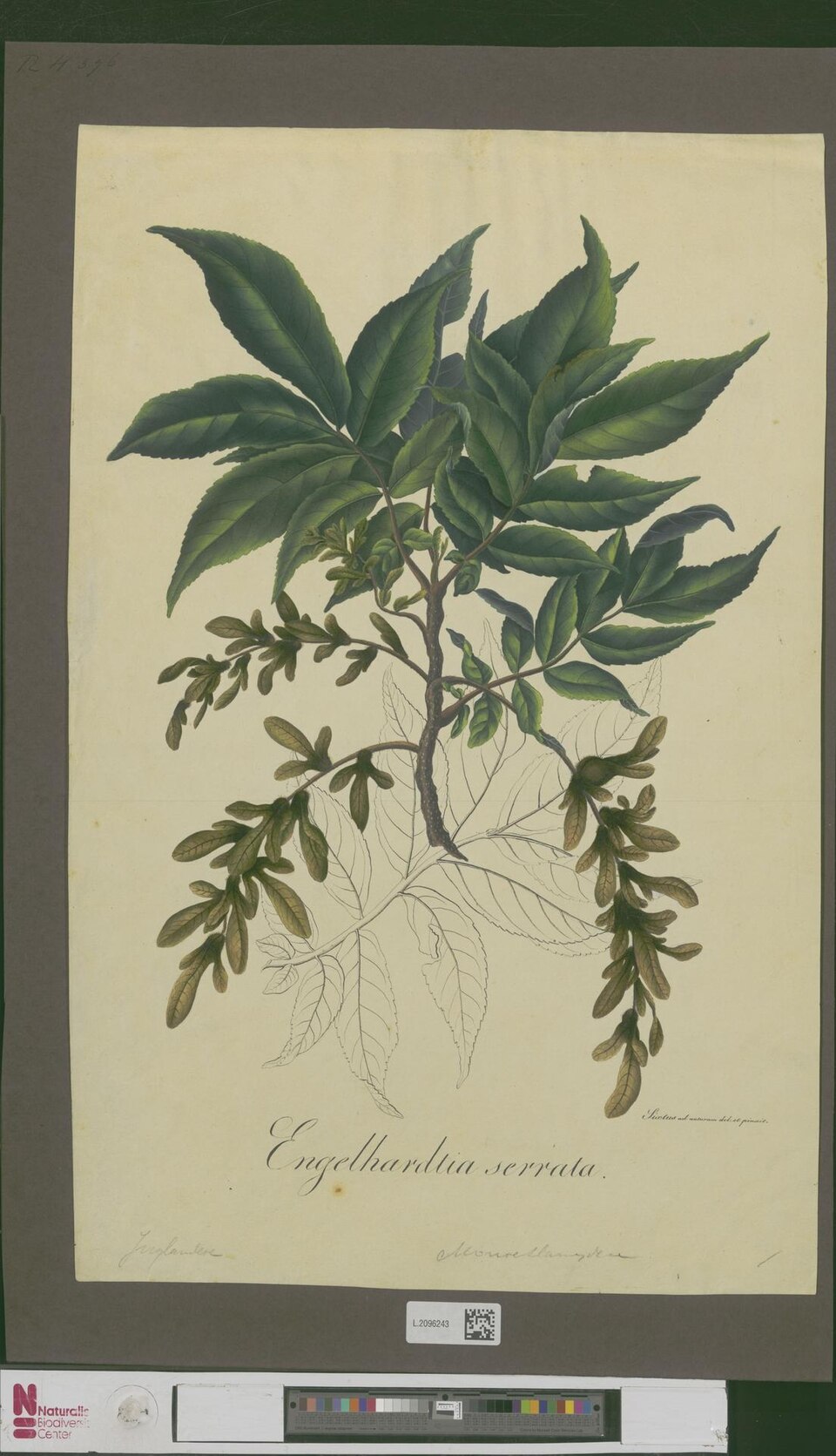
wikimedia · cc0
Wikimedia Commons - Sixtus, Ernst Philipp
Wikimedia Commons - Sixtus, Ernst Philipp
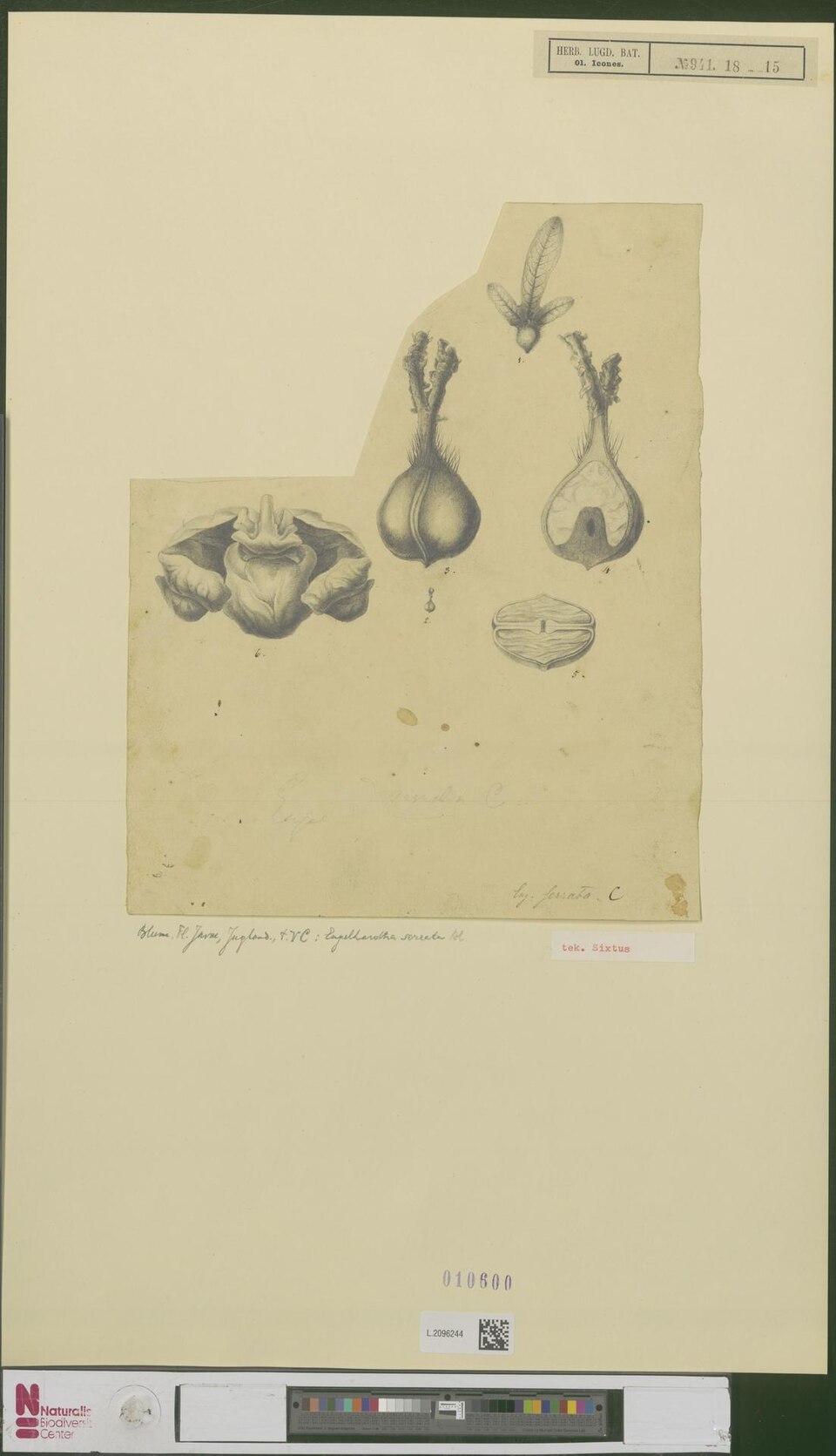
wikimedia · cc0
Wikimedia Commons - Blume
Wikimedia Commons - Blume
What to Eat
Edible parts: Leaves, Bark - spice
The young leaves are fried and eaten. The bark is used as a spice.
Where to Find It
It is a tropical plant. It grows in forests.
Asia, Indochina, Indonesia, Laos, Myanmar, Philippines, SE Asia, Thailand,
Countries: United Arab Emirates, Afghanistan, Armenia, Azerbaijan, Bangladesh, Bahrain, Brunei, Bhutan, China, Georgia, Indonesia, Israel, India, Iraq, Iran, Jordan, Japan, Kyrgyzstan, Cambodia, North Korea, South Korea, Kuwait, Kazakhstan, Laos, Lebanon, Sri Lanka, Myanmar, Mongolia, Maldives, Malaysia, Nepal, Oman, Philippines, Pakistan, Qatar, Saudi Arabia, Singapore, Syria, Thailand, Tajikistan, Timor-Leste, Turkmenistan, Turkey, Taiwan, Uzbekistan, Vietnam, Yemen
How to Identify
A large tree. It grows 20 m tall. It loses its leaves during the year. The bark is grey and deeply cracked. The leaves are compound with leaflets opposite. There are teeth along the edge near the tip. The flowers are separately male and female on the same tree. The fruit is a winged nut. It is 3.5 cm long. There is one seed.
How to Grow
Plants can be grown by seeds.
Notes
Also put in the family Myrsinaceae.
Names & Synonyms
Engelhardtia nudiflora Hook.f.
and others
References (3)
- Anderson, E. F., 1993, Plants and people of the Golden Triangle. Dioscorides Press. p 210
- Schmidt-Vogt, D., 2001, Secondary Forests in Swidden Agriculture in the Highland of Thailand. Journal of tropical Forest Science 13(4): 748-767
- Sukarya, D. G., (Ed.) 2013, 3,500 Plant Species of the Botanic Gardens of Indonesia. LIPI p 260
More from Juglandaceae
Carya aquatica
Water hickory, Swamp hickory, Bitter pecan

Carya buckleyi
No photo
Carya californica
California walnut

Carya carolinae-septentrionalis - (Ashe.)Engelm.&Graebn.
Southern Shagbark, Southern shagbark hickory

Carya cathayensis
Chinese Hickory

Carya cordiformis
Bitternut, Swamp hickory, Bitternut hickory