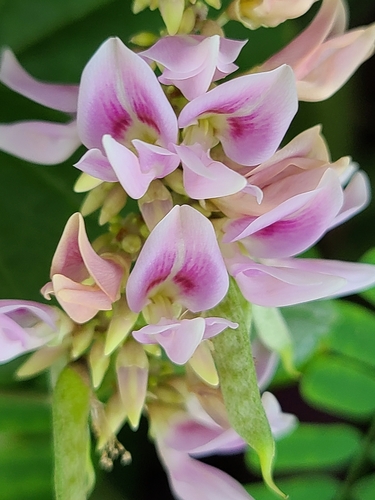
Lonchocarpus laxiflorus
Guill. & Perr.

iNaturalist · cc-by
(c) Murphy Tladi, some rights reserved (CC BY)
(c) Murphy Tladi, some rights reserved (CC BY)

iNaturalist · cc-by
(c) Alan Manson, some rights reserved (CC BY)
(c) Alan Manson, some rights reserved (CC BY)

iNaturalist · cc-by
(c) Alan Manson, some rights reserved (CC BY)
(c) Alan Manson, some rights reserved (CC BY)
What to Eat
Edible parts: Leaves, Flowers, Fruit, Vegetable
The leaves, flowers, and fruit are edible. The fruit can be dried and stored for later use.
Known Hazards
Where to Find It
It is a tropical plant. It grows in savannah areas. It grows between 450-2,150 m above sea level.
Africa, Benin, Burkina Faso, Central African Republic, CAR, Ethiopia, Gambia, Kenya, Nigeria, Senegal, Sudan, Togo, Uganda, West Africa,
Countries: Angola, Burkina Faso, Burundi, Benin, Botswana, Congo (DRC), Central African Republic, Congo (Republic), Cote d'Ivoire, Cameroon, Cape Verde, Djibouti, Algeria, Egypt, Eritrea, Ethiopia, Gabon, Ghana, Gambia, Guinea, Equatorial Guinea, Guinea-Bissau, Kenya, Comoros, Liberia, Lesotho, Libya, Morocco, Madagascar, Mali, Mauritania, Mauritius, Malawi, Mozambique, Namibia, Niger, Nigeria, Rwanda, Seychelles, Sudan, Sierra Leone, Senegal, Somalia, South Sudan, Sao Tome & Principe, Eswatini, Chad, Togo, Tunisia, Tanzania, Uganda, South Africa, Zambia, Zimbabwe
How to Identify
A small tree. It grows 4-8 m tall. The bark is grey to yellow. The leaves are compound. The flowers are purple. The fruit is a papery pod. It usually contains on seed.
Medicinal Uses
It is used as medicine.
Notes
It is used as medicine.
Names & Synonyms
Alwaro, Amera, Lero, Marchessa, Oleme, Orora, Riak, Tsengwerefya
Philenoptera laxiflora (Guill. & Perr.) Roberty
References (2)
- Gallagher, D. E., 2010, Farming beyond the escarpment: Society, Environment, and Mobility in Precolonial Southeastern Burkina Faso. PhD University of Michigan.
- Grubben, G. J. H. and Denton, O. A. (eds), 2004, Plant Resources of Tropical Africa 2. Vegetables. PROTA, Wageningen, Netherlands. p 563