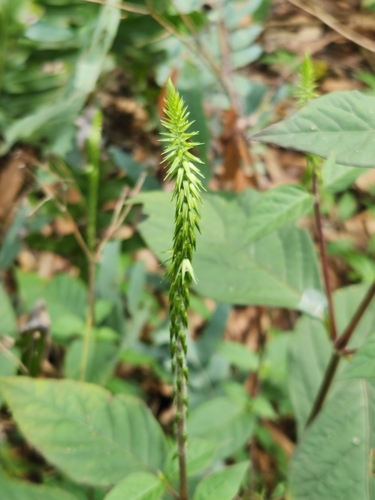
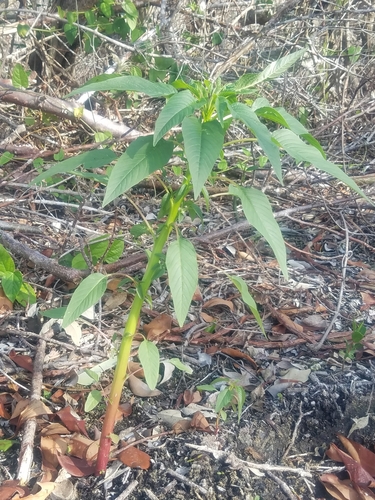
Amaranthus australis
(A. Gray) Sauer
AmaranthaceaeLeaves

iNaturalist · cc-by-nc-sa
(c) Mary Keim, some rights reserved (CC BY-NC-SA)
(c) Mary Keim, some rights reserved (CC BY-NC-SA)
iNaturalist · cc-by-nc
(c) Joshua Sands, some rights reserved (CC BY-NC)
(c) Joshua Sands, some rights reserved (CC BY-NC)

iNaturalist · cc-by-nc
(c) deborahgreen, some rights reserved (CC BY-NC)
(c) deborahgreen, some rights reserved (CC BY-NC)
What to Eat
Edible parts: Leaves
The leaves are eaten.
Where to Find It
It is a tropical plant.
North America, USA,
Countries: Antigua & Barbuda, Barbados, Bahamas, Belize, Canada, Costa Rica, Cuba, Dominica, Dominican Republic, Grenada, Guatemala, Honduras, Haiti, Jamaica, St Kitts & Nevis, St Lucia, Mexico, Nicaragua, Panama, Puerto Rico, El Salvador, Trinidad & Tobago, United States, St Vincent
How to Identify
An annual herb of the amaranth family that grows 1-3 m tall from seed each year. It is a tropical plant.
Wikipedia
Source ↗Amaranthus australis is also known as southern amaranth or southern water-hemp. The plant usually grows from 1 to 3 m (3.3 to 9.8 ft) in height, though some have been known to grow up to 9 m (30 ft) high. The stems can be up to 30 cm in diameter. It is a herbaceous annual. It is found in many southern states of the United States, Mexico, the West Indies, and South America. They are frequently found in wetland areas. It is herbaceous, short lived perennial. The largest is 4.6 m (15 ft) tall.
Names & Synonyms
Acnida alabamensis Standl.Acnida australis A.GrayAcnida cannabina var. australis (A.Gray) Uline & W.L.BrayAcnida cuspidata Bertero ex Spreng.