Ochrosia compta
K. Schum.
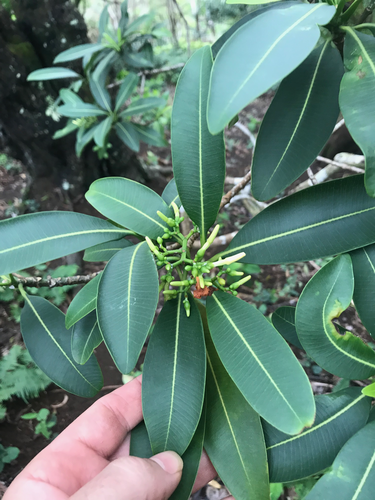
iNaturalist · cc-by-nc
(c) mykle hoban, some rights reserved (CC BY-NC), uploaded by mykle hoban
(c) mykle hoban, some rights reserved (CC BY-NC), uploaded by mykle hoban
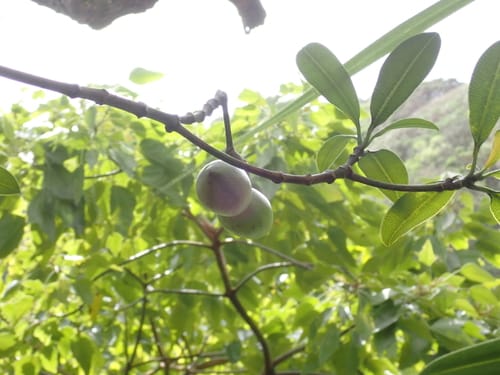
iNaturalist · cc-by-nc
(c) Mike Ross, some rights reserved (CC BY-NC)
(c) Mike Ross, some rights reserved (CC BY-NC)

iNaturalist · cc-by-nc
(c) Kyhl Austin, some rights reserved (CC BY-NC)
(c) Kyhl Austin, some rights reserved (CC BY-NC)
What to Eat
Edible parts: Seeds
The seeds are eaten.
Known Hazards
Where to Find It
It is a tropical plant.
Hawaii, Pacific, USA,
Countries: Australia, Fiji, Micronesia, Kiribati, Marshall Islands, Nauru, New Zealand, Papua New Guinea, Palau, Solomon Islands, Tonga, Tuvalu, United States, Vanuatu, Samoa
How to Identify
A small tree. It grows 3-10 m tall. The leaves are 10-15 cm long and 5 cm wide. There are 2-4 leathery leaves growing from each node. The sap is milky. The flowers are yellow and in clusters at the ends of the branches. The fruit are 2.5 cm long and pointed. They are yellow to purple when ripe.
How to Grow
Plants can be grown from fresh seed.
Propagation: Seed - untreated fresh seed has germinated within 2 weeks. The germination rate ranges from 5 - 10%.
Other Uses
A yellow dye is obtained from the bark and roots. It is used for colouring clothes, especially those make from tapas cloth.
Names & Synonyms
Ochrosia sandwicensis A. Grayand others
References (1)
- Moerman, D. F., 2010, Native American Ethnobotany. Timber Press. p 359


