Dryopteris marginata
(C. B. Clarke) H. Christ
DryopteridaceaeLeaves
iNaturalist · cc-by
(c) Jacy Chen, some rights reserved (CC BY), uploaded by Jacy Chen
(c) Jacy Chen, some rights reserved (CC BY), uploaded by Jacy Chen
iNaturalist · cc-by
(c) 曾昱承 Yu-Cheng Zeng, some rights reserved (CC BY), uploaded by 曾昱承 Yu-Cheng Zeng
(c) 曾昱承 Yu-Cheng Zeng, some rights reserved (CC BY), uploaded by 曾昱承 Yu-Cheng Zeng
iNaturalist · cc-by
(c) Jacy Chen, some rights reserved (CC BY), uploaded by Jacy Chen
(c) Jacy Chen, some rights reserved (CC BY), uploaded by Jacy Chen
What to Eat
Edible parts: Leaves, Fronds
The fronds are cooked as a vegetable.
Where to Find It
It is a tropical plant. In southern China it grows in forests and near streams between 900-2,400 m above sea level.
Asia, Bhutan, China, Himalayas, India, Indochina, Myanmar, Nepal, Northeastern India, SE Asia, Taiwan, Thailand, Vietnam,
Countries: United Arab Emirates, Afghanistan, Armenia, Azerbaijan, Bangladesh, Bahrain, Brunei, Bhutan, China, Georgia, Indonesia, Israel, India, Iraq, Iran, Jordan, Japan, Kyrgyzstan, Cambodia, North Korea, South Korea, Kuwait, Kazakhstan, Laos, Lebanon, Sri Lanka, Myanmar, Mongolia, Maldives, Malaysia, Nepal, Oman, Philippines, Pakistan, Qatar, Saudi Arabia, Singapore, Syria, Thailand, Tajikistan, Timor-Leste, Turkmenistan, Turkey, Taiwan, Uzbekistan, Vietnam, Yemen
How to Identify
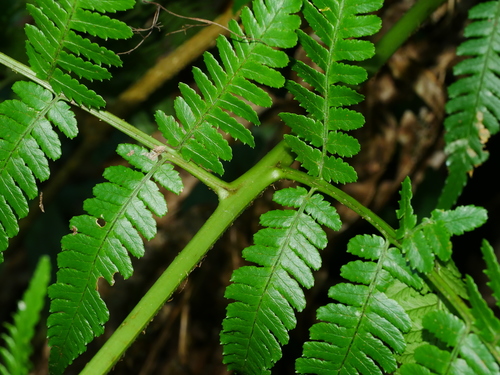
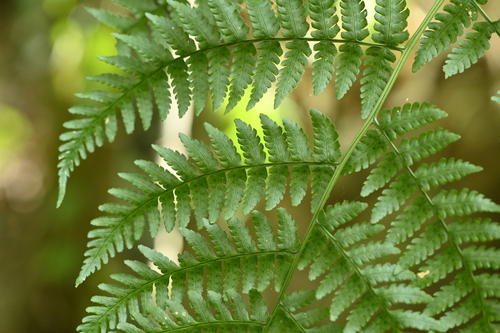
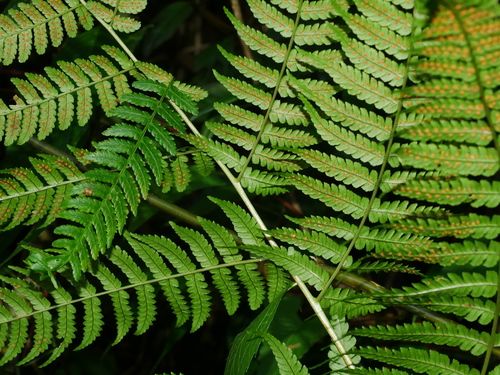
A tropical fern in the Dryopteridaceae family that grows as a straggling herb reaching up to 1.7 m tall. It is found in southern China in forests and near streams at elevations between 900–2,400 m, where it is sold in local markets.
Other Information
It is sold in local markets.
Names & Synonyms
Lai-changkhrang, Takok, Tekoh
Aspidium filix-mas var. marginatum (C. B. Clarke) H. ChristAspidium marginatum Wall.Aspidium marginatum (C. B. Clarke) Wall. ex H. ChristDropteris blinii H. Lev.Dryopteris chiui ChingDryopteris grandissima TagawaDryopteris leveillei NakaiDryopteris metcalfii ChingNephrodium filix-mas var. marginatum C. B. ClarkeNephrodium marginatum (C. B. Clarke) C. Hope
References (3)
- Gangte, H. E., et al, 2013, Wild Edible Plants used by the Zou Tribe in Manipur, India. International Journal of Scientific and Research Publications, Volume 3, Issue 5
- Guite, C., 2016, A study of wild edible plants associated with the Paite tribe of Manipur, India, International Journal of Current Research. Vol. 8, Issue, 11, pp. 40927-40932
- Jain et al, 2011, Dietary Use and Conservation Concern of Edible Wetland Plants at Indo-Burma Hotspot: A Case Study from Northeast India. Journal of Ethnobiology and Ethnomedicine 7:29 p 6


