Paronychia jamesii
Torr. & A. Gray
James's nailwort

(c) Ryan Andrews, some rights reserved (CC BY-NC), uploaded by Ryan Andrews

no rights reserved

no rights reserved
What to Eat
Edible parts: Plant - tea
The herb is used to make a tea.
Where to Find It
It is a temperate plant.
North America, USA,
How to Identify
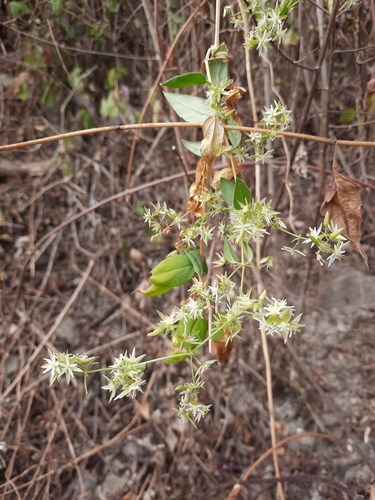
A herb. The stems are 10-35 cm long. They are hairy. The leaves are narrow and 7-35 mm long by 0.5-1 mm wide.
How to Grow
We have very little information on this species and do not know if it will be hardy in Britain, though judging by its native range it could succeed outdoors in many parts of this country. The following notes are based on the general needs of the genus. Requires a sunny position succeeding in hot dry soils and tolerating drought once established. Requires a warm open position in full sun, in a sharply drained sandy or gritty soil. If the soil is too rich the plants leaves will not be so silvery. Plants can be grown in a wall.
Propagation: Seed - we have no information for this species but suggest sowing the seed in spring in a greenhouse. When they are large enough to handle, prick the seedlings out into individual pots and grow them on in the greenhouse for at least their first winter. Plant them out into their permanent positions in late spring or early summer, after the last expected frosts. Division in spring.
Medicinal Uses
None known
Other Uses
None known
Wikipedia
A perennial herb with hermaphroditic flowers pollinated by insects. Thrives in light sandy or medium loamy, well-drained soils across mildly acidic to basic pH ranges. Requires full sun and tolerates both dry and moist conditions with good drought resistance.
References (1)
- Moerman, D. F., 2010, Native American Ethnobotany. Timber Press. p 378