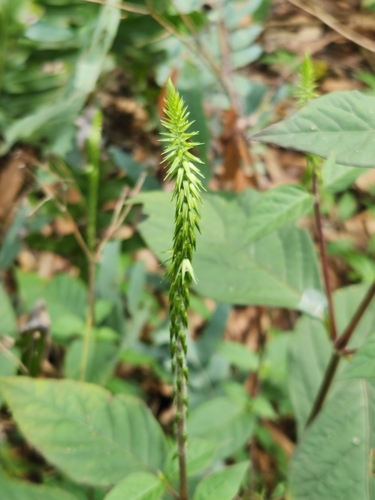
Sarcocornia pacifica
(Standl.) A. J. Scott
Pacific swampfire, Beach asparagus
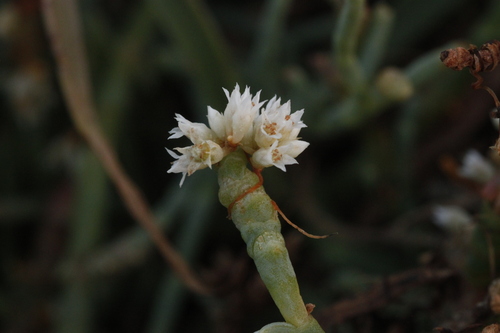
(c) Dan, some rights reserved (CC BY-NC)
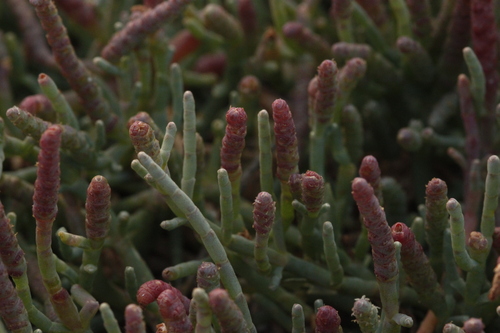
(c) Dan, some rights reserved (CC BY-NC)
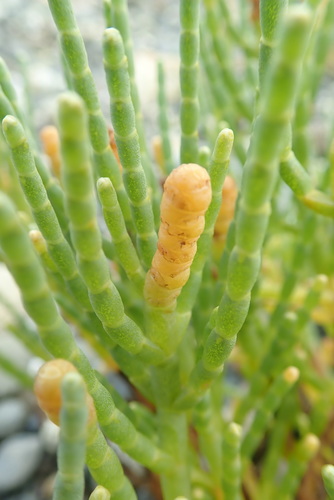
no rights reserved
What to Eat
Edible parts: Leaves, Plant
The leaves and stems can be eaten cooked or pickled.
Where to Find It
It is a cold temperate plant. It grows on beaches.
Alaska, North America, USA,
How to Identify
A herb that keeps growing from year to year. The stems are smooth and fleshy. They are jointed with branches that come out opposite. The leaves are opposite and reduced to scales. The flowers are very small and in 3 sunk into the fleshy top of the stalks.
How to Grow
Propagation: No specific information is available for this species. Sow seed as soon as it is ripe if possible, otherwise in spring, in a greenhouse in a light sandy compost. Prick out seedlings into individual pots when large enough to handle and plant out in summer. Division may be possible in spring.
Medicinal Uses
None known
Other Uses
None known
Wikipedia
A perennial reaching 0.6 m tall, flowering August to September with seeds maturing September to October. Hermaphroditic and wind-pollinated. Grows in light to heavy soils, mildly acidic to basic pH, and saline conditions; requires full sun, prefers moist soil, and tolerates maritime exposure.
Names & Synonyms
References (2)
- Heller, C. A., 1962, Wild Edible and Poisonous Plants of Alaska. Univ. of Alaska Extension Service. p 28 (As Salicornea pacifica)
- Moerman, D. F., 2010, Native American Ethnobotany. Timber Press. p 518